Get your free personalized podcast brief
We scan new podcasts and send you the top 5 insights daily.
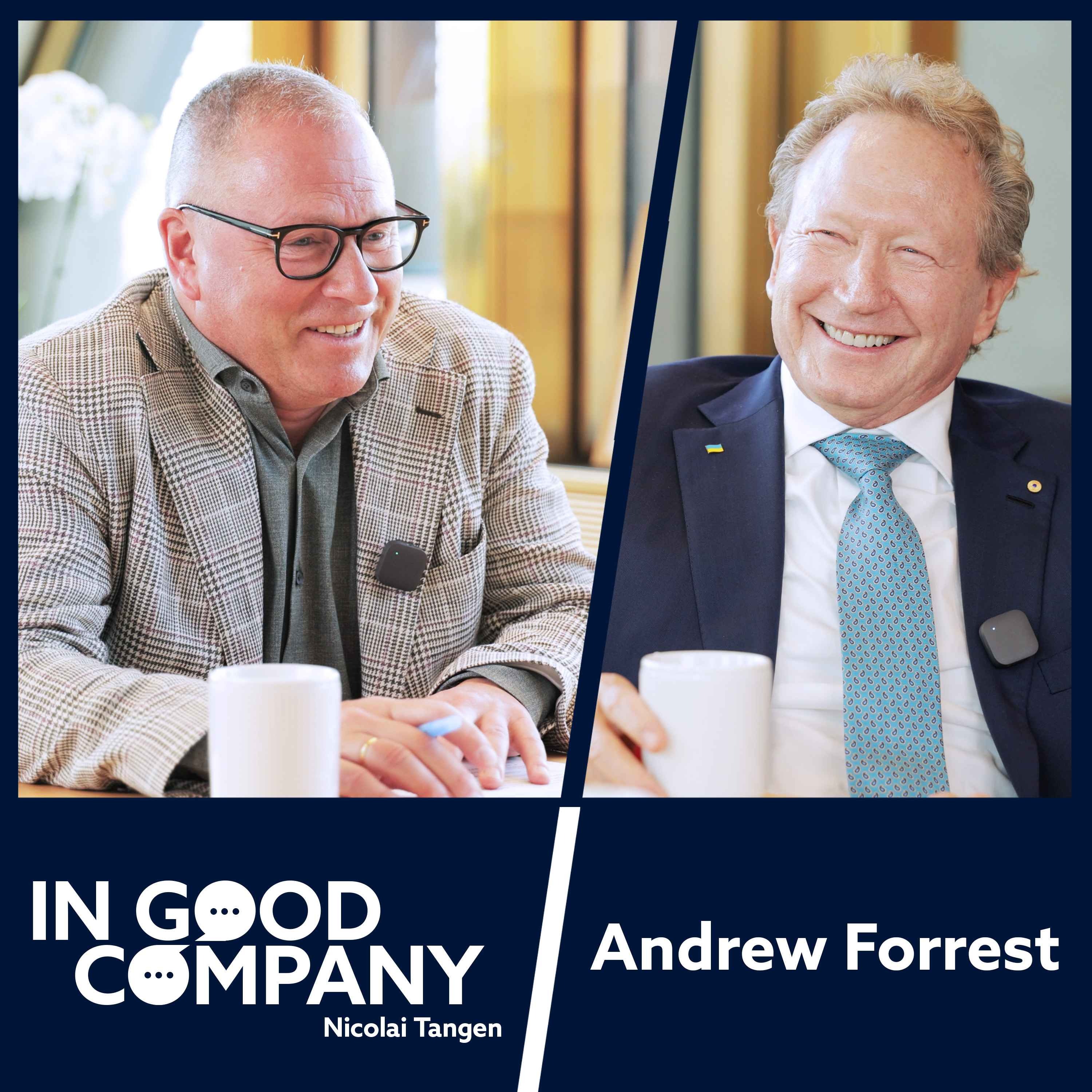
After a hiking accident left him in a wheelchair, Andrew Forrest pursued a PhD in marine ecology. His research on climate change's impact on oceans directly motivated him to transform his heavy-industry mining company, Fortescue, into a green energy leader, committing to zero fossil fuels by 2030.
Related Insights
A career in science can evolve from pursuing pure intellectual curiosity (like quantum gravity) to prioritizing tangible impact. Prof. Max Welling describes this shift as a natural evolution with age, where a new dimension of making a positive impact on issues like climate change becomes a primary motivator.

Jade's CEO Tom Frohlich initially aimed to be a PhD biochemist but discovered he wasn't skilled at bench science. Instead of abandoning his passion, he pivoted to the pharmaceutical industry's business side. This allowed him to leverage his love for science while excelling in a commercial environment, demonstrating a successful model for recalibrating a scientific career.

Andrew Forrest argues that competitors will follow his green transition for economic reasons, not environmental ones. By eliminating a billion liters of diesel annually, Fortescue will save a billion dollars, creating a cost advantage that will force the rest of the industry to adapt to remain competitive.
Andrew Forrest fosters a culture of ambitious innovation where "crazy brave plan a's" are expected to often fail. The key is requiring a "bulletproof plan b" so that failure doesn't endanger the company, allowing teams to learn and move forward without fear of existential risk.
Instead of focusing on marginal emissions cuts, companies should leverage their unique capabilities to solve hard problems. This means acting as early buyers for new green technologies or investing in R&D within their supply chains, creating new markets for the entire industry.

Holcim gets paid to accept waste materials, which it then processes into an energy source. This replaces fossil fuels, simultaneously reducing costs and CO2 emissions, demonstrating how sustainability can be a primary driver of profitable growth.

The founder believes the key to replacing fossil fuels is acknowledging their incredible convenience and cost-effectiveness. The winning renewable solution must be fundamentally better on those metrics, not just an alternative that relies on incentives.

To ensure accountability for societal impact, Mars directly links 40% of its CEO's compensation to non-financial metrics, including sustainability goals. This structure challenges the conventional, finance-only incentive models prevalent in public companies and hardwires long-term purpose into executive performance.
Forrest's first company, Anaconda Nickel, struggled despite having contracts with a major engineering firm that took shortcuts. He learned that contracts are secondary to having a passionate, value-aligned team that can navigate problems collaboratively without resorting to lawyers.
When Andrew Forrest felt like giving up after a worksite cyclone killed two people, a severely injured worker urged him to continue. The worker's message—"If you give up, none of this was worth it"—provided the critical resolve for Forrest to push through the company's darkest moment.