Get your free personalized podcast brief
We scan new podcasts and send you the top 5 insights daily.
Garry Kasparov argues that dictators don't hide their intentions; they state them plainly, like Hitler in *Mein Kampf*. The public's failure is not a lack of information but a failure to believe what is being said. This playbook applies directly to Donald Trump's rhetoric and actions, which should be taken seriously.

Related Insights
Kasparov argues the greatest danger isn't just high-level political cronies. The critical inflection point is when a "critical mass of the second and third tier of officers of the law and bureaucrats" become loyalists. This cements authoritarian control by taking over the permanent machinery of the state itself.
Authoritarian figures generate a high volume of daily outrages to prevent sustained focus on their overarching project. Using a strong, organizing label like 'fascism' is not merely an insult but a crucial cognitive tool. It helps the public categorize events into a larger pattern, maintaining focus on the big picture instead of getting lost in the noise.
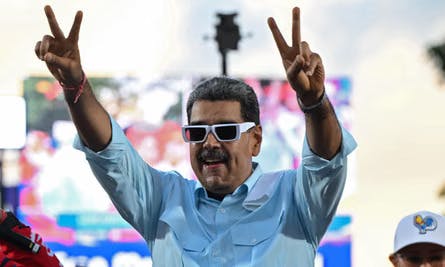
Authoritarian leaders who publicly mock or dismiss threats risk triggering a military response driven by personal pride. Venezuelan President Maduro's televised dancing was reportedly perceived by the Trump administration as calling their bluff, demonstrating how avoiding the appearance of being a 'chump' can become a primary motivator for military action.
Historically, figures like Hitler were initially dismissed as buffoons. This perceived lack of seriousness is a strategic tactic, not a flaw. It disarms civil opponents who can't operate in that space, captures constant media attention, and causes observers to fatally underestimate the true threat. The defense to "take him seriously, not literally" is a modern manifestation of this pattern.
Putin's history shows a reliable pattern: he appears cooperative and makes agreements, only to later act in his own self-interest. To predict his moves in conflicts like the Ukraine war, one must analyze this long-term behavioral pattern rather than his current statements or gestures.

To predict a leader's actions, disregard their words and even individual actions. Instead, focus on their consistent, long-term pattern of behavior. For Putin, the pattern is using negotiations as a stalling tactic to advance a fixed agenda, making him an unreliable partner for peace deals based on stated intentions.

Unlike typical political graft, Kasparov explains that under Trump, corruption is the fundamental system. It's not a bug or an isolated problem but the deliberate and systematic use of state agencies and policies as a mechanism for personal enrichment. This reframes it from a moral failing to a systemic takeover.
Contrary to their image of strength, authoritarian figures often rely on bluff and "anticipatory obedience." When confronted with direct, organized resistance, they frequently lack a follow-up plan and retreat, revealing their inherent fragility and dependence on their opposition's inaction.

Trump is not an isolated phenomenon but a vessel for a broader, international right-wing movement. His talking points on immigration and 'special operations' mirror the language used by authoritarians like Viktor Orbán in Hungary and Vladimir Putin in Russia. This global playbook is tested in 'laboratories of autocracy' worldwide before being deployed in the U.S.

Understanding political behavior is simplified by recognizing the primary objective is not ideology but accumulating and holding power. Actions that seem hypocritical are often rational calculations toward this singular goal, including telling 'horrific lies.'