Get your free personalized podcast brief
We scan new podcasts and send you the top 5 insights daily.
Waymo's potential $100B valuation, over 200 times current revenue, is based on more than its robo-taxi service. Investors are betting on future high-margin revenue streams, particularly licensing its autonomous driving software to established automakers. This B2B model is key to justifying a valuation far beyond traditional transportation multiples.

Related Insights
As autonomous vehicles drop the per-mile cost of ride-sharing to under $1, it will become cheaper than owning a car. This price drop will induce massive demand, shifting most transportation to these networks and creating a market exponentially larger than the current industry.
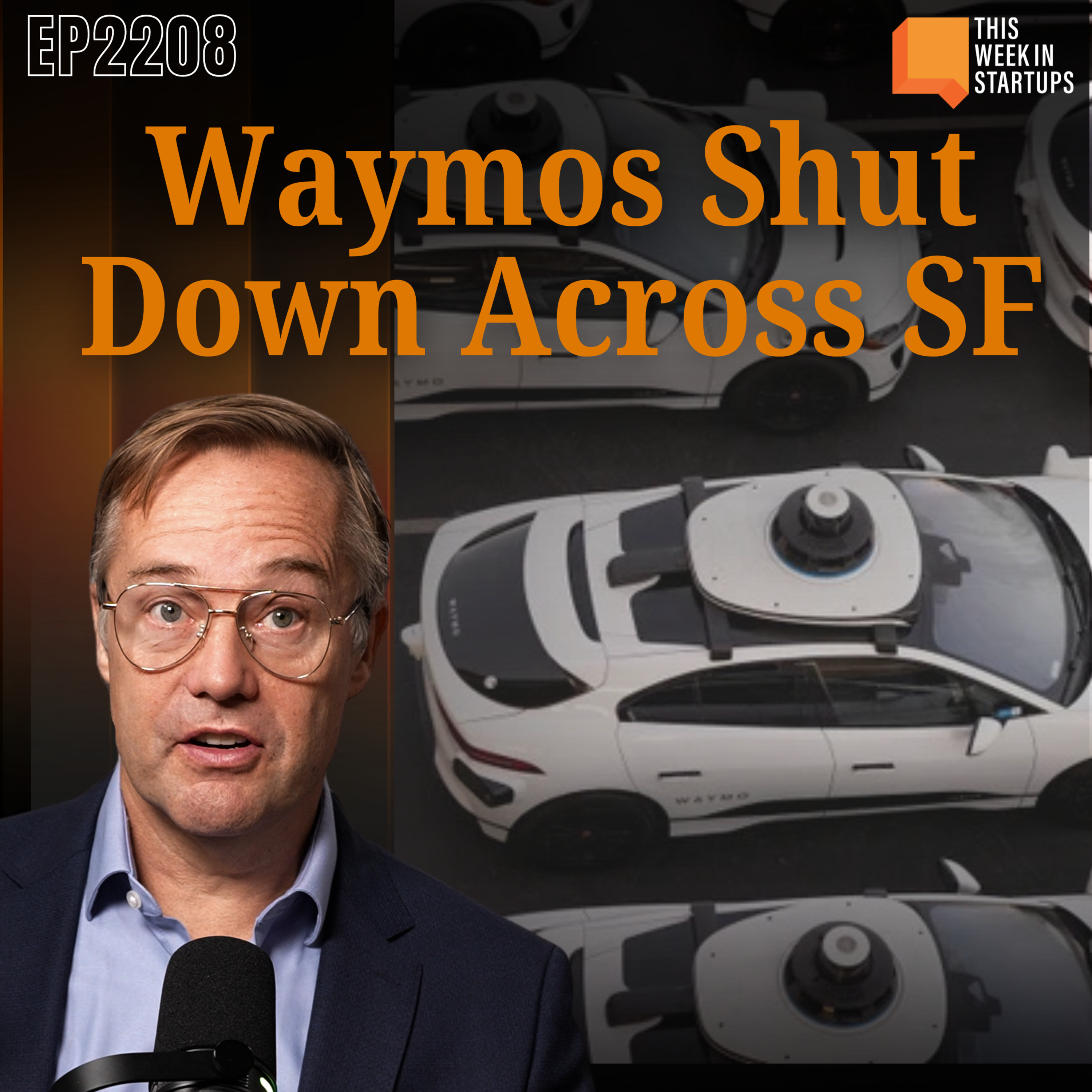
When investing in high-risk, long-development categories like autonomous vehicles, the key signal is undeniable consumer pull. Once Waymo became the preferred choice in San Francisco, it validated the investment thesis despite a decade of development and high costs.
![David George - Building a16z Growth, Investing Across the AI Stack, and Why Markets Misprice Growth - [Invest Like the Best, EP.450] thumbnail](https://megaphone.imgix.net/podcasts/8da7dbd8-ceeb-11f0-941c-ef83bcdd4c9f/image/d44107bc94719f78fbe91befb141073e.jpg?ixlib=rails-4.3.1&max-w=3000&max-h=3000&fit=crop&auto=format,compress)
While its technology is advanced, Waymo's most significant competitive advantage is its head start in securing regulatory permits to operate and charge for rides. Competitors like Amazon's Zoox are far behind, not yet able to take paid passengers. This regulatory moat creates a powerful first-mover advantage in lucrative urban markets.
Instead of building its own capital-intensive robotaxi fleet, Waive's go-to-market strategy is to sell its autonomous driving stack to major auto manufacturers. This software-centric approach allows them to leverage the scale, distribution, and hardware infrastructure of established OEMs to reach millions of consumers.

Contrary to displacement fears, driverless taxis like Waymo are carving out a new, expensive market segment. They cater to a different customer base—likely former private car users—thereby increasing overall demand for ride services rather than just cannibalizing the traditional taxi market.

Companies pursuing revolutionary technologies like autonomous driving (Waymo) or VR (Reality Labs) must endure over a decade of massive capital burn before profitability. This affirms venture capital's core role in funding these long-term, high-risk, high-reward endeavors.
ARK Invest projects an $8-10 trillion market for autonomous ride-hailing, dwarfing the current ~$60B market of Uber and Lyft. This isn't just about replacing drivers; it's about a 4x cost reduction per mile (from ~$1.10 to $0.25). This dramatic price drop will absorb the entire transportation market, not just the existing ride-hailing segment.

Instead of building its own AV tech or committing to one exclusive partner, Lyft is embracing a 'polyamorous' approach by working with multiple AV companies like Waymo, May Mobility, and Baidu. This de-risks their strategy, positioning them as an open platform that can integrate the best technology as it emerges, rather than betting on a single winner.

The transition from selling cars to operating a RoboTaxi network transforms Tesla's business model. A car sold for a one-time $4,000 profit could generate $200,000 in profit over a five-year period as an autonomous taxi. This 100x increase in lifetime value per unit represents a massive financial unlock for the company.

CEO David Risher describes Lyft's autonomous vehicle strategy as "polyamorous." Instead of betting on one technology partner, they are integrating with multiple AV companies like Waymo, May Mobility, and Baidu. This approach positions Lyft as the essential network for any AV provider to access riders, regardless of who builds the best car.