Get your free personalized podcast brief
We scan new podcasts and send you the top 5 insights daily.
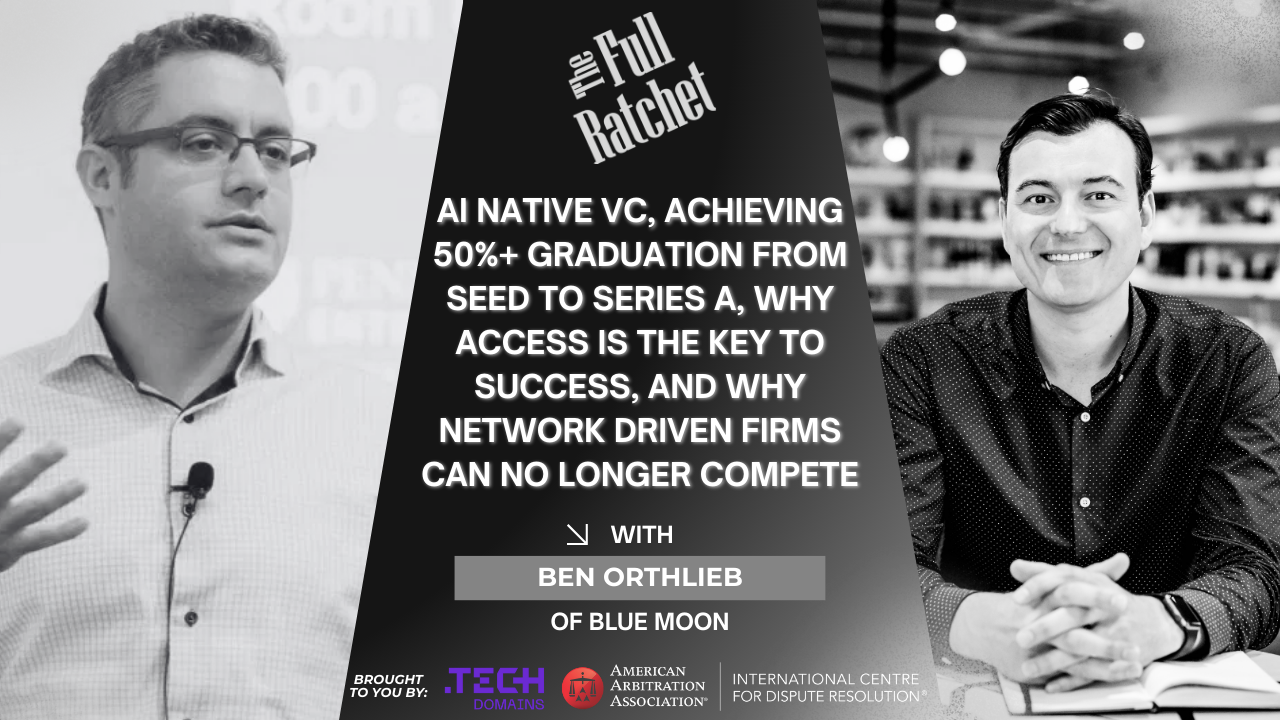
Achieving a top-decile graduation rate requires stacking multiple, distinct filters. Start with an algorithmic screen on founders to beat the market. Add a filter for co-investing with top VCs to improve further. The final layer is your own qualitative judgment to reach the target performance.
Related Insights
Sequoia quantifies its search for 'outlier founders' in statistical terms. An exceptional founder is three standard deviations above the mean in a key trait, but a true outlier is four. This statistical lens explains their high bar, reviewing around 1,000 companies for every single investment.
A simple framework to evaluate a VC's skill is the four 'D's'. They need proprietary Deal Flow, the ability to make good Decisions (initial investment), the conviction to Double Down on winners, and the discipline to generate Distributions (returns) for LPs.

Acknowledging venture capital's power-law returns makes winner-picking nearly impossible. Vested's quantitative model doesn't try. Instead, it identifies the top quintile of all startups to create a high-potential "pond." The strategy is then to achieve broad diversification within this pre-qualified group, ensuring they capture the eventual outliers.

Horowitz claims a VC firm's ability to win access to the most sought-after deals is more critical to success than its genius for picking winners. A strong brand that ensures access to competitive rounds can generate top-tier returns even with average picking ability.

By using an unsupervised machine learning model to filter thousands of teams based solely on founder profiles, a VC can significantly de-risk its pipeline. Investing in this pre-screened pool alone would yield a 24% graduation rate, far above the 14% market average, even before applying human judgment.
Horowitz claims that winning competitive deals is a much larger component of VC success than simply picking the right companies. A firm with a brand and platform that can consistently win the best deals will automatically generate top-tier returns, even with average picking ability. This attracts the best pickers over time, creating a flywheel.
'Gifted TVPI' comes from consensus deals with pedigreed founders who easily raise follow-on capital. 'Earned TVPI' comes from non-consensus founders whose strong metrics eventually prove out the investment. A healthy early-stage portfolio requires a deliberate balance of both.
Ben Horowitz argues that waiting a decade for fund outcomes is too slow. Instead, a16z judges investors "at the point of attack"—how good they are at finding and winning deals with exceptional founders. This focuses on decision quality in the present, not lagging indicators.

The majority of venture capital funds fail to return capital, with a 60% loss-making base rate. This highlights that VC is a power-law-driven asset class. The key to success is not picking consistently good funds, but ensuring access to the tiny fraction of funds that generate extraordinary, outlier returns.
True alpha in venture capital is found at the extremes. It's either in being a "market maker" at the earliest stages by shaping a raw idea, or by writing massive, late-stage checks where few can compete. The competitive, crowded middle-stages offer less opportunity for outsized returns.
