Get your free personalized podcast brief
We scan new podcasts and send you the top 5 insights daily.
An AI company is revolutionizing movie dubbing by analyzing the emotion in an actor's voice (e.g., angry, happy) and replicating that tone in the target language. This creates a more authentic viewing experience than traditional dubbing, which often sounds wooden and disconnected.

Related Insights
The company's founding insight stemmed from the poor quality of Polish movie dubbing, where one monotone voice narrates all characters. This specific, local pain point highlighted a universal desire for emotionally authentic, context-aware voice technology, proving that niche frustrations can unlock billion-dollar opportunities.

While most focus on human-to-computer interactions, Crisp.ai's founder argues that significant unsolved challenges and opportunities exist in using AI to improve human-to-human communication. This includes real-time enhancements like making a speaker's audio sound studio-quality with a single click, which directly boosts conversation productivity.
Not all AI video models excel at the same tasks. For scenes requiring characters to speak realistically, Google's VEO3 is the superior choice due to its high-quality motion and lip-sync capabilities. For non-dialogue shots, other models like Kling or Luma Labs can be effective alternatives.

For enterprise customers, a "good" translation goes far beyond literal accuracy. It must adhere to specific brand terminology, tone of voice, and even formatting rules like bolding and quotes. This complexity is why generic tools fail and specialized platforms are necessary for protecting brand integrity globally.

Language barriers have historically limited video reach. Meta AI's automatic translation and lip-sync dubbing for Reels allows marketers to seamlessly adapt content for different languages, removing the need for non-verbal videos or expensive localization and opening up new international markets.
A common objection to voice AI is its robotic nature. However, current tools can clone voices, replicate human intonation, cadence, and even use slang. The speaker claims that 97% of people outside the AI industry cannot tell the difference, making it a viable front-line tool for customer interaction.

A project is using advanced AI to translate content like 'SpongeBob' into Cherokee. This helps preserve a language rapidly losing its native speakers, tackling complex linguistic challenges like the absence of a direct word for "love" to keep the culture alive for the next generation.
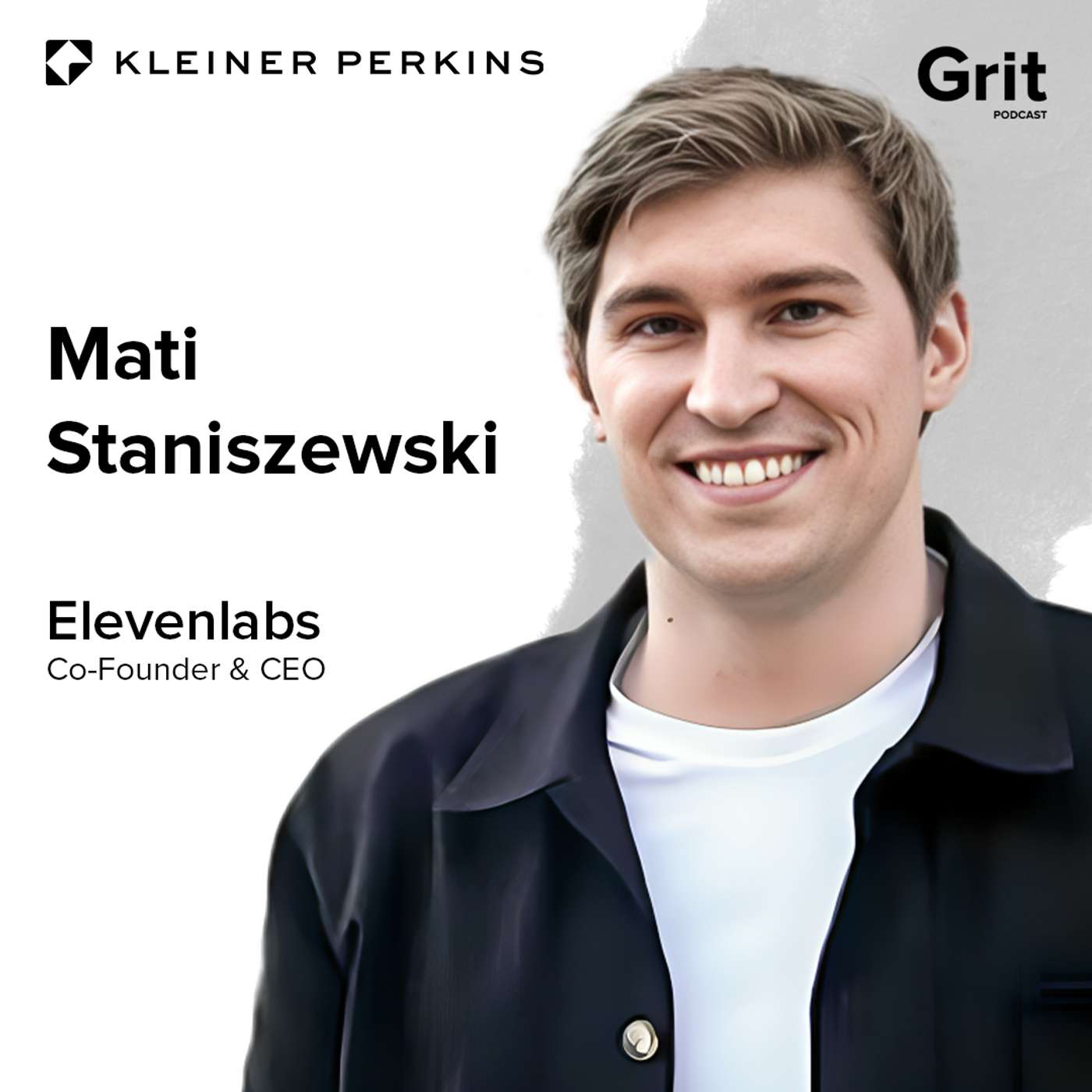
CEO Mati Staniszewski co-founded ElevenLabs after being frustrated by the Polish practice of dubbing foreign films with a single, monotonous voice. This hyper-specific, personal pain point became the catalyst for building a leading AI voice company, proving that massive opportunities can hide in niche problems.
Instagram's AI translation goes beyond captions; it dubs audio, alters the speaker's voice, and syncs lip movements to new languages. This allows creators to bypass the language barrier entirely, achieving the global reach previously reserved for silent or universally visual content without requiring additional production effort or cost.
ElevenLabs found that traditional data labelers could transcribe *what* was said but failed to capture *how* it was said (emotion, accent, delivery). The company had to build its own internal team to create this qualitative data layer. This shows that for nuanced AI, especially with unstructured data, proprietary labeling capabilities are a critical, often overlooked, necessity.