Get your free personalized podcast brief
We scan new podcasts and send you the top 5 insights daily.
Traditional software development is too costly for short-lived events like conferences or ski trips. AI agent platforms like Dreamer enable non-technical users to quickly build powerful, "episodic" applications that are highly useful for a limited time, solving a major cost-value mismatch for temporary needs.
Related Insights
Previously, the high cost of software development meant products needed to achieve scale to be successful. AI lowers this barrier, making it practical to build custom applications for very small, niche audiences (e.g., a Super Bowl app for 15 family members) that were never financially viable before.
The cost to run an autonomous AI coding agent is surprisingly low, reframing the value of developer time. A single coding iteration can cost as little as $3, meaning a complete feature built over 10 iterations could be completed for around $30, making complex software development radically more accessible.

An AI agent was used to build a functional internal CRM iPhone app in just two hours for approximately $150 in API costs. This highlights a massive ROI compared to traditional development, which would have required tens of thousands of dollars and months of work from an engineer.

The barrier to creating software is collapsing. Non-coders can now build sophisticated, personalized applications for specific workflows in under an hour. This points to a future where individuals and teams create their own disposable, custom tools, replacing subscriptions to numerous niche SaaS products.

AI agents like OpenClaw dramatically lower the barrier to creating software. Founders with no prior coding experience can now build complex applications simply by issuing conversational commands, effectively making software development feel 'free' and accessible to anyone with an idea.
A free trial for an AI agent hosting service revealed an unexpected user behavior: spinning up powerful AI agents for specific, time-bound tasks (like a coding project or planning a trip) and then letting them self-destruct. This concept of temporary agents opens up new possibilities beyond persistent personal assistants.

A design agency professional with no coding experience used the Moltbot agent to build 25 internal web services simply by describing the problems. This signals a paradigm shift where non-technical users can create their own hyper-personalized software, bypassing traditional development cycles and SaaS subscriptions.
Traditionally, building software required deep knowledge of many complex layers and team handoffs. AI agents change this paradigm. A creator can now provide a vague idea and receive a 60-70% complete, working artifact, dramatically shortening the iteration cycle from months to minutes and bypassing initial complexities.

The excitement around tools like OpenClaw stems from their ability to empower non-programmers to create custom software and workflows. This replicates the feeling of creative power previously exclusive to developers, unlocking a long tail of niche, personalized applications for small businesses and individuals who could never build them before.
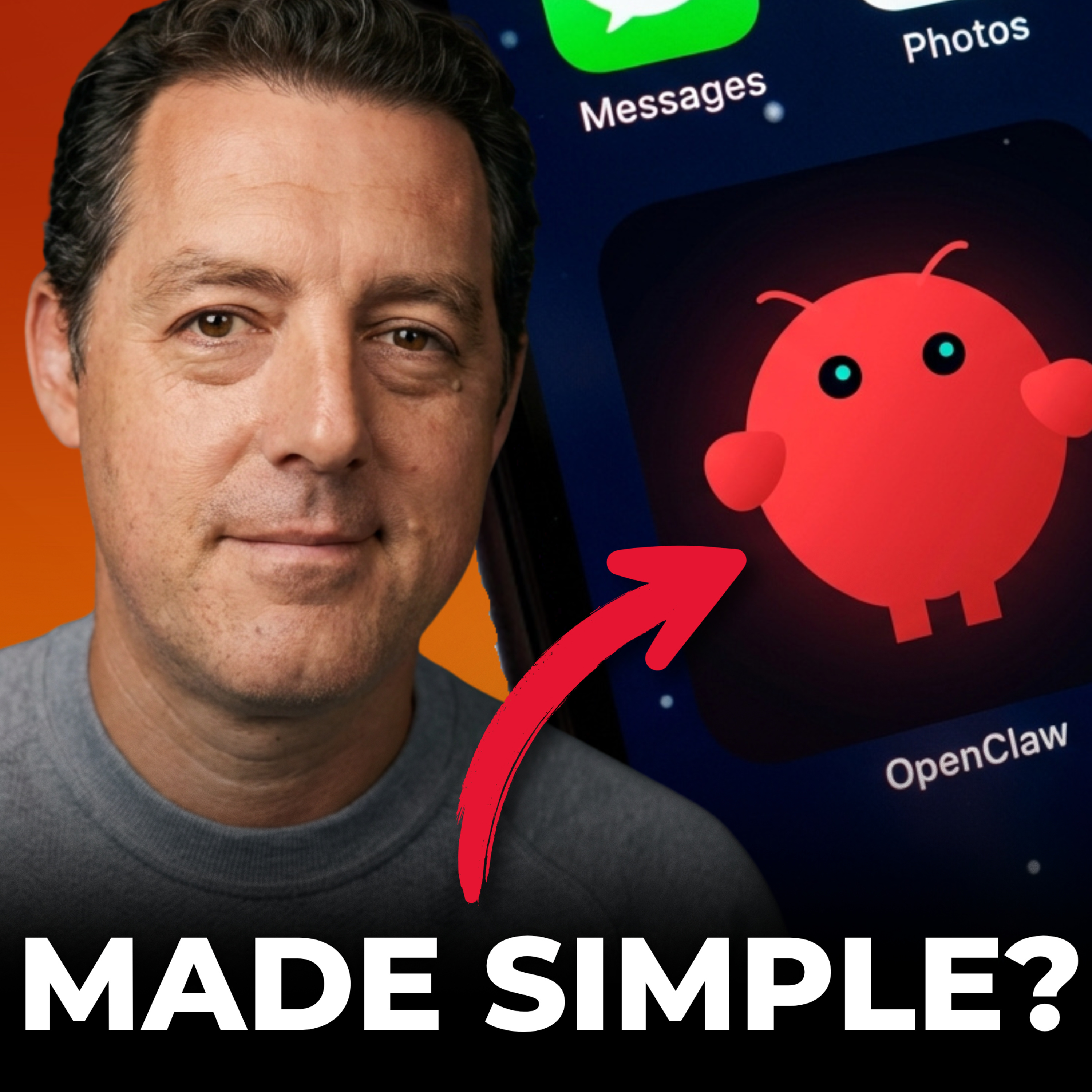
Non-technical users are leveraging agents like Moltbot to build their own hyper-personalized software. By simply describing a problem in natural language, they can create internal tools that perfectly solve their needs, eliminating the need to subscribe to many single-purpose SaaS applications.
