Get your free personalized podcast brief
We scan new podcasts and send you the top 5 insights daily.
An AI agent was used to build a functional internal CRM iPhone app in just two hours for approximately $150 in API costs. This highlights a massive ROI compared to traditional development, which would have required tens of thousands of dollars and months of work from an engineer.

Related Insights
For mature companies struggling with AI inference costs, the solution isn't feature parity. They must develop an AI agent so valuable—one that replaces multiple employees and shows ROI in weeks—that customers will pay a significant premium, thereby financing the high operational costs of AI.

The cost to run an autonomous AI coding agent is surprisingly low, reframing the value of developer time. A single coding iteration can cost as little as $3, meaning a complete feature built over 10 iterations could be completed for around $30, making complex software development radically more accessible.

Modern AI coding agents allow non-technical and technical users alike to rapidly translate business problems into functional software. This shift means the primary question is no longer 'What tool can I use?' but 'Can I build a custom solution for this right now?' This dramatically shortens the cycle from idea to execution for everyone.

The primary value of AI app builders isn't just for MVPs, but for creating disposable, single-purpose internal tools. For example, automatically generating personalized client summary decks from intake forms, replacing the need for a full-time employee.

A real business problem that had persisted for years, costing significant annual revenue, was fully solved in a single 30-minute session with an AI coding assistant. This demonstrates how AI can overcome the engineering resource scarcity that allows known, expensive issues to fester.

A design agency professional with no coding experience used the Moltbot agent to build 25 internal web services simply by describing the problems. This signals a paradigm shift where non-technical users can create their own hyper-personalized software, bypassing traditional development cycles and SaaS subscriptions.
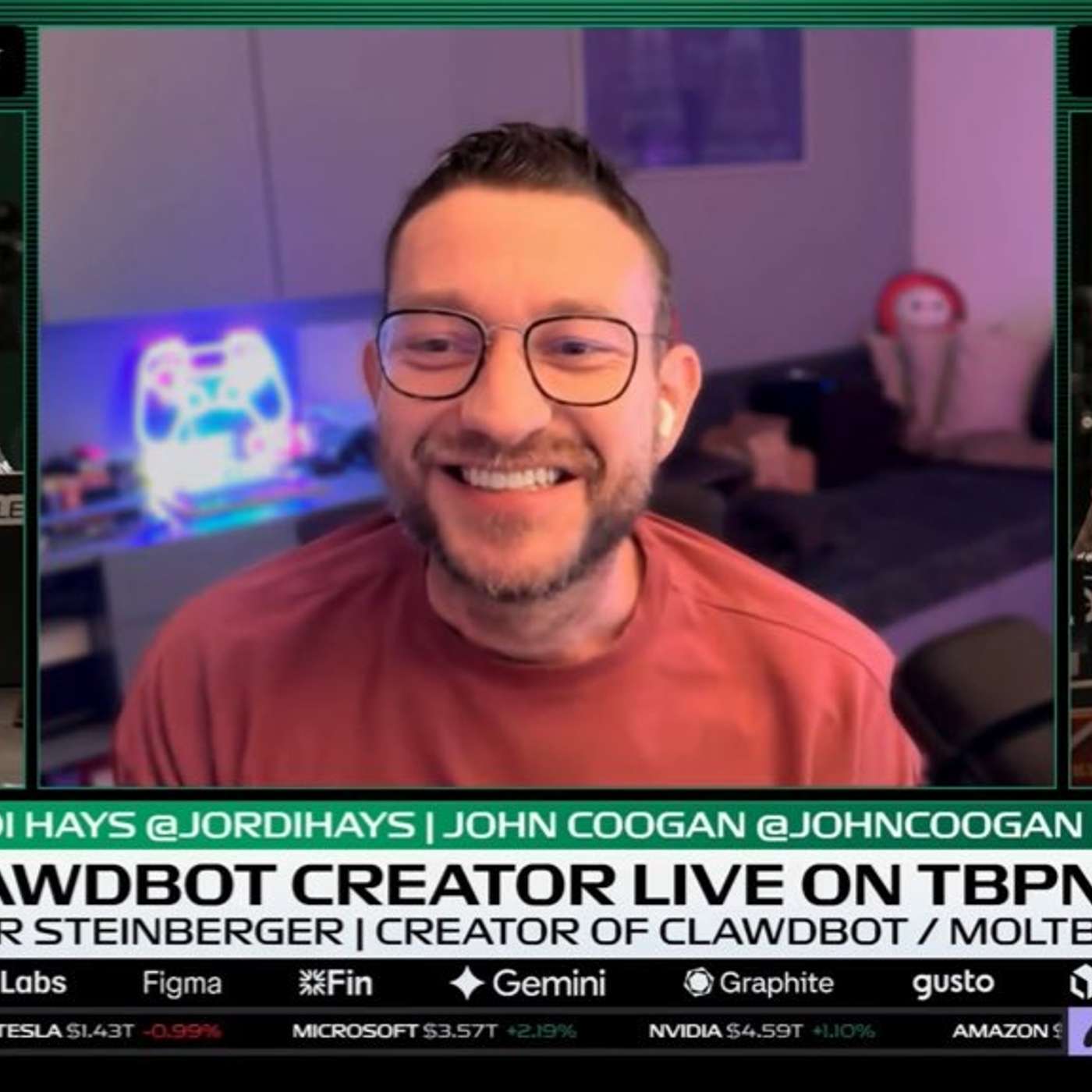
Traditionally, building software required deep knowledge of many complex layers and team handoffs. AI agents change this paradigm. A creator can now provide a vague idea and receive a 60-70% complete, working artifact, dramatically shortening the iteration cycle from months to minutes and bypassing initial complexities.

Instead of integrating with existing SaaS tools, AI agents can be instructed on a high-level goal (e.g., 'track my relationships'). The agent can then determine the need for a CRM, write the code for it, and deploy it itself.
Using AI platforms like Lovable, business leaders can build custom internal apps simply by describing what they want in plain English. The host created a bespoke org chart tool in 10 minutes, a process that previously required a lengthy and frustrating cycle with developers, showcasing a dramatic acceleration in productivity.
The new Spiral app, with its complex UI and multiple features, was built almost entirely by one person. This was made possible by leveraging AI coding agents like Droid and Claude, which dramatically accelerates the development process from idea to a beautiful, functional product.
