Get your free personalized podcast brief
We scan new podcasts and send you the top 5 insights daily.
Archer's acquisition of Boeing's InSitu is a strategic move to generate immediate cash flow in a capital-intensive industry. It also provides a smaller, operational drone platform to test advanced capabilities before deploying them on larger EVTOLs.

Related Insights
Instead of saturating a single major city, Archer plans to sell small batches of 20-50 aircraft across a thousand smaller markets. This 'breadth over depth' strategy avoids public backlash and regulatory bottlenecks, allowing them to build a massive business before tackling high-density urban air taxi services.

Hexion's decision to acquire technology capabilities rather than building them internally was driven by two factors: speed-to-market and de-risking commercialization. Buying a business with an existing or near-commercial product provides a significant head start and avoids the uncertainty of a long, internal development cycle.

Creating a new hardware category in a regulated space like aviation requires more than capital; it demands proactive government engagement to write new laws. Archer initiated efforts to establish the regulatory framework for its eVTOL aircraft, demonstrating the necessity of shaping policy for market creation.
To overcome a major barrier to adoption, flying car company Archer is designing its eVTOLs to be compatible with existing helicopter infrastructure. By fitting within the size, weight, and flight plan constraints of current helipads, the company avoids the massive capital expenditure and regulatory hurdles of building a new network of "VertiPorts."

Unlike typical cash-burning startups, Mana's new drone locations are contribution-positive from the start and achieve payback in 7-12 months. This allows the company to use debt, not just dilutive equity, to finance its physical expansion, creating a highly capital-efficient scaling model.
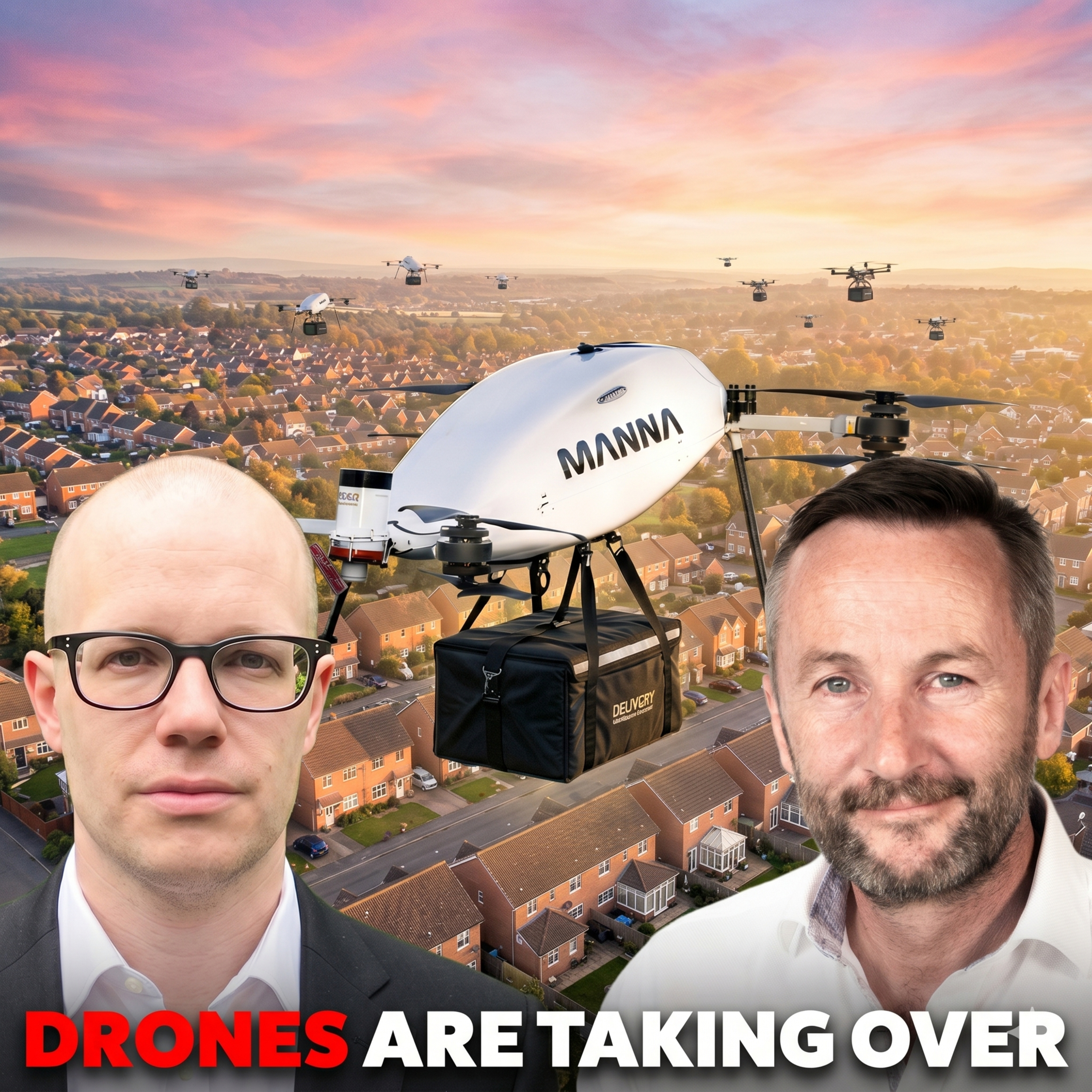
Instead of competing with giants like FedEx and DHL, some drone companies are offering them a white-labeled, fully integrated autonomous delivery system. This B2B model allows logistics operators to adopt drone technology without building it from scratch, treating it as an addition to their existing fleet.

Joby's business is extremely capital-intensive because they are vertically integrated 'down' to manufacturing components and 'up' to the customer-facing software. They strategically chose to go public early to secure the massive capital required to fund this full-stack approach, which includes commercial partnerships with Uber and Delta.
To de-risk its entry into the future of aviation, Flexjet invested in existing helicopter companies. This strategy allows them to gain critical operational expertise in short-distance aviation, safety, and logistics before committing heavily to unproven eVTOL technology.

Archer's strategy involves designing aircraft for both commercial and military applications from the start. This dual-use approach creates opportunities to shift manufacturing capacity based on demand, helping to re-industrialize both the civil and defense aviation sectors and providing strategic flexibility.
To secure a strategic foothold in the critical Los Angeles market, eVTOL company Archer Aviation purchased the Hawthorne private airport for ~$170 million. This gives them a base near LAX and SoFi Stadium, bordering Elon Musk's companies like SpaceX, creating a hub for the future of transportation.
