Get your free personalized podcast brief
We scan new podcasts and send you the top 5 insights daily.
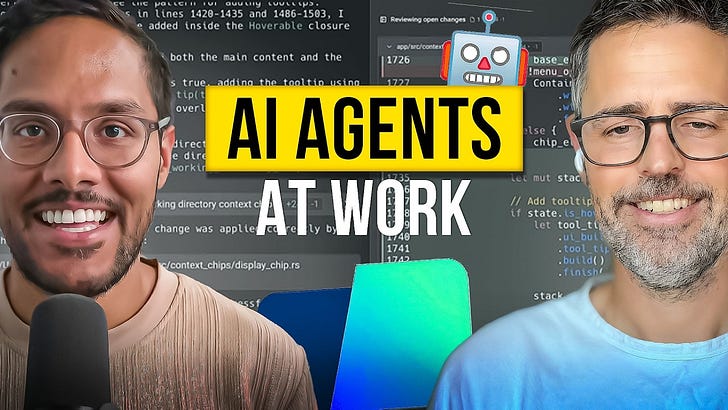
Artemis automates the analysis of product usage data by deploying AI agents instead of relying on manual session reviews. These agents identify points of customer friction and can even suggest new features to streamline workflows, turning a time-consuming process into a scalable, automated one.

Related Insights
To discover high-value AI use cases, reframe the problem. Instead of thinking about features, ask, "If my user had a human assistant for this workflow, what tasks would they delegate?" This simple question uncovers powerful opportunities where agents can perform valuable jobs, shifting focus from technology to user value.
In an AI-driven product org, traditional research methods like surveys are becoming obsolete. The new model involves automatically synthesizing diverse signals—product telemetry, customer service insights, user sentiment—to get near real-time, specific direction on the most important problems to solve.

Ramp built an AI agent that sifts through Gong recordings, Salesforce notes, support tickets, and chats to answer any product question. This automates the work of an entire team, turning days of research into an eight-minute query to identify key customer pain points and roadmap priorities.

AI can analyze a customer's support history to predict their behavior. For instance, if a customer consistently calls about shipping delays, an AI agent can proactively contact them with an update before they reach out, transforming a reactive, negative interaction into a positive customer experience.

The next frontier for AI in product is automating time-consuming but cognitively simple tasks. An AI agent can connect CRM data, customer feedback, and product specs to instantly generate a qualified list of beta testers, compressing a multi-week process into days.
To manage immense feedback volume, Microsoft applies AI to identify high-quality, specific, and actionable comments from over 4 million annual submissions. This allows their team to bypass low-quality noise and focus resources on implementing changes that directly improve the customer experience.

Expensive user research often sits unused in documents. By ingesting this static data, you can create interactive AI chatbot personas. This allows product and marketing teams to "talk to" their customers in real-time to test ad copy, features, and messaging, making research continuously actionable.

The most advanced analytics workflow moves beyond manual dashboards to scheduled AI agents. These agents analyze data, synthesize top insights and deviations, and automatically push a report into the team's Slack channel. This frees PMs from routine reporting to focus on strategic action.

Prioritize using AI to support human agents internally. A co-pilot model equips agents with instant, accurate information, enabling them to resolve complex issues faster and provide a more natural, less-scripted customer experience.

Reviewing user interaction data is the highest ROI activity for improving an AI product. Instead of relying solely on third-party observability tools, high-performing teams build simple, custom internal applications. These tools are tailored to their specific data and workflow, removing all friction from the process of looking at and annotating traces.