Get your free personalized podcast brief
We scan new podcasts and send you the top 5 insights daily.
The most advanced analytics workflow moves beyond manual dashboards to scheduled AI agents. These agents analyze data, synthesize top insights and deviations, and automatically push a report into the team's Slack channel. This frees PMs from routine reporting to focus on strategic action.

Related Insights
AI agents will automate PM tasks like competitive analysis, user feedback synthesis, and PRD writing. This efficiency gain could shift the standard PM-to-developer ratio from 1:6-10 to 1:20-30, allowing PMs to cover a much broader product surface area and focus on higher-level strategy.
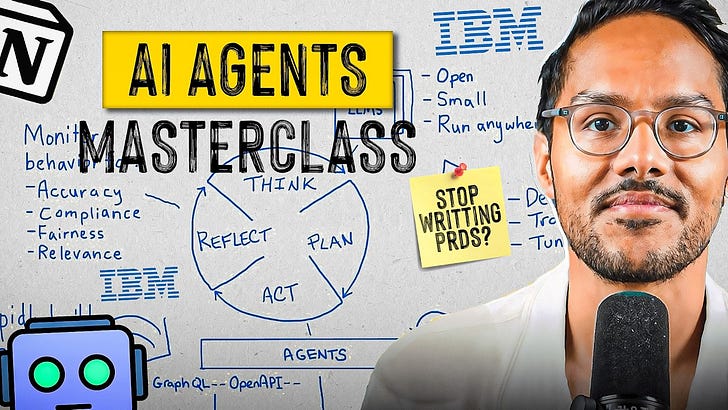
Integrate AI agents directly into core workflows like Slack and institutionalize them as the "first line of response." By tagging the agent on every new bug, crash, or request, it provides an initial analysis or pull request that humans can then review, edit, or build upon.
The biggest failure of BI tools is analysis paralysis. The most effective AI data platforms solve this by distilling all company KPIs into a single daily email or Slack message that contains one clear, unambiguous action item for the team to execute.

To elevate AI-driven analysis, connect it to unstructured data sources like Slack and project management tools. This allows the AI to correlate data trends with real-world events, such as a metric dip with a reported incident, mimicking how a senior human analyst thinks and providing deeper insights.

AI automates tactical tasks, shifting the PM's role from process management to de-risking delivery by developing deep customer insights. This allows PMs to spend more time confirming their instincts about customer needs, which engineering teams now demand.

AI-powered platforms transform how leaders consume insights. Instead of passively receiving periodic reports from a central analyst, leaders are empowered to pull real-time information on demand for immediate needs. This enables more timely decision-making without creating an analytical bottleneck.

By connecting AI coding agents like Claude Code to analytics platforms via MCP, product managers can automate weekly reporting, synthesize qualitative feedback, draft specs, and even generate code prototypes. This integrated stack covers the entire product lifecycle, from insight to initial implementation.
Walmart builds "orchestrator" AIs that act as project managers for other task-based agents (e.g., writing user stories). This system automates the product development lifecycle, from discovery to developer handoff, only alerting the human PM for key decisions or anomalies, dramatically boosting efficiency.

AI is transforming Product Portfolio Management (PPM) from a function reliant on periodic, presentation-heavy reviews into a real-time intelligence capability. Leaders can move beyond quarterly business reviews and use AI to query portfolio status, surface risks, and gain continuous visibility, enabling proactive decision-making.

Traditional automated dashboards are often ignored. AI-driven reporting is superior because it doesn't just present data; it actively analyzes it. The AI summarizes trends, generates relevant follow-up questions, and even attempts to answer them, ensuring that insights are never missed, even when stakeholders are busy.