Get your free personalized podcast brief
We scan new podcasts and send you the top 5 insights daily.
The founder of Heights Labs, a former math professor, deliberately rejects the 'move fast' mantra. Instead, he systematically learns and masters each business function—from product to sales. This patient, methodical approach enables his small team to successfully compete against a massive incumbent.

Related Insights
The fastest-growing founders achieve outlier results not by working more hours, but by operating differently. They identify the single biggest bottleneck (e.g., low sales close rate), generate high-volume opportunities to test it (e.g., five sales calls a day), and then iterate on their process with extreme speed (e.g., reviewing and shipping changes every two days).

The ideal founder archetype starts with deep technical expertise and product sense. They then develop exceptional business and commercial acumen over time, a rarer and more powerful combination than a non-technical founder learning the product.
![David George - Building a16z Growth, Investing Across the AI Stack, and Why Markets Misprice Growth - [Invest Like the Best, EP.450] thumbnail](https://megaphone.imgix.net/podcasts/8da7dbd8-ceeb-11f0-941c-ef83bcdd4c9f/image/d44107bc94719f78fbe91befb141073e.jpg?ixlib=rails-4.3.1&max-w=3000&max-h=3000&fit=crop&auto=format,compress)
Instead of rushing in, the founders spent over a decade preparing. Mike learned design at Ralph Lauren, and Alex learned finance on Wall Street. This patient, deliberate skill acquisition provided the foundation for their venture.

When facing a new business bottleneck, Ladder's CEO Greg Stewart enters a "cave" of intense, focused study to become an expert. He went from a non-creator to mastering the TikTok algorithm, demonstrating that founders can learn and execute on critical functions themselves without immediate hiring.
![Tom Digan & Greg Stewart - Building the World’s Best Fitness App - [Invest Like the Best, EP.454] thumbnail](https://megaphone.imgix.net/podcasts/8459013c-f00c-11f0-ac98-fbad2fe189ee/image/d99352e9439af266dbb87c1efac1299f.jpg?ixlib=rails-4.3.1&max-w=3000&max-h=3000&fit=crop&auto=format,compress)
Successful founders often exhibit a paradoxical blend of traits. They need the arrogance to believe they can disrupt incumbents. Simultaneously, they require the humility to do unglamorous, hands-on work—like personally delivering 1,000 packages—to deeply understand the problem they are solving.

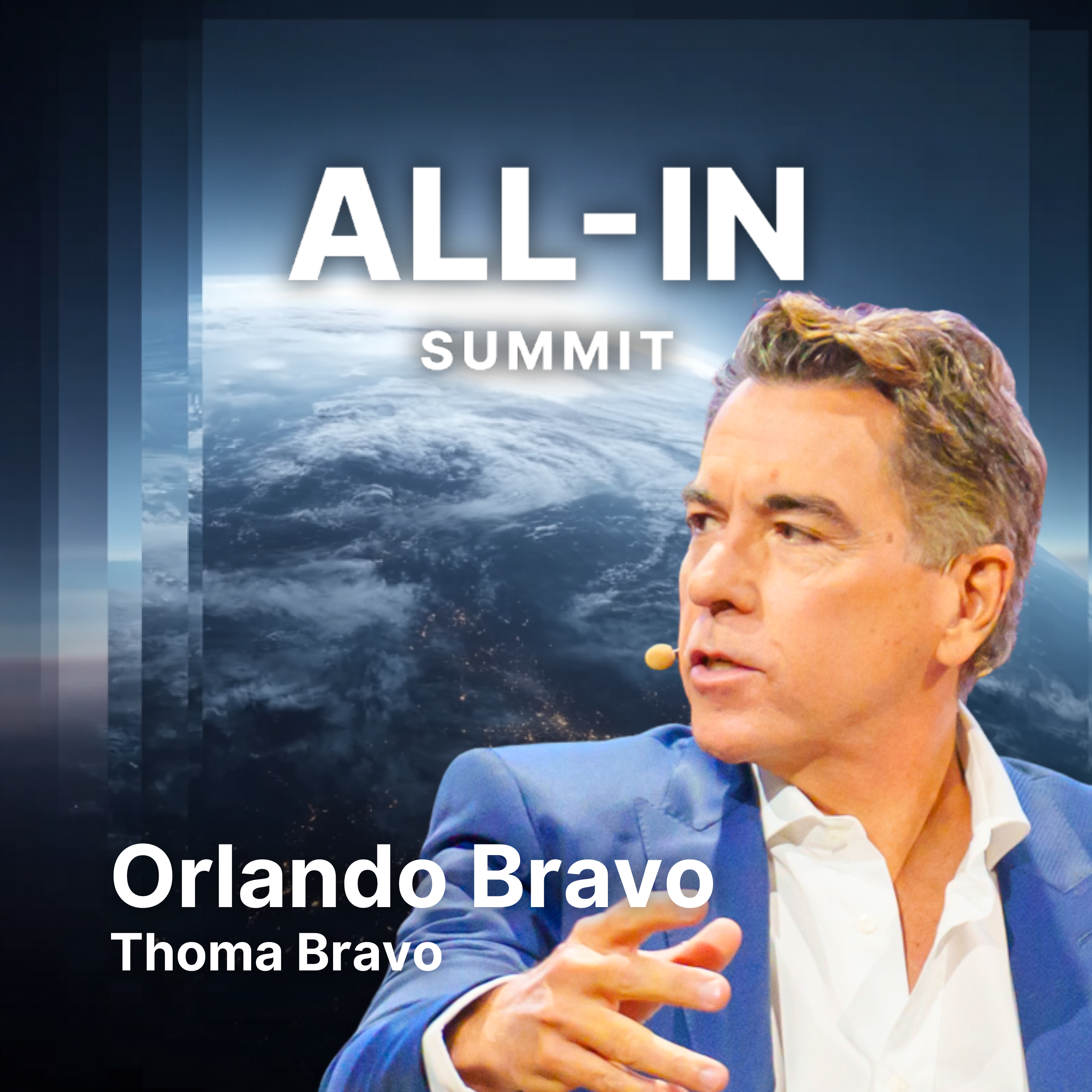
Contrary to the typical founder narrative of invention, Orlando Bravo emphasizes that his career was built on execution and disciplined learning. He actively listened to his mentors, absorbing their playbooks rather than trying to invent his own, suggesting apprenticeship can be a faster path to success.
The founder advocates for a sequential approach to company building. Early on, the sole focus is the product and customer happiness layer. Concerns like sales efficiency are layers to be addressed later, preventing the team from optimizing the wrong things too early.

Rapid startup success stories are misleading. A company's quick victory is almost always the result of its founder's decade-long journey of grinding, learning, and failing. The compounding effect of skills, credibility, and network building is the true engine behind the breakthrough moment.

The founder credits his success to transferable skills from professional football, specifically the meticulous attention to detail and obsessive application required to master a craft. This mindset, which involves consistently doing monotonous things well, is crucial for building a quality-focused business from the ground up.

The most successful founders rarely get the solution right on their first attempt. Their strength lies in persistence combined with adaptability. They treat their initial ideas as hypotheses, take in new data, and are willing to change their approach repeatedly to find what works.
