Get your free personalized podcast brief
We scan new podcasts and send you the top 5 insights daily.
The leader of Taiwan's KMT opposition party, a controversial figure seen as soft on Beijing, met with Xi Jinping partly as an internal power play. The meeting aimed to legitimize her authority within her own party, demonstrating how international diplomacy can serve domestic political goals.
Related Insights
Despite its military buildup, China's primary strategy for Taiwan is not a direct invasion, which remains highly difficult. Instead, President Xi Jinping favors a coerced diplomacy, aiming to squeeze Taiwan on all sides until it feels it has no choice but to accept a 'one country, two systems' model.
While Xi looms large, his foreign policy is largely consistent with the path set by his predecessors. He has capitalized on China's increased power to pursue established goals more intensely, but he has not radically changed the overall direction. Focusing only on him as an individual misses this continuity.

In authoritarian systems like China's, naming a successor creates an immediate alternative power center, leading to tension. Not naming one, however, risks a chaotic power struggle later. Xi Jinping appears to be choosing the latter risk, consolidating power now at the expense of future stability, a classic 'damned if you do, damned if you don't' scenario for autocratic rulers.

As a 'princeling,' Xi Jinping possesses an intuitive, inherited understanding of the Communist Party's hidden power networks. This allows him to surgically purge high-level opponents without getting 'zapped,' a feat his predecessors couldn't manage.
China is deploying a dual-track foreign policy: engaging in soft 'panda diplomacy' with Western powers like the UK and Canada through cultural outreach and visa-free travel, while simultaneously taking a hardline 'wolf warrior' stance with regional rivals like Japan over issues such as Taiwan and currency tensions. This flexible approach allows Beijing to selectively de-risk relationships.

Contrary to the perception of Taiwan as uniformly pro-independence, its government is politically divided. While the prime minister is pro-independence, the parliament is controlled by the KMT party, which now advocates for reunification with mainland China, creating an internal political avenue for Beijing's influence.
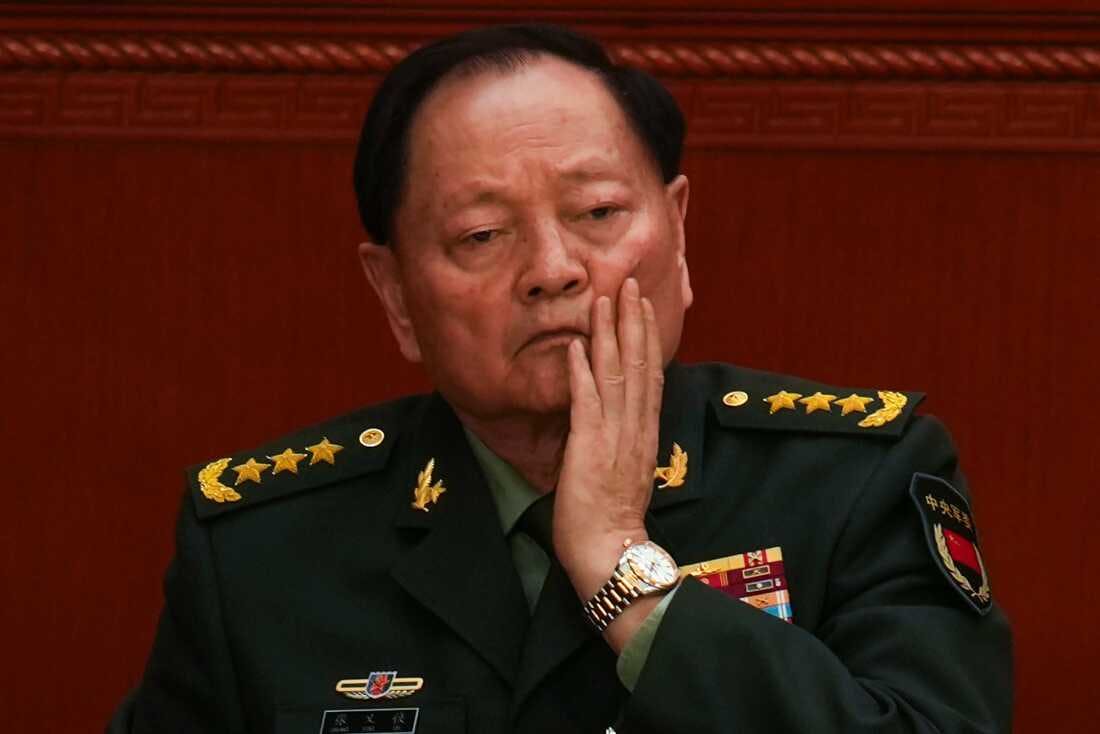
The official narrative of China's top general leaking nuclear secrets is likely a cover for a deeper power struggle between President Xi and the military establishment. The ongoing purges are a sign of internal conflict for control, making an invasion of Taiwan less likely due to a destabilized command structure.

Xi Jinping's willingness to decapitate his military leadership suggests he feels secure about the external environment. He perceives no immediate crisis over Taiwan, giving him the political space to conduct a thorough and disruptive internal consolidation.
President Xi Jinping used a phone call with President Trump not just for bilateral issues, but to strategically signal displeasure with Japan's hawkish stance on Taiwan. This "shadow play" diplomacy shows China leveraging its relationship with the U.S. to indirectly manage and warn other nations, making the U.S. a channel for its geopolitical messaging.

China concentrates its diplomatic and military resources on regions crucial to its core interests—its immediate neighbors like Taiwan and Japan. This long-standing "periphery diplomacy" explains its choice to use economic leverage, rather than direct intervention, in more distant conflicts like Iran.
