Get your free personalized podcast brief
We scan new podcasts and send you the top 5 insights daily.
Current AI offers 'assisted decisions' for complex logistics, relying on approximations for NP-hard problems like vehicle routing. The transition to truly self-operating systems depends on quantum computing. Its ability to find optimal, precise solutions in real-time for problems with countless variables will eliminate the need for human oversight and the inaccuracies of approximation.

Related Insights
Rather than just replacing drivers, autonomy will allow logistics to operate 24/7 during the midnight-to-8am "third shift." This will dramatically increase the world's operational intensity and create new demand as automation drives down costs and enables services that were previously too expensive.

The future of AI is not a single all-knowing model, but a "router" model that triages requests to a suite of specialized expert AIs (e.g., doctor, programmer). The primary technical and business challenge will shift to building the most efficient and accurate routing system, which will determine market leadership.
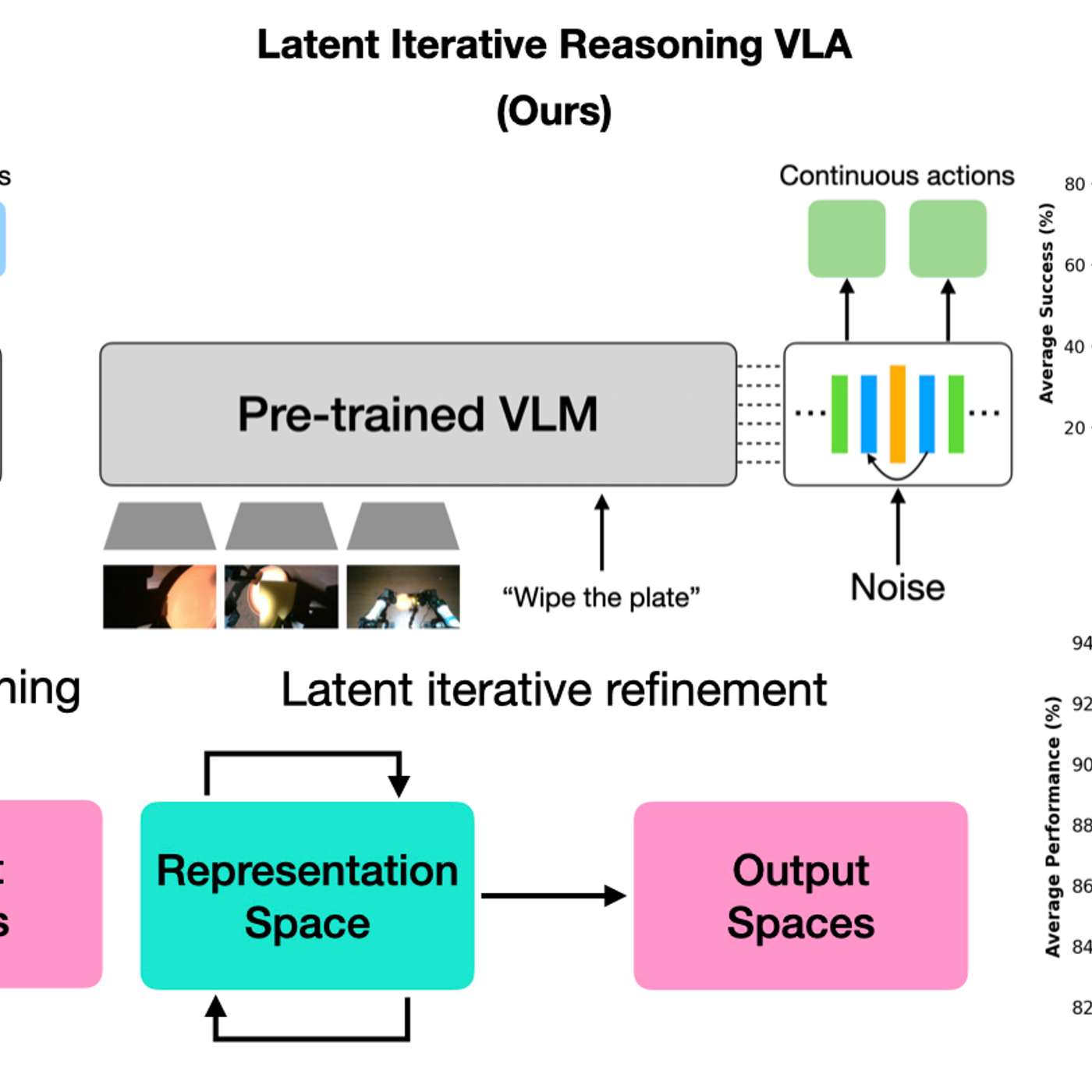
A new model architecture allows robots to vary their internal 'thinking' iterations at test time. This lets practitioners trade response speed for decision accuracy on a case-by-case basis, boosting performance on complex tasks without needing to retrain the model.
Rivian's CEO explains that early autonomous systems, which were based on rigid rules-based "planners," have been superseded by end-to-end AI. This new approach uses a large "foundation model for driving" that can improve continuously with more data, breaking through the performance plateau of the older method.

Today's routing algorithms use approximations for complex scenarios. Praveen Murugesan explains that quantum computing could provide precise, optimal solutions by processing immense variables like real-time traffic across thousands of stops and multiple vehicles, moving beyond predictive models.

Unlike pre-programmed industrial robots, "Physical AI" systems sense their environment, make intelligent choices, and receive live feedback. This paradigm shift, similar to Waymo's self-driving cars versus simple cruise control, allows for autonomous and adaptive scientific experimentation rather than just repetitive tasks.
The evolution from simple voice assistants to 'omni intelligence' marks a critical shift where AI not only understands commands but can also take direct action through connected software and hardware. This capability, seen in new smart home and automotive applications, will embed intelligent automation into our physical environments.
Despite hype around its potential to solve famously complex problems like the "traveling salesman," experts in the field caution that the number of actual, practical problems quantum computing can currently solve is extremely small. The gap between its theoretical power and tangible business application remains vast, making its near-term commercial impact questionable.

A symbiotic relationship exists between AI and quantum computing, where AI is used to significantly speed up the optimization and calibration of quantum machines. By automating solutions to the critical 'noise' and error-rate problems, AI is shortening the development timeline for achieving stable, powerful quantum computers.

The primary impact of quantum computing won't just be faster calculations. It will be its ability to generate entirely new insights into complex systems like molecules—knowledge that is currently out of reach. This new data can then be fed into AI models, creating a powerful synergistic loop of discovery.
