Get your free personalized podcast brief
We scan new podcasts and send you the top 5 insights daily.
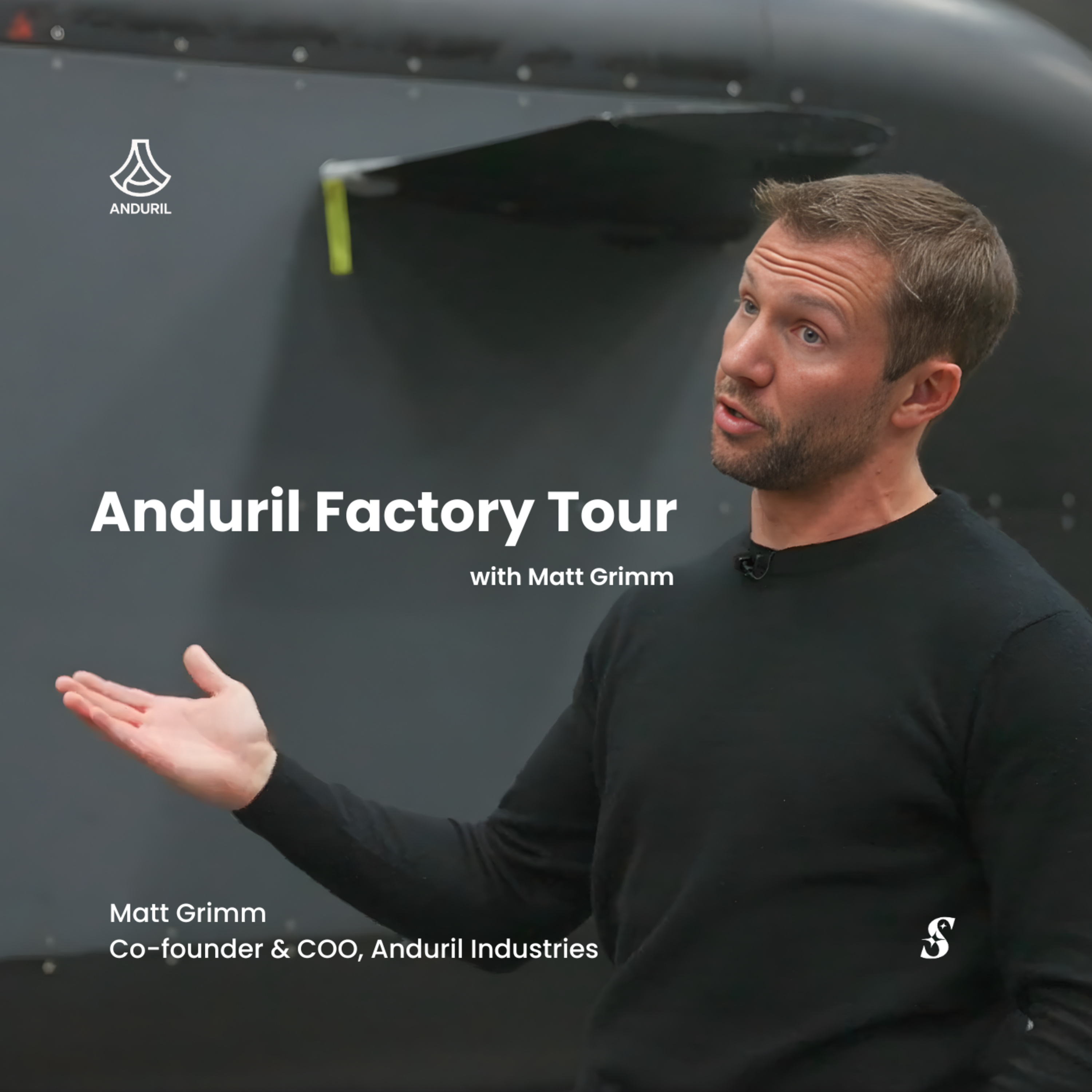
Anduril prioritizes a specific cultural mindset in hiring. They seek entrepreneurial, mission-driven people who instinctively ask 'How do we make it go right?' rather than 'What can go wrong?'. This positive, ambitious worldview is considered the core driver of the company's ability to tackle massive, complex programs.
Related Insights
Prioritizing a candidate's skills ('capacity') over their fit with the team ('chemistry') is a mistake. To scale culture successfully, focus on hiring people who will get along with their colleagues. The ability to collaborate and integrate is more critical for long-term success than a perfect resume.

Organizational success depends less on high-profile 'superstars' and more on 'Sherpas'—generous, energetic team players who handle the essential, often invisible, support work. When hiring, actively screen for generosity and positive energy, as these are the people who enable collective achievement.

Many leaders hire defensively, trying to avoid a costly mistake. This fear-based mindset leads to negative assumptions and misinterpretations of candidate signals. Shifting to an abundance mindset—believing the right person is out there—fosters curiosity and leads to better evaluation and hiring outcomes.

The ideal early startup employee has an extreme bias for action and high agency. They identify problems and execute solutions without needing approvals, and they aren't afraid to fail. This contrasts sharply with candidates from structured environments like consulting, who are often more calculated and risk-averse.

Hiring for "cultural fit" can lead to homogenous teams and groupthink. Instead, leaders should seek a "cultural complement"—candidates who align with core values but bring different perspectives and experiences, creating a richer and more innovative team alchemy.

In a fast-moving environment, Larroudé prioritizes hiring people who admit what they don't know rather than bluffing. They also seek candidates who, when in crisis, proactively look for solutions instead of panicking. These traits, combined with non-negotiable ethics, indicate success in a scrappy culture.

When contractors complain they can't find good people, it's often a culture problem, not a talent shortage. A great workplace turns existing employees into recruiters who attract other high-quality talent from their networks, creating a self-sustaining recruitment pipeline.

The company's leadership philosophy, borrowed from Palantir, is to hire highly opinionated and sometimes difficult talent. While this feels chaotic, these individuals are essential for innovation and adaptation, unlike talent that merely optimizes existing, stable systems.
The common practice of hiring for "culture fit" creates homogenous teams that stifle creativity and produce the same results. To innovate, actively recruit people who challenge the status quo and think differently. A "culture mismatch" introduces the friction necessary for breakthrough ideas.

Beyond IQ and EQ, interview for 'Resilience Quotient' (RQ)—the ability to persevere through setbacks. A key tactic is to ask candidates about their proudest achievement, then follow up with, 'What would you do differently?' to see how they navigated strife and learned from it.
