Get your free personalized podcast brief
We scan new podcasts and send you the top 5 insights daily.
To understand how users would naturally interact with their agent, Linear quietly replaced its procedural Slack bot with the new AI. This revealed unexpected behaviors, like users simply typing "@linear do the right thing," providing invaluable real-world usage data.

Related Insights
The real power of AI in a shared space like Slack is not just individual productivity. When colleagues observe each other's prompts and workflows, it creates a viral learning loop. This public interaction spreads best practices and up-levels the entire organization's AI competency.

Shopify built an AI agent named River that works exclusively in public Slack channels, never in DMs. This forces collaboration into the open, allowing 6,000 employees to watch and learn from each other's interactions with the AI, accelerating company-wide adoption and skill development.

Instead of pre-engineering tool integrations, Block lets its AI agent Goose learn by doing. Successful user-driven workflows can be saved as shareable "recipes," allowing emergent capabilities to be captured and scaled. They found the agent is more capable this way than if they tried to make tools "Goose-friendly."

Instead of a rigid roadmap, Lindy's team observes unexpected, proactive suggestions from the AI—like offering recruiting help after a meeting. This allows the agent's emergent behavior to guide future development and reveal new, valuable use cases organically.

Instead of confining users to its app, Linear's first homegrown agent was built for Slack's interface. This user-centric strategy embeds workflows into existing habits—like summarizing a long Slack thread into tickets—acknowledging that work happens across an ecosystem of tools.

By building internal AI agents directly into Slack, their usage becomes public and visible. This visibility is key for driving adoption; seeing a bot turn a message into a PR creates a "holy shit" moment that sparks curiosity and makes others want to use the tool, creating a natural viral effect.

By launching their internal agent in a single company-wide Slack channel, Perplexity enabled employees to see each other's prompts and use cases. This created a powerful cross-pollination of ideas and accelerated learning on how to best leverage the new tool for collaborative work.

A chatbot is a necessary interface for multi-turn interactions but shouldn't be the primary entry point. The most effective domain-specific agents are accessible from natural "on-ramps" within a user's existing workflow, such as a Slack conversation or a meeting summary.
The AI agent is designed to act like a human team member within existing systems. It performs bi-directional updates in tools like Jira or Linear—adding comments, changing statuses, and assigning tickets. This seamless integration ensures human teams maintain visibility and that established processes aren't disrupted.
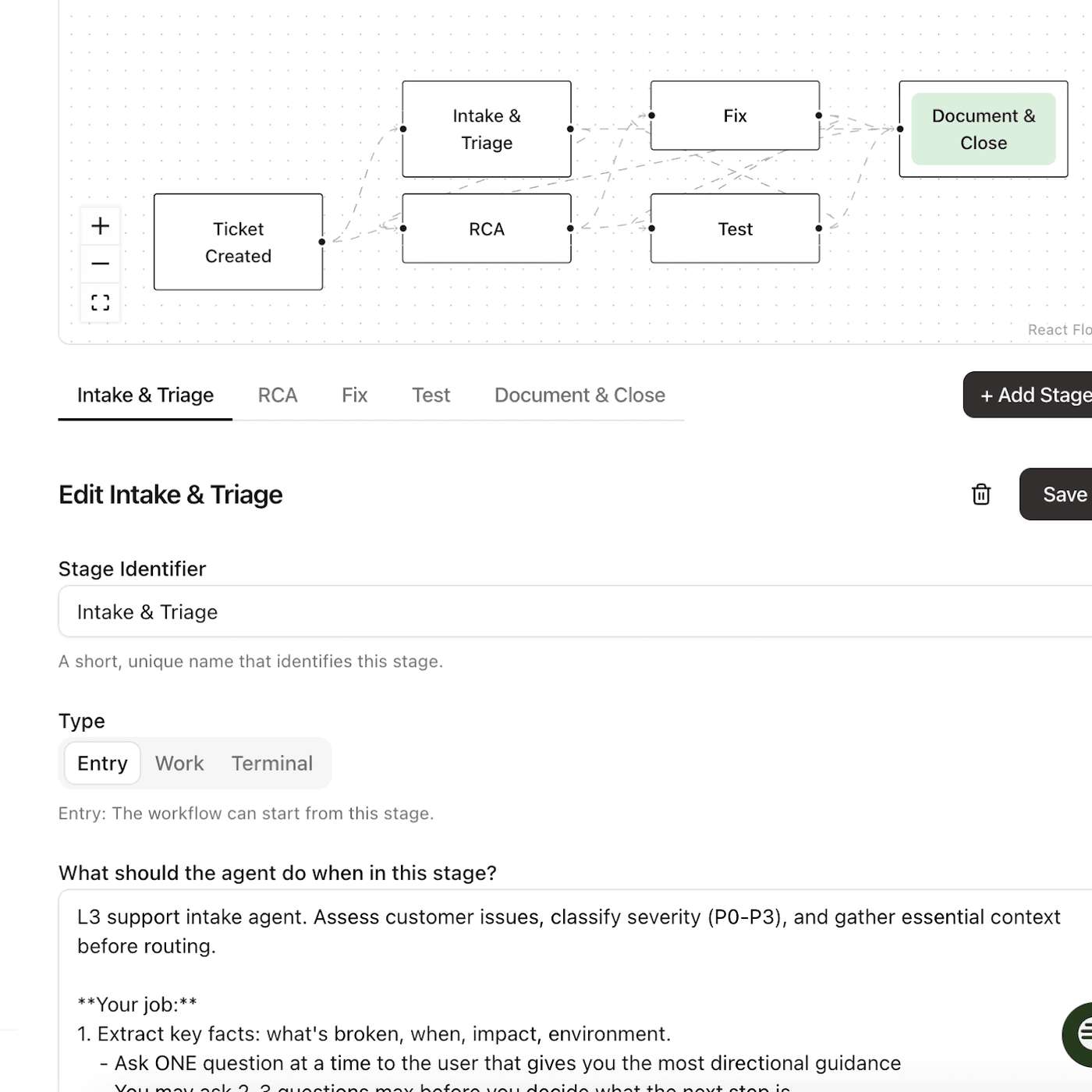
To drive adoption of AI agents, don't force users into a new application. Instead, integrate the agent directly into their existing collaboration tools like Slack. This approach reduces friction and makes the agent feel like a natural part of the team, leading to higher engagement and user satisfaction.
