Get your free personalized podcast brief
We scan new podcasts and send you the top 5 insights daily.
Instead of confining users to its app, Linear's first homegrown agent was built for Slack's interface. This user-centric strategy embeds workflows into existing habits—like summarizing a long Slack thread into tickets—acknowledging that work happens across an ecosystem of tools.

Related Insights
The next generation of software may lack traditional user interfaces. Instead, they will be 'API-first' or 'agent-first,' integrating directly into existing workflows like Slack or email. Software will increasingly 'visit the user' rather than requiring the user to visit a dashboard.

Building a bespoke communication layer for multiple AI agents is a complex "scaffolding" problem. A simpler, more direct solution is to treat agents as digital coworkers, assigning them accounts on existing platforms like Slack or Google Docs, enabling them to interact using established human workflows.
The most effective way to build with AI agent tools is to treat the AI as an employee in a chat interface like Slack. Give it high-level goals and provide feedback on its output in natural language, allowing it to iteratively reconfigure and improve the business automation.

User workflows rarely exist in a single application; they span tools like Slack, calendars, and documents. A truly helpful AI must operate across these tools, creating a unified "desired path" that reflects how people actually work, rather than being confined by app boundaries.

By building internal AI agents directly into Slack, their usage becomes public and visible. This visibility is key for driving adoption; seeing a bot turn a message into a PR creates a "holy shit" moment that sparks curiosity and makes others want to use the tool, creating a natural viral effect.

While Linear started by creating a platform for third-party agents, they found they couldn't control or improve the end-to-end user experience. This limitation prompted them to build their own coding agent to create a smoother, more integrated workflow where context is automatically injected.

To maximize an AI agent's effectiveness, treat it like a team member, not just a tool. Integrate it directly into your company's communication and project management systems (like Slack). This ensures the agent has the full context necessary to perform its tasks.
Furcon designed his AI agent platform, Nebula, to look and feel like Slack. This familiar messaging interface makes it easier for non-technical users to delegate complex tasks to AI agents, lowering the barrier to entry for powerful automation.
The AI agent is designed to act like a human team member within existing systems. It performs bi-directional updates in tools like Jira or Linear—adding comments, changing statuses, and assigning tickets. This seamless integration ensures human teams maintain visibility and that established processes aren't disrupted.
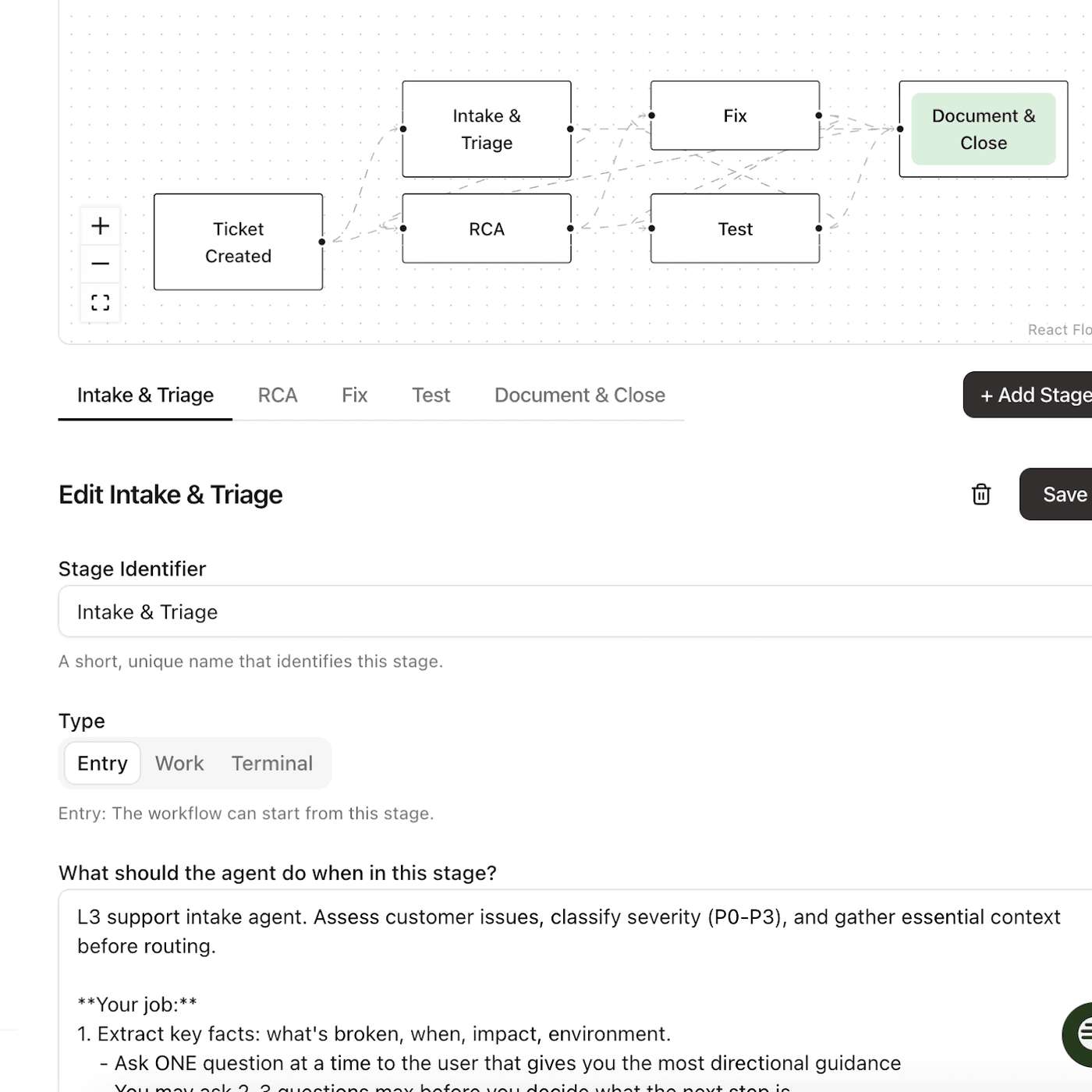
To drive adoption of AI agents, don't force users into a new application. Instead, integrate the agent directly into their existing collaboration tools like Slack. This approach reduces friction and makes the agent feel like a natural part of the team, leading to higher engagement and user satisfaction.
