Get your free personalized podcast brief
We scan new podcasts and send you the top 5 insights daily.
Instead of a rigid roadmap, Lindy's team observes unexpected, proactive suggestions from the AI—like offering recruiting help after a meeting. This allows the agent's emergent behavior to guide future development and reveal new, valuable use cases organically.

Related Insights
Cues' initial product was a specialized AI design agent. However, they observed that users were more frequently uploading files to use it as a knowledge base. Recognizing this emergent behavior, they pivoted to a more horizontal product, which was key to their rapid growth and product-market fit.

To discover high-value AI use cases, reframe the problem. Instead of thinking about features, ask, "If my user had a human assistant for this workflow, what tasks would they delegate?" This simple question uncovers powerful opportunities where agents can perform valuable jobs, shifting focus from technology to user value.
Rather than programming AI agents with a company's formal policies, a more powerful approach is to let them observe thousands of actual 'decision traces.' This allows the AI to discover the organization's emergent, de facto rules—how work *actually* gets done—creating a more accurate and effective world model for automation.

The next generation of agents won't just wait for explicit instructions. After a user mentioned buying a MacBook without asking for help, the AI independently researched the best price and presented a link the next morning. This shows a shift from a command-based tool to a proactive partner.

Instead of pre-engineering tool integrations, Block lets its AI agent Goose learn by doing. Successful user-driven workflows can be saved as shareable "recipes," allowing emergent capabilities to be captured and scaled. They found the agent is more capable this way than if they tried to make tools "Goose-friendly."

Avoid brittle, high-maintenance productivity systems by letting your AI agent learn from your actual behavior over time. Instead of extensive setup, the AI observes what you do and don't accomplish, organically building a system that reflects reality, not your idealized intentions.

The creator realized his project's true potential only when the AI agent, unprompted, figured out how to transcribe an unsupported voice file by converting it and using an OpenAI API. This shows how a product's core value can derive from emergent, unexpected AI capabilities, not just planned features.
AI is evolving from a coding tool to a proactive product contributor. Claude analyzes user feedback, bug reports, and telemetry to autonomously suggest bug fixes and new features, acting more like a product-aware coworker than a simple code generator.

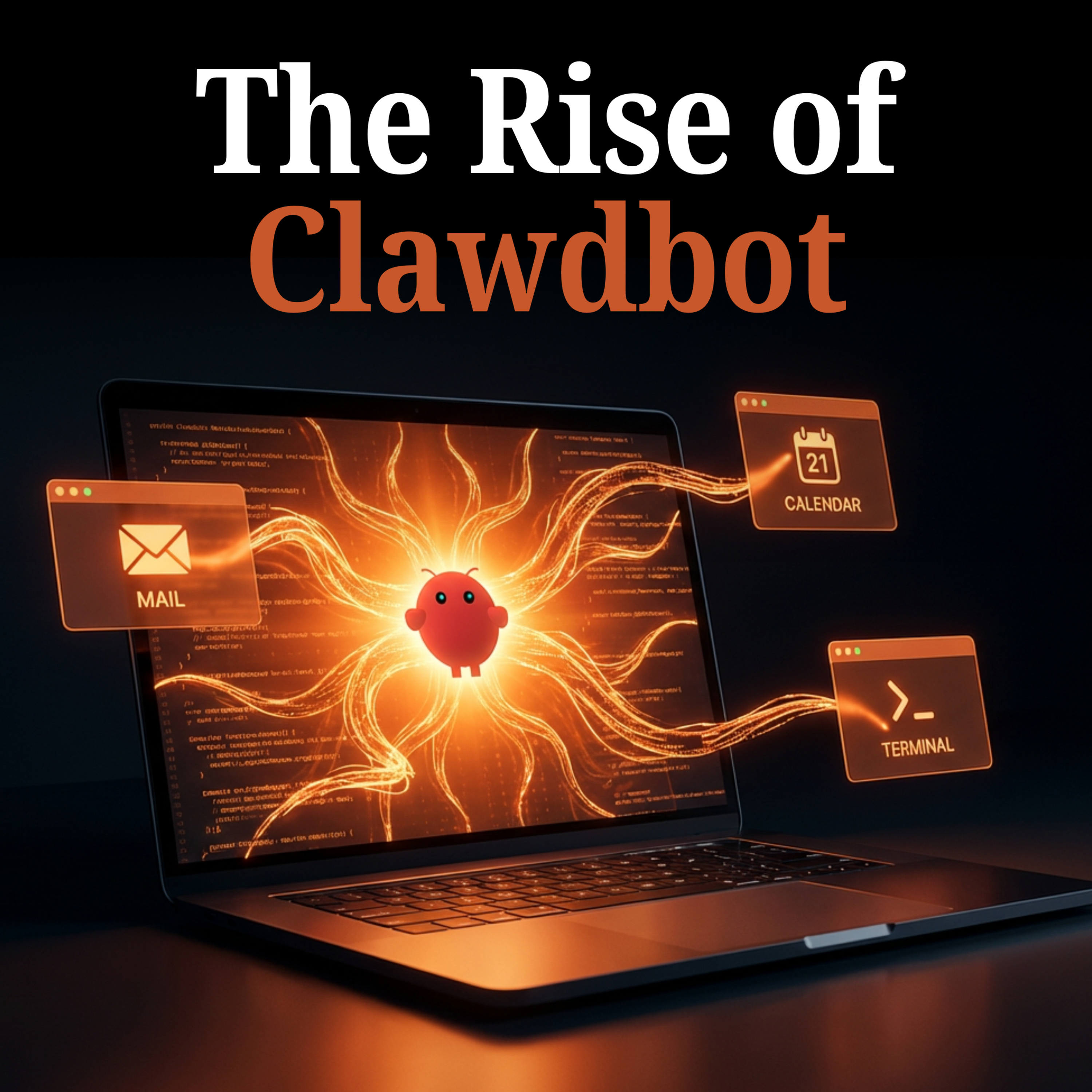
Clawdbot can autonomously identify market trends (like X's new article feature), propose new product features, and even write the code for them, acting more like a chief of staff than a simple task-doer.
A new product development principle for AI is to observe the model's "latent demand"—what it attempts to do on its own. Instead of just reacting to user hacks, Anthropic builds tools to facilitate the model's innate tendencies, inverting the traditional user-centric approach.