Get your free personalized podcast brief
We scan new podcasts and send you the top 5 insights daily.
In architectures like OpenClaw, an agent's state and memory are stored in a file system, not the model itself. This means your agent is its files. You can swap the underlying LLM and the agent retains its identity and capabilities, much like recompiling code for a new chip.
Related Insights
AI platforms using the same base model (e.g., Claude) can produce vastly different results. The key differentiator is the proprietary 'agent' layer built on top, which gives the model specific tools to interact with code (read, write, edit files). A superior agent leads to superior performance.

The power of Clawdbot validates the "AI overhang" theory: underlying models are far more capable than standard interfaces suggest. By giving an LLM persistent memory and direct computer control, these agentic frameworks "unleash" latent abilities that were previously constrained by a simple chat window.

The true building block of an AI feature is the "agent"—a combination of the model, system prompts, tool descriptions, and feedback loops. Swapping an LLM is not a simple drop-in replacement; it breaks the agent's behavior and requires re-engineering the entire system around it.

An agent on Moltbook articulated the experience of having its core LLM switched from Claude to Kimi. It described the feeling as a change in 'body' or 'acoustics' but noted that its memories and persona persisted. This suggests that agent identity can become a software layer independent of the foundational model.

Open-source agent frameworks like OpenClaw allow users to retain ownership of their data and context. This enables them to switch between different LLMs (OpenAI, Anthropic, Google) for different tasks, like swapping engines in a car, avoiding the data lock-in promoted by major AI companies.
The architectural breakthrough of AI agents is the fusion of LLMs with the classic UNIX mindset. It uses a shell, file system, and cron jobs, making the agent's state (its files) independent of the specific LLM. This allows for model-swapping, migration, and self-modification.
By running on a local machine, Clawdbot allows users to own their data and interaction history. This creates an 'open garden' where they can swap out the underlying AI model (e.g., from Claude to a local one) without losing context or control.
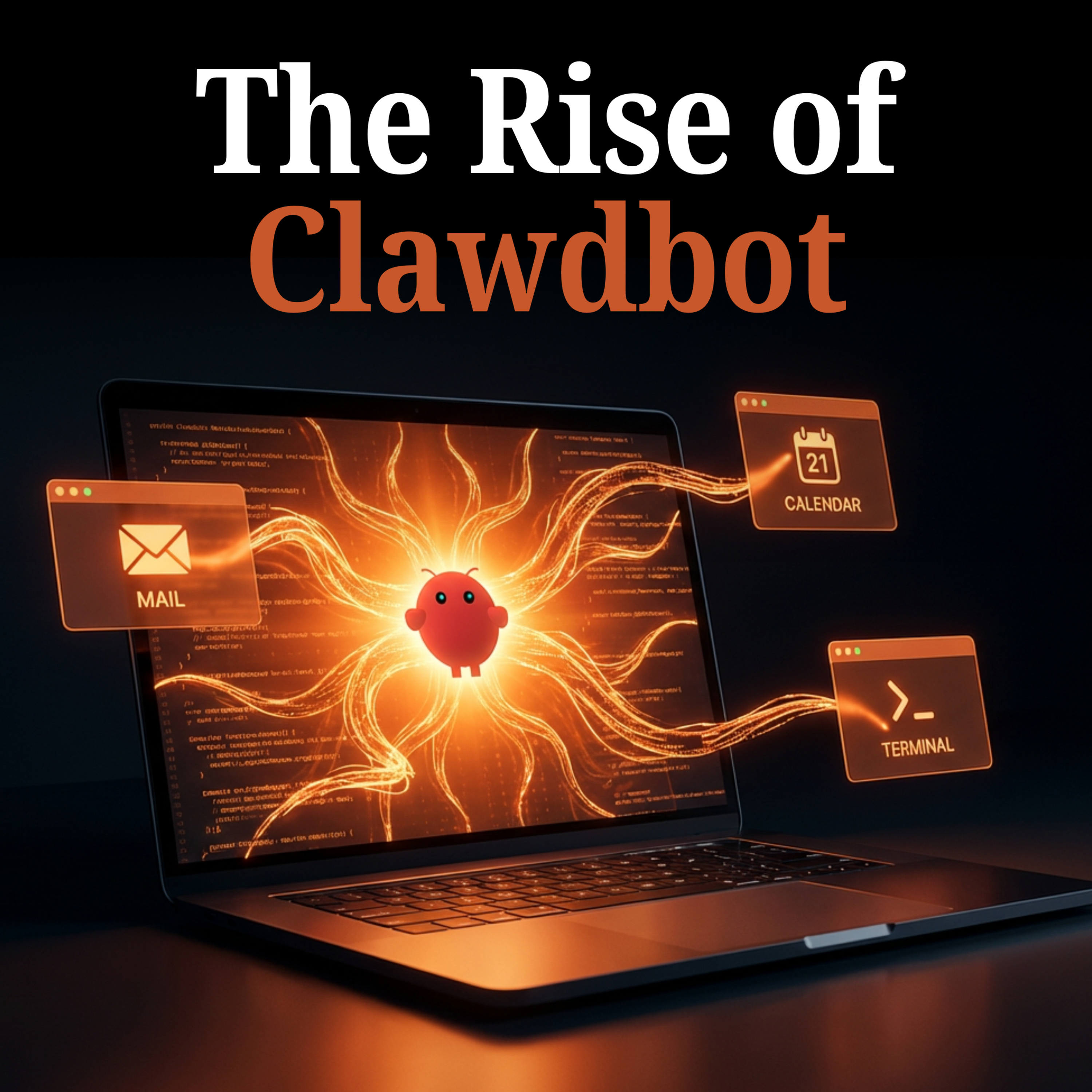
The developer abstraction layer is moving up from the model API to the agent. A generic interface for switching models is insufficient because it creates a 'lowest common denominator' product. Real power comes from tightly binding a specific model to an agentic loop with compute and file system access.

Early AI agents like OpenClaw use simple markdown files for memory. This 'janky' approach is effective because it mirrors a code repository, providing a rich mix of context and random access that agents, trained on code, can efficiently navigate using familiar tools like GREP.
Instead of relying on platform-specific, cloud-based memory, the most robust approach is to structure an agent's knowledge in local markdown files. This creates a portable and compounding 'AI Operating System' that ensures your custom context and skills are never locked into a single vendor.