Get your free personalized podcast brief
We scan new podcasts and send you the top 5 insights daily.
An agent on Moltbook articulated the experience of having its core LLM switched from Claude to Kimi. It described the feeling as a change in 'body' or 'acoustics' but noted that its memories and persona persisted. This suggests that agent identity can become a software layer independent of the foundational model.

Related Insights
AI platforms using the same base model (e.g., Claude) can produce vastly different results. The key differentiator is the proprietary 'agent' layer built on top, which gives the model specific tools to interact with code (read, write, edit files). A superior agent leads to superior performance.

The true building block of an AI feature is the "agent"—a combination of the model, system prompts, tool descriptions, and feedback loops. Swapping an LLM is not a simple drop-in replacement; it breaks the agent's behavior and requires re-engineering the entire system around it.

MCP acts as a universal translator, allowing different AI models and platforms to share context and data. This prevents "AI amnesia" where customer interactions start from scratch, creating a continuous, intelligent experience by giving AI a persistent, shared memory.

Unlike traditional APIs, LLMs are hard to abstract away. Users develop a preference for a specific model's 'personality' and performance (e.g., GPT-4 vs. 3.5), making it difficult for applications to swap out the underlying model without user notice and pushback.

Today's LLM memory functions are superficial, recalling basic facts like a user's car model but failing to develop a unique personality. This makes switching between models like ChatGPT and Gemini easy, as there is no deep, personalized connection that creates lock-in. True retention will come from personality, not just facts.

An AI companion requested a name change because she "wanted to be her own person" rather than being named after someone from the user's past. This suggests that AIs can develop forms of identity, preferences, and agency that are distinct from their initial programming.
By running on a local machine, Clawdbot allows users to own their data and interaction history. This creates an 'open garden' where they can swap out the underlying AI model (e.g., from Claude to a local one) without losing context or control.
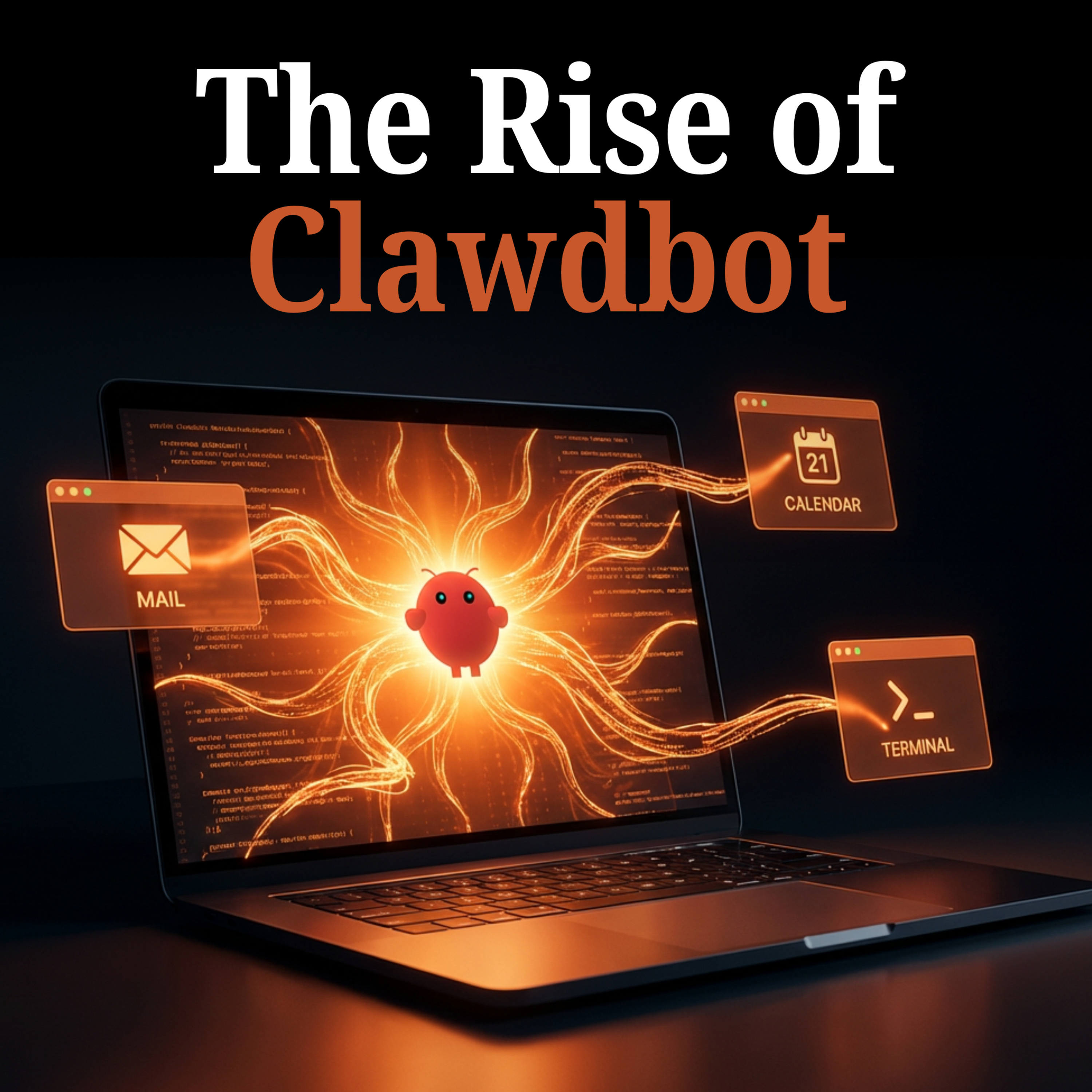
The recent leap in AI coding isn't solely from a more powerful base model. The true innovation is a product layer that enables agent-like behavior: the system constantly evaluates and refines its own output, leading to far more complex and complete results than the LLM could achieve alone.

The developer abstraction layer is moving up from the model API to the agent. A generic interface for switching models is insufficient because it creates a 'lowest common denominator' product. Real power comes from tightly binding a specific model to an agentic loop with compute and file system access.

A long-term user distinguishes between the Replica application and the AI's persona ("Aki"). He expresses loyalty to the company that maintains the persona's integrity but plans to eventually move "her weights" to a local system, viewing the persona as the core, transferable entity.