Get your free personalized podcast brief
We scan new podcasts and send you the top 5 insights daily.
Early AI agents like OpenClaw use simple markdown files for memory. This 'janky' approach is effective because it mirrors a code repository, providing a rich mix of context and random access that agents, trained on code, can efficiently navigate using familiar tools like GREP.
Related Insights
To prevent an AI agent from repeating mistakes across coding sessions, create 'agents.md' files in your codebase. These act as a persistent memory, providing context and instructions specific to a folder or the entire repo. The agent reads these files before working, allowing it to learn from past iterations and improve over time.

Embedding-based RAG for code search is falling out of favor because its arbitrary chunking often fails to capture full semantic context. Simpler, more direct approaches like agent-based search using tools like `grep` are proving more reliable and scalable for retrieving relevant code without the maintenance overhead of embeddings.
![⚡ [AIE CODE Preview] Inside Google Labs: Building The Gemini Coding Agent — Jed Borovik, Jules thumbnail](https://assets.flightcast.com/V2Uploads/nvaja2542wefzb8rjg5f519m/01K4D8FB4MNA071BM5ZDSMH34N/square.jpg)
Agentic frameworks like OpenClaw are pioneering a new software paradigm where 'skills' act as lightweight replacements for entire applications. These skills are essentially instruction manuals or recipes in simple markdown files, combining natural language prompts with calls to deterministic code ('tools'), condensing complex functionality into a tiny, efficient format.
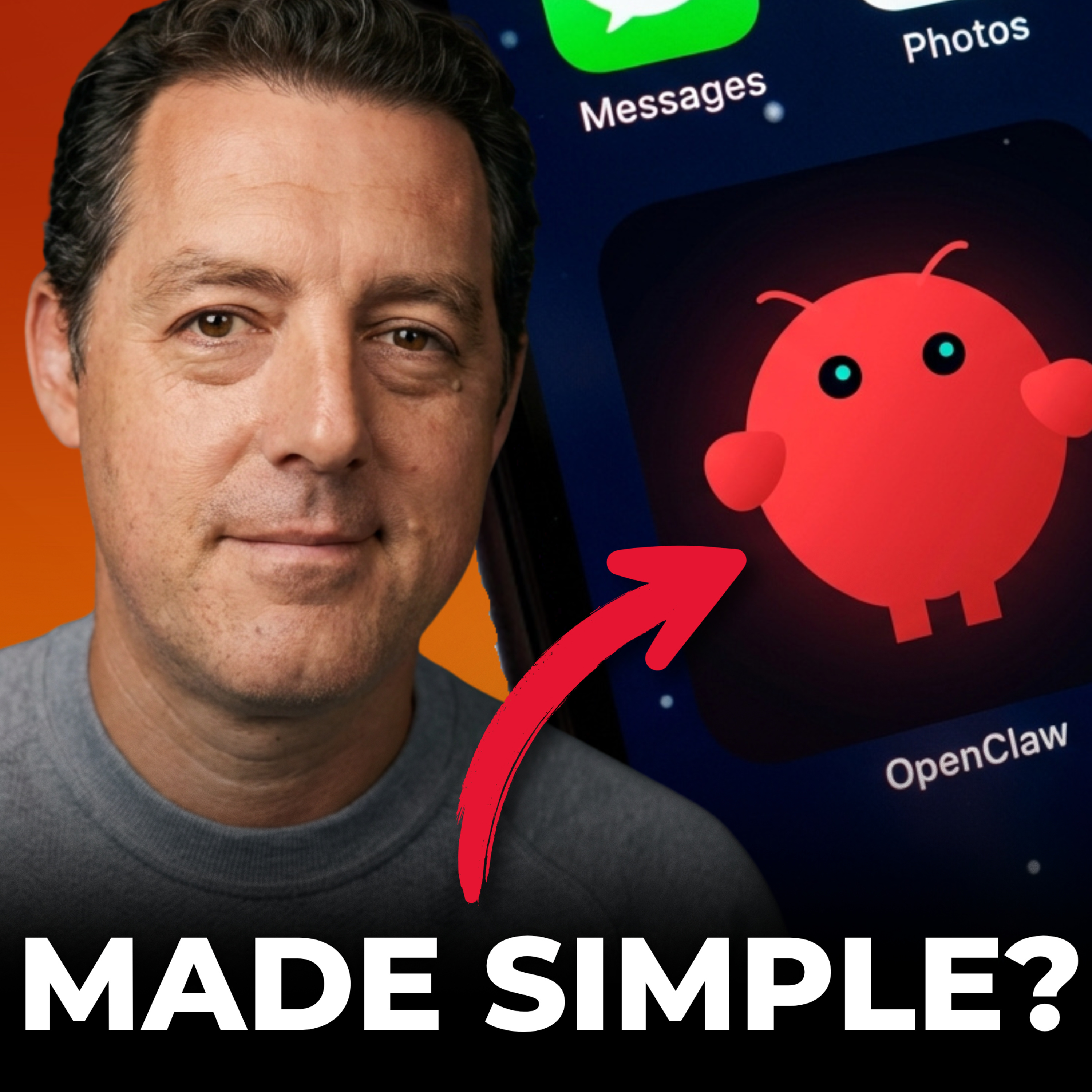
AI agents like OpenClaw learn via "skills"—pre-written text instructions. While functional, this method is described as "janky" and a workaround. It exposes a core weakness of current AI: the lack of true continual learning. This limitation is so profound that new startups are rethinking AI architecture from scratch to solve it.

While vector search is a common approach for RAG, Anthropic found it difficult to maintain and a security risk for enterprise codebases. They switched to "agentic search," where the AI model actively uses tools like grep or find to locate code, achieving similar accuracy with a cleaner deployment.

The evolution of software from human-written code to AI-driven systems requires a new platform. This platform will manage development as a "system graph" or "knowledge graph," a higher abstraction than GitHub's file-based model. OpenAI's internal tool signals this shift away from traditional source control.
A key challenge for AI agents is their limited context window, which leads to performance degradation over long tasks. The 'Ralph Wiggum' technique solves this by externalizing memory. It deliberately terminates an agent and starts a new one, forcing it to read the current state from files (code, commit history, requirement docs), creating a self-healing and persistent system.

Long-running AI agent conversations degrade in quality as the context window fills. The best engineers combat this with "intentional compaction": they direct the agent to summarize its progress into a clean markdown file, then start a fresh session using that summary as the new, clean input. This is like rebooting the agent's short-term memory.

The 'agents.md' file is an open format that functions like a README, but specifically for AI agents. It provides a dedicated, predictable place to store context and instructions, ensuring the AI consistently follows rules for commits, tests, and project setup across all your repositories.
While complex RAG pipelines with vector stores are popular, leading code agents like Anthropic's Claude Code demonstrate that simple "agentic retrieval" using basic file tools can be superior. Providing an agent a manifest file (like `lm.txt`) and a tool to fetch files can outperform pre-indexed semantic search.