Get your free personalized podcast brief
We scan new podcasts and send you the top 5 insights daily.
Standard operating procedures (SOPs) and checklists, famously championed for reducing human error, are even more effective for AI. They provide the structured, repeatable instructions that agents need to perform tasks reliably and can be used to hold them accountable for their performance.

Related Insights
According to Anthropic's Claude Code team, the most valuable part of an AI agent's "Skill" is often a "Gotcha Section." This explicitly details common failure points and edge cases. This practice focuses on encoding hard-won experience to prevent repeated mistakes, proving more valuable than simply outlining a correct process.

Contrary to the vision of free-wheeling autonomous agents, most business automation relies on strict Standard Operating Procedures (SOPs). Products like OpenAI's Agent Builder succeed by providing deterministic, node-based workflows that enforce business logic, which is more valuable than pure autonomy.

Instead of relying on engineers to remember documented procedures (e.g., pre-commit checklists), encode these processes into custom AI skills. This turns static best-practice documents into automated, executable tools that enforce standards and reduce toil.

Instead of static documents, business processes can be codified as executable "topical guides" for AI agents. This solves knowledge transfer issues when employees leave and automates rote work, like checking for daily team reports, making processes self-enforcing.

The key to creating effective and reliable AI workflows is distinguishing between tasks AI excels at (mechanical, repetitive actions) and those it struggles with (judgment, nuanced decisions). Focus on automating the mechanical parts first to build a valuable and trustworthy product.

Treating AI evaluation like a final exam is a mistake. For critical enterprise systems, evaluations should be embedded at every step of an agent's workflow (e.g., after planning, before action). This is akin to unit testing in classic software development and is essential for building trustworthy, production-ready agents.
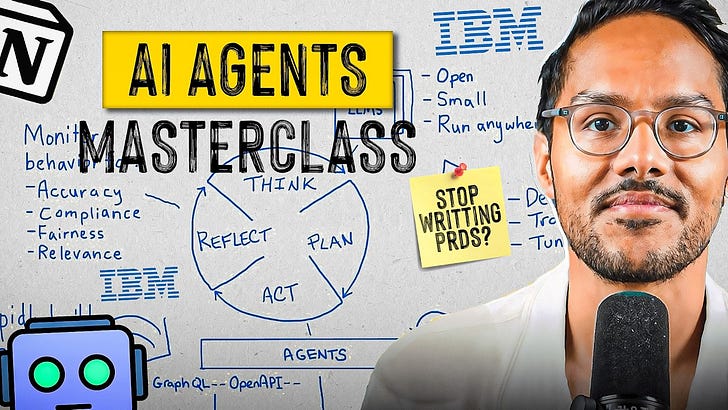
To avoid context drift in long AI sessions, create temporary, task-based agents with specialized roles. Use these agents as checkpoints to review outputs from previous steps and make key decisions, ensuring higher-quality results and preventing error propagation.
Don't assume AI can effectively perform a task that doesn't already have a well-defined standard operating procedure (SOP). The best use of AI is to infuse efficiency into individual steps of an existing, successful manual process, rather than expecting it to complete the entire process on its own.

Simply adding AI "nodes" to a deterministic workflow builder is a limited view of AI's potential. This approach fails to capture the human judgment and edge cases that define complex processes. A better architecture empowers AI agents to run standard operating procedures from end to end.

The most valuable part of an AI agent skill is a 'gotcha' section. This is where you explicitly instruct the model on its typical failure patterns and wrong assumptions for a given task, preventing common errors before they happen.