Get your free personalized podcast brief
We scan new podcasts and send you the top 5 insights daily.
Atlassian's CEO categorizes jobs to strategize AI's impact. "Input-bound" roles (e.g., legal, customer service) are constrained by incoming work, where AI drives efficiency. "Output-bound" creative roles (e.g., marketing, R&D) are limitless, where AI enhances creative capacity.

Related Insights
AI expert Allie Miller predicts job titles will be dead by 2027. Instead of hiring for narrow roles, she structures her team around three "zones of influence": back-office operations, front-facing marketing, and product. This model allows for more fluid, AI-augmented roles fit for the future of work.

The most exciting application of AI isn't making people faster at their current jobs. It's enabling them to broaden their span of influence—like a backend engineer doing frontend work or a non-engineer automating technical customer onboarding—which creates significantly more business value.
Atlassian's founder suggests a model for AI's impact. In "input-constrained" fields like legal or support, AI drives efficiency on a finite set of tasks. In "creation-constrained" fields like software development, AI amplifies output on an infinite roadmap, leading to market expansion.
Effective AI implementation isn't about automating entire human jobs. It's about re-architecting workflows to assign AI the research and analysis tasks it excels at, while preserving relationship-building, empathy, and high-judgment tasks for humans. This division of labor maximizes the strengths of both.

Frame internal AI initiatives not as a way to replace employees, but to automate their chores. This frees them to move 'up the stack' to perform higher-value functions like client relations, creative strategy, and founder meetings, ultimately increasing overall output.
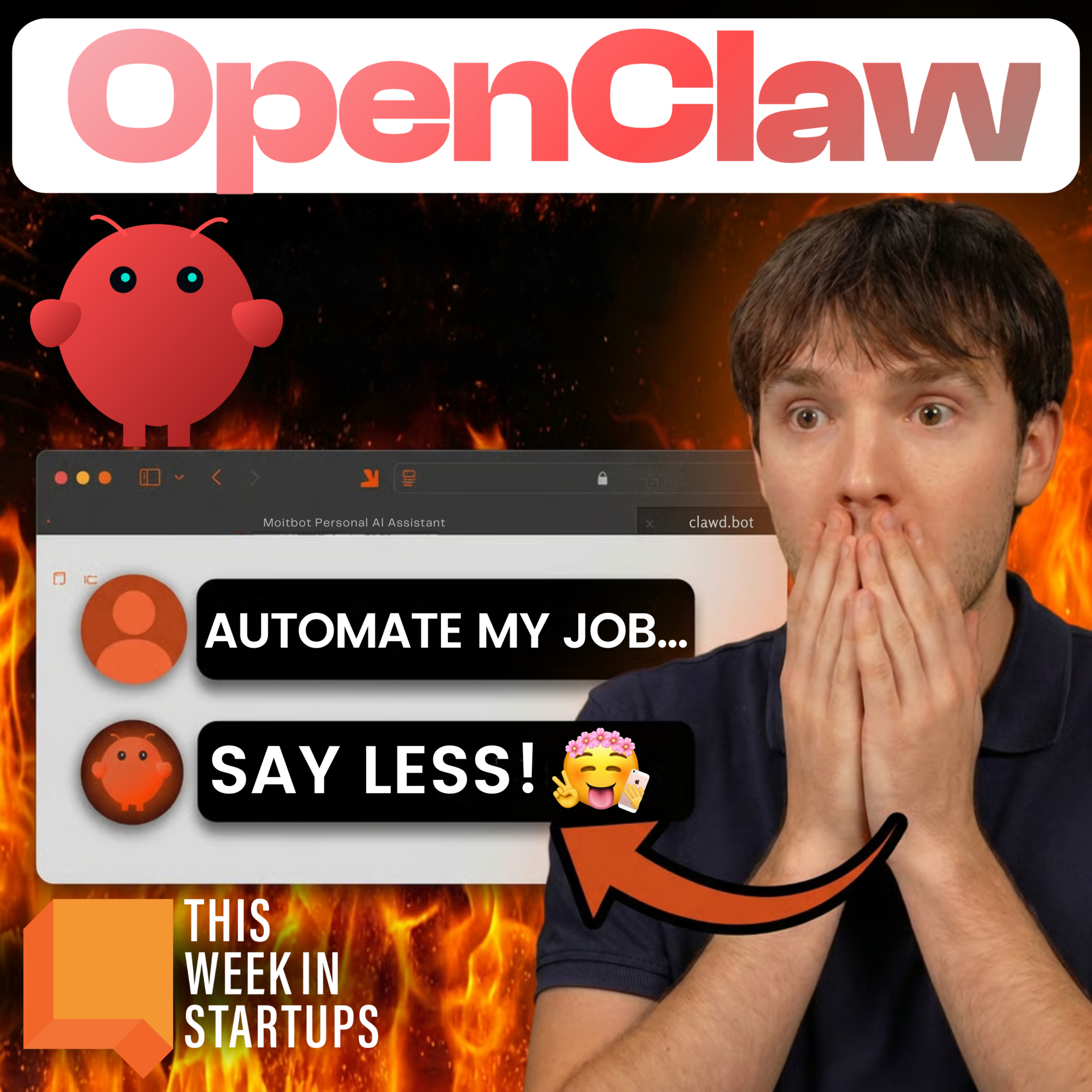
Instead of hiring for a role like "video editor," break the job into its core tasks. Analyze which individual workflows can be automated with AI first. This shifts focus from headcount to outputs, revealing opportunities to augment or replace traditional roles with technology.

Rather than just replacing jobs, AI is fostering the emergence of new, specialized roles. The "Content Automation Strategist," for example, is a position that merges creative oversight with the technical skill to use AI for scaling content production and personalization effectively.
Mike Cannon-Brookes suggests viewing business functions through a new lens. "Input-constrained" work (e.g., customer support, legal) has a finite queue; AI drives cost efficiency. "Output-constrained" work (e.g., R&D, marketing) is limited by creativity; AI can be reinvested to generate more value.

Instead of just augmenting existing roles, companies should deconstruct jobs into their component tasks. Analyze each task and reassign it to either a machine or a person based on what each does best. For example, remove 'prospect list building' from BDRs and centralize it with an AI-powered data team, freeing reps to focus on selling.

AI will handle most routine tasks, reducing the number of average 'doers'. Those remaining will be either the absolute best in their craft or individuals leveraging AI for superhuman productivity. Everyone else must shift to 'director' roles, focusing on strategy, orchestration, and interpreting AI output.
