Get your free personalized podcast brief
We scan new podcasts and send you the top 5 insights daily.
Instead of hiring for a role like "video editor," break the job into its core tasks. Analyze which individual workflows can be automated with AI first. This shifts focus from headcount to outputs, revealing opportunities to augment or replace traditional roles with technology.

Related Insights
Frame internal AI initiatives not as a way to replace employees, but to automate their chores. This frees them to move 'up the stack' to perform higher-value functions like client relations, creative strategy, and founder meetings, ultimately increasing overall output.
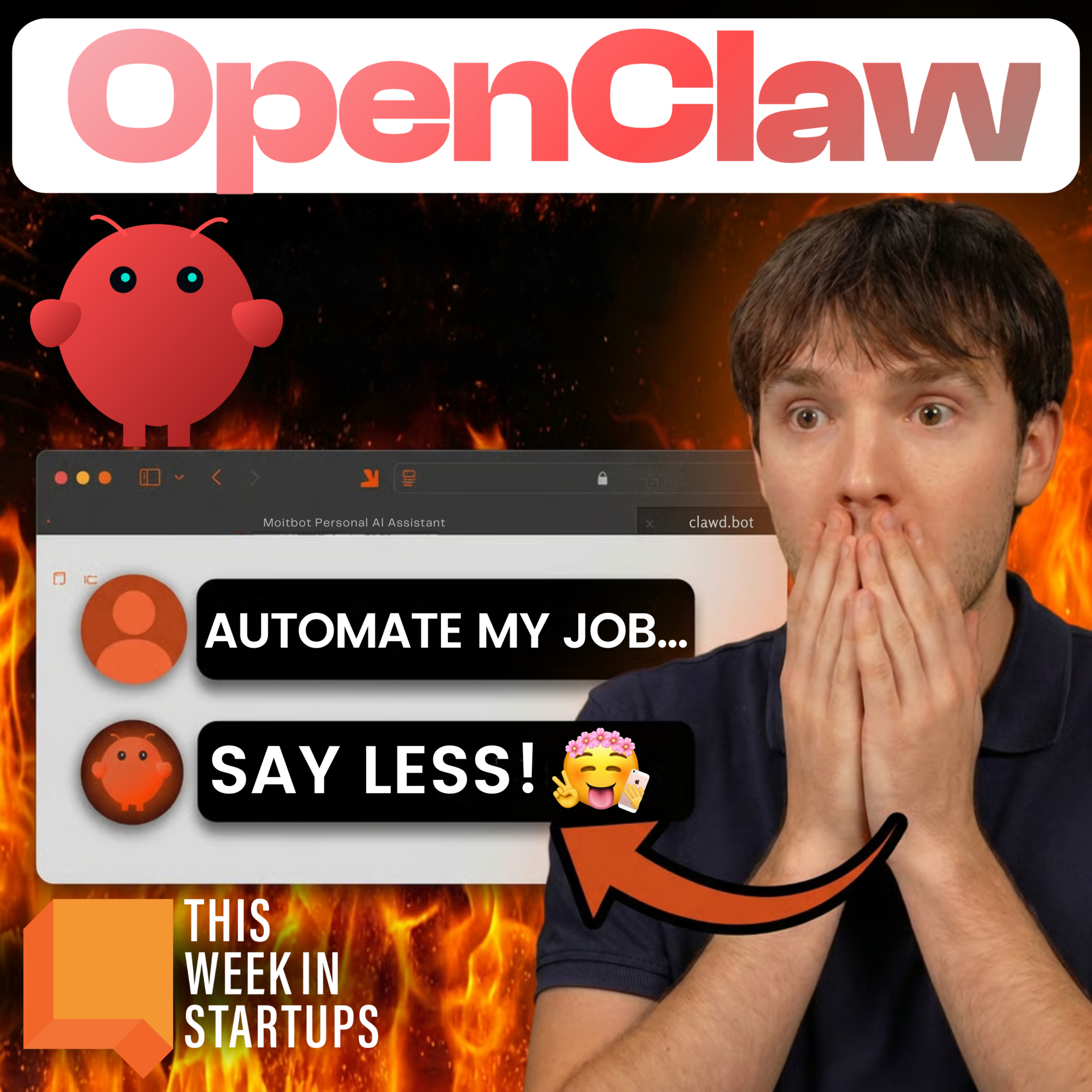
The key to creating effective and reliable AI workflows is distinguishing between tasks AI excels at (mechanical, repetitive actions) and those it struggles with (judgment, nuanced decisions). Focus on automating the mechanical parts first to build a valuable and trustworthy product.

AI's primary value isn't replacing employees, but accelerating the speed and quality of their work. To implement it effectively, companies must first analyze and improve their underlying business processes. AI can then be used to sift through data faster and automate refined workflows, acting as a powerful assistant.

Don't hire based on today's job description. Proactively run AI impact assessments to project how a role will evolve over the next 12-18 months. This allows you to hire for durable, human-centric skills and plan how to reallocate the 30%+ of their future capacity that will be freed up by AI agents.
Reframe your job as a collection of tasks, not a monolithic title. This allows you to identify which tasks AI can automate, which it can augment, and which remain uniquely human, providing a clear path for adaptation and reskilling in the face of technological change.

Don't assume AI can effectively perform a task that doesn't already have a well-defined standard operating procedure (SOP). The best use of AI is to infuse efficiency into individual steps of an existing, successful manual process, rather than expecting it to complete the entire process on its own.
The greatest value of AI isn't just automating tasks within your current process. Leaders should use AI to fundamentally question the workflow itself, asking it to suggest entirely new, more efficient, and innovative ways to achieve business goals.
The key career strategy in the AI era is to shift from being an "occupant of a role" to an "owner of a workflow." Use AI not just to do your job faster, but to become so productive you can single-handedly deliver outcomes that previously required an entire team, thus making yourself irreplaceable.

Instead of traditional IT roles focused on software, an AI Ops person focuses on identifying and automating workflows. They work with teams to eliminate busy work and return hundreds of hours, shifting employees from performing tasks to directing AI.

When AI automates a core task like content writing, don't eliminate the role. Instead, reframe it to leverage human judgment. A "content writer" can be transformed into a "content curator" who guides, edits, and validates AI-generated output. This shifts the focus from replacement to augmentation.
