Get your free personalized podcast brief
We scan new podcasts and send you the top 5 insights daily.
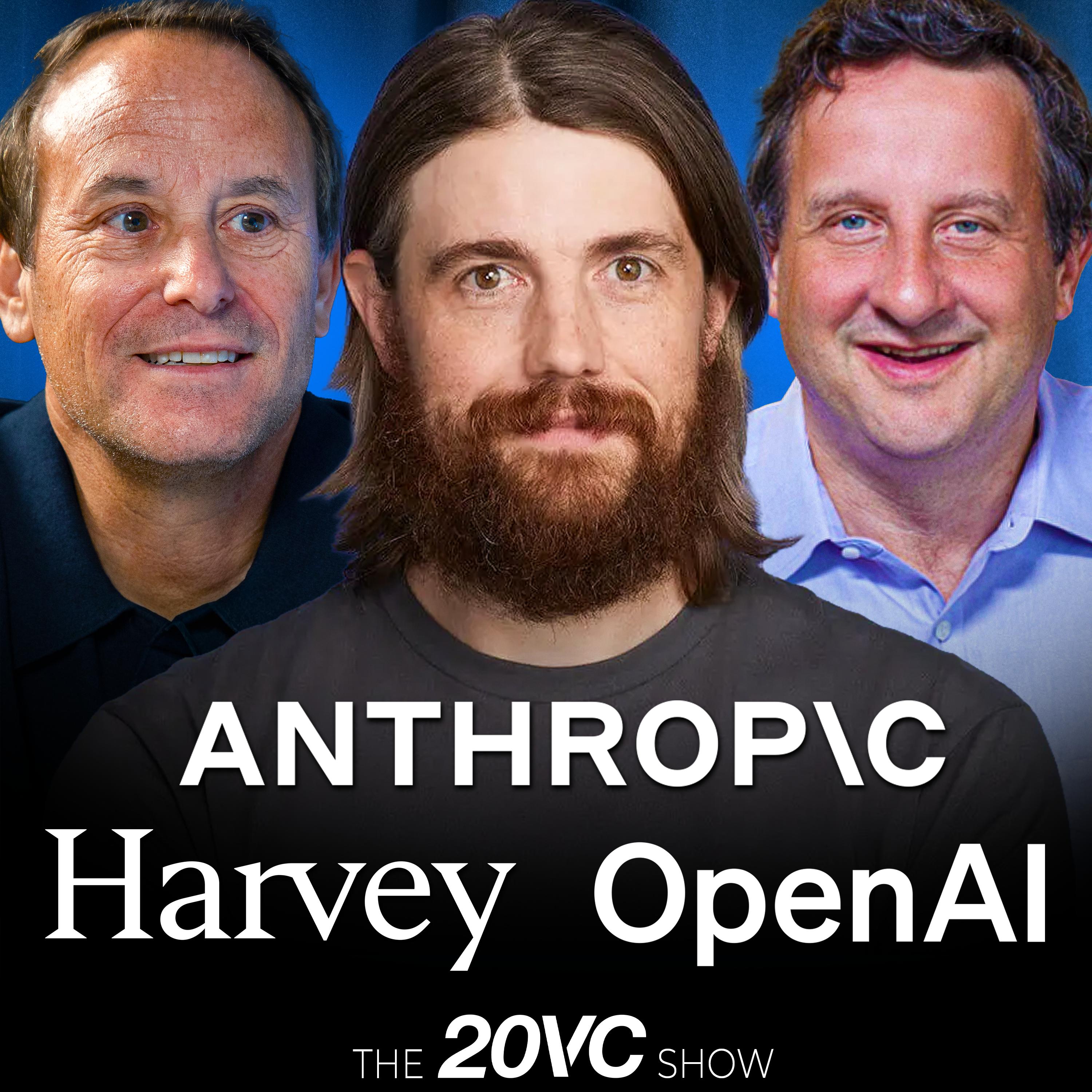
Atlassian's founder suggests a model for AI's impact. In "input-constrained" fields like legal or support, AI drives efficiency on a finite set of tasks. In "creation-constrained" fields like software development, AI amplifies output on an infinite roadmap, leading to market expansion.
Related Insights
In a world where anyone can generate software to solve a problem, the primary constraint on progress is no longer engineering capacity ('who can code'). Instead, competitive advantage shifts to creativity, judgment, and the quality of ideas. This fundamentally breaks traditional organizational structures built around resource allocation for execution.

Atlassian's CEO argues that as AI makes software creation cheaper, the key differentiator becomes design—how a product feels and works. This is a scarce resource that is much harder to copy than features, making it the new source of competitive advantage.

Increased developer productivity from AI won't lead to fewer jobs. Instead, it mirrors the Jevons paradox seen with electricity: as building software becomes cheaper and faster, the demand for it will dramatically increase. This boosts investment in new projects and ultimately grows the entire software engineering industry.
![⚡ [AIE CODE Preview] Inside Google Labs: Building The Gemini Coding Agent — Jed Borovik, Jules thumbnail](https://assets.flightcast.com/V2Uploads/nvaja2542wefzb8rjg5f519m/01K4D8FB4MNA071BM5ZDSMH34N/square.jpg)
As AI agents handle the mechanics of code generation, the primary role of a developer is elevated. The new bottlenecks are not typing speed or syntax, but higher-level cognitive tasks: deciding what to build, designing system architecture, and curating the AI's work.
The focus on AI automating existing human labor misses the larger opportunity. The most significant value will come from creating entirely new types of companies that are fully autonomous and operate in ways we can't currently conceive, moving beyond simple replacement of today's jobs.

While AI can improve existing software categories, the most significant opportunity lies in creating new applications that automate tasks previously performed by humans. This 'software eating labor' market is substantially larger than the traditional SaaS market, representing a massive greenfield opportunity for startups.

As AI agents eliminate the time and skill needed for technical execution, the primary constraint on output is no longer the ability to build, but the quality of ideas. Human value shifts entirely from execution to creative ideation, making it the key driver of progress.

Most view AI for efficiency, but its true power lies in handling routine tasks to free up human talent. This unlocks capacity for strategic, creative, and relationship-driven work that fuels innovation and growth, shifting the question from cost savings to new capabilities.

While AI-driven efficiency is an obvious first step, it often results in workforce reduction if company growth is flat. True differentiation and sustainable advantage come from using AI for innovation—creating new products, markets, and business models to fuel growth.

Mike Cannon-Brookes argues that AI makes developers more efficient, but since the demand for new technology is effectively unlimited, companies will simply build more. This will lead to a net increase in hiring for engineering talent, not a reduction.