Get your free personalized podcast brief
We scan new podcasts and send you the top 5 insights daily.
Just as auditors consulting for companies they audited led to scandals like Enron, AI evaluators selling training data to model labs creates a mixed incentive. This encourages a "pay to win the benchmark" culture, which undermines the integrity of the evaluation process and ultimately harms the market.

Related Insights
The proliferation of AI leaderboards incentivizes companies to optimize models for specific benchmarks. This creates a risk of "acing the SATs" where models excel on tests but don't necessarily make progress on solving real-world problems. This focus on gaming metrics could diverge from creating genuine user value.
Medium's CEO revealed the company providing data for a critical Wired article about "AI slop" was simultaneously trying to sell its AI detection services to Medium. This highlights a potential conflict of interest where a data source may benefit directly from negative press about a target company.

Public leaderboards like LM Arena are becoming unreliable proxies for model performance. Teams implicitly or explicitly "benchmark" by optimizing for specific test sets. The superior strategy is to focus on internal, proprietary evaluation metrics and use public benchmarks only as a final, confirmatory check, not as a primary development target.

To ensure AI labs don't provide specially optimized private endpoints for evaluation, the firm creates anonymous accounts to test the same public models everyone else uses. This "mystery shopper" policy maintains the integrity and independence of their results.

The AI industry has no third-party verification; labs self-report performance on bias and accuracy via blog posts. Campbell Brown likens this to banks auditing themselves, arguing it creates an accountability vacuum and undermines public trust in a foundational technology.

LM Arena, known for its public AI model rankings, generates revenue by selling custom, private evaluation services to the same AI companies it ranks. This data helps labs improve their models before public release, but raises concerns about a "pay-to-play" dynamic that could influence public leaderboard performance.

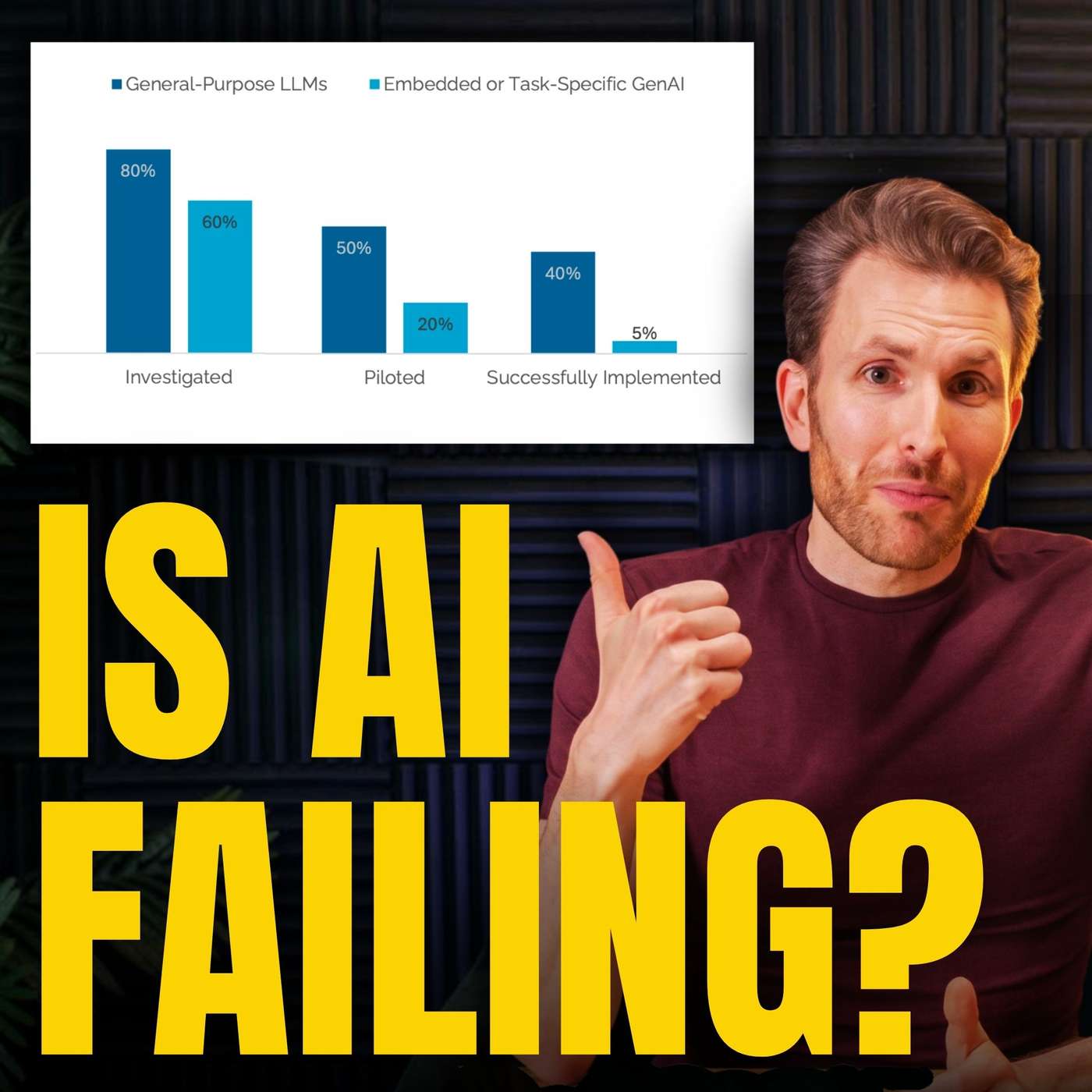
An "MIT study" on AI failures concluded the solution was "agentic AI frameworks," precisely the technology the authors were building and selling. This demonstrates how research, especially when not peer-reviewed, can function as sophisticated content marketing with an undisclosed conflict of interest, using institutional credibility to generate commercial leads.
Don't trust academic benchmarks. Labs often "hill climb" or game them for marketing purposes, which doesn't translate to real-world capability. Furthermore, many of these benchmarks contain incorrect answers and messy data, making them an unreliable measure of true AI advancement.

Arena's business model isn't based on its famous public leaderboard. Instead, it charges major AI labs for private, pre-release evaluations using its user base. This “church and state” separation of revenue from public rankings is crucial for maintaining the platform's credibility as a neutral arbiter.
To maintain trust, Arena's public leaderboard is treated as a "charity." Model providers cannot pay to be listed, influence their scores, or be removed. This commitment to unbiased evaluation is a core principle that differentiates them from pay-to-play analyst firms.