Get your free personalized podcast brief
We scan new podcasts and send you the top 5 insights daily.
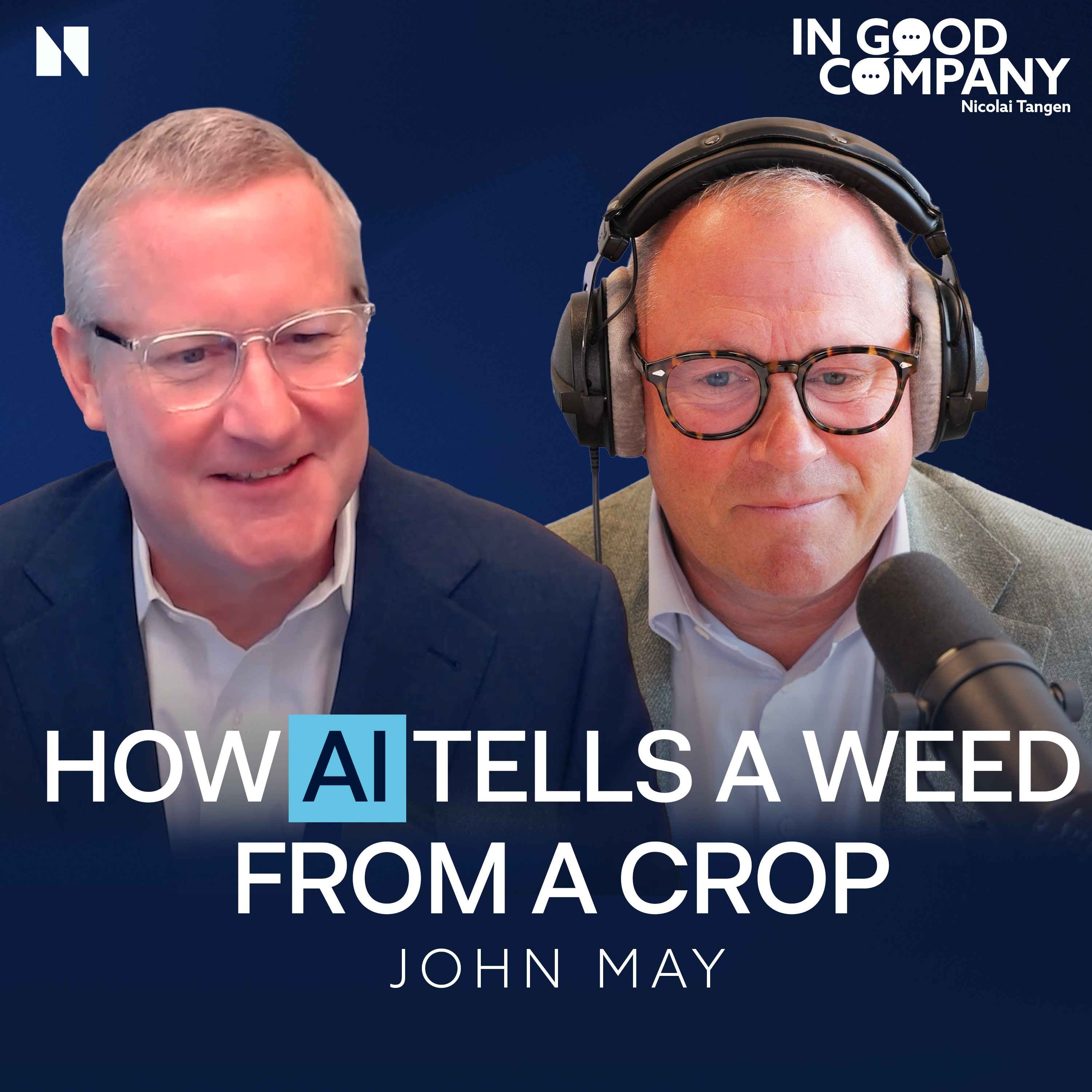
To solve the agricultural problem of weed control, John Deere acquired a computer vision company and repurposed technology originally developed for autonomous vehicles. Instead of steering a car, they use AI to precisely identify and spray only weeds, demonstrating a powerful cross-industry technology application.
Related Insights
Applied Intuition uses the same fundamental software platform across cars, trucks, boats, and construction equipment. This is possible because all are machines interacting with the physical world governed by consistent laws of physics, enabling a scalable "Teslification" of multiple industrial sectors with a single core technology.

John Deere's goal for autonomy is not to eliminate farmers, but to move them from the driver's seat to a strategic command role. Farmers can manage a fleet of machines, analyze field data, and make higher-level decisions, leveraging their decades of experience on more valuable tasks than just operating a single vehicle.
While consumer AI gets the hype, the most significant impact in the next 5-10 years will be adding autonomy to physical machinery in industries like farming, mining, and construction. These sectors are facing labor shortages and desperately need automation.

Instead of focusing on building the 'best planter,' John Deere's strategy targets farmers' biggest pain points, like seed cost. By using technology to deliver quantifiable financial value (e.g., better crop placement), they make their customers more profitable, moving from a product-centric to an outcome-centric model.
By deploying 36 cameras and nine embedded GPUs across a 120-foot boom, their sprayer identifies and applies herbicide only to weeds while traveling at 15 mph. This computer vision application creates a "triple win" by saving farmers money, benefiting the environment, and providing a strong business case.

The neural nets powering autonomous vehicles are highly generalizable, with 80-90% of the underlying software being directly applicable to other verticals like trucking. A company's long-term value lies in its scaled driving data and core AI competency, not its initial target market.

The company's mission is to use AI for "plant-level management," treating each of the four trillion corn seeds planted annually with the precision of a master gardener. This ensures each seed receives exactly what it needs for optimal growth, maximizing agricultural efficiency at an unprecedented scale.
Partnering with Interplant, John Deere is exploring a future where plants non-verbally communicate stresses like fungus or nitrogen deficiency by glowing at specific wavelengths. This creates a direct feedback loop between the plant and AI-driven machinery, allowing for hyper-targeted, real-time treatment.
Human medicine faces long, expensive regulatory paths for AI-designed drugs. In contrast, agriculture benefits from faster R&D cycles because, as the speaker notes, "nobody cares if you kill plants." This allows more shots on goal and faster market entry for AI innovations.

While autonomous drones save on fuel and labor, their biggest selling point is applying chemicals more precisely. This reduces waste of expensive materials, which can be four times the cost of the application service itself.