Get your free personalized podcast brief
We scan new podcasts and send you the top 5 insights daily.
Instead of focusing on building the 'best planter,' John Deere's strategy targets farmers' biggest pain points, like seed cost. By using technology to deliver quantifiable financial value (e.g., better crop placement), they make their customers more profitable, moving from a product-centric to an outcome-centric model.
Related Insights
The key question for modern entrepreneurs is, 'How do I help my customers succeed faster?' The business model is evolving from selling information (the 'what' and 'how') to selling tangible results. Use technology to build tools that accelerate customer application and outcomes, not just for internal efficiency.

John Deere replaced its traditional matrix org chart with teams dedicated to specific crop 'production systems,' like a 'corn team' or 'soybean team.' This structure forces employees to focus exclusively on a single customer's entire workflow, fostering deep domain expertise and creating a competitive moat.
John Deere's goal for autonomy is not to eliminate farmers, but to move them from the driver's seat to a strategic command role. Farmers can manage a fleet of machines, analyze field data, and make higher-level decisions, leveraging their decades of experience on more valuable tasks than just operating a single vehicle.
To accelerate decision-making, John Deere 'delayered' its corporate structure from 11 to 7 levels. This change was inspired by the lean, two-layer structure of an AI company they acquired. It is a deliberate strategy to reduce bureaucracy and enable a 190-year-old industrial firm to operate at a faster pace.
In businesses blending services and tech, the "product" is the entire package of technology, services, and expertise delivering a client outcome. This redefines product management’s scope beyond just the application to the holistic customer experience and the results it generates.

To move from selling outputs to guaranteeing outcomes, firms must build a learning system that optimizes the entire production process, not just the customer interface. This involves fine-tuning every "coupling" in the value chain, as seen in companies like Shein or Tesla.

When selling complex technology like autonomous mining, bypass technical details and frame the value proposition in terms of a simple, compelling business outcome. Kalanick's pitch to gold mine CEOs—'Would you like to have 20% more gold per year?'—is an effective go-to-market strategy that focuses on quantifiable results, making the 'prove it' pilot phase a natural next step.

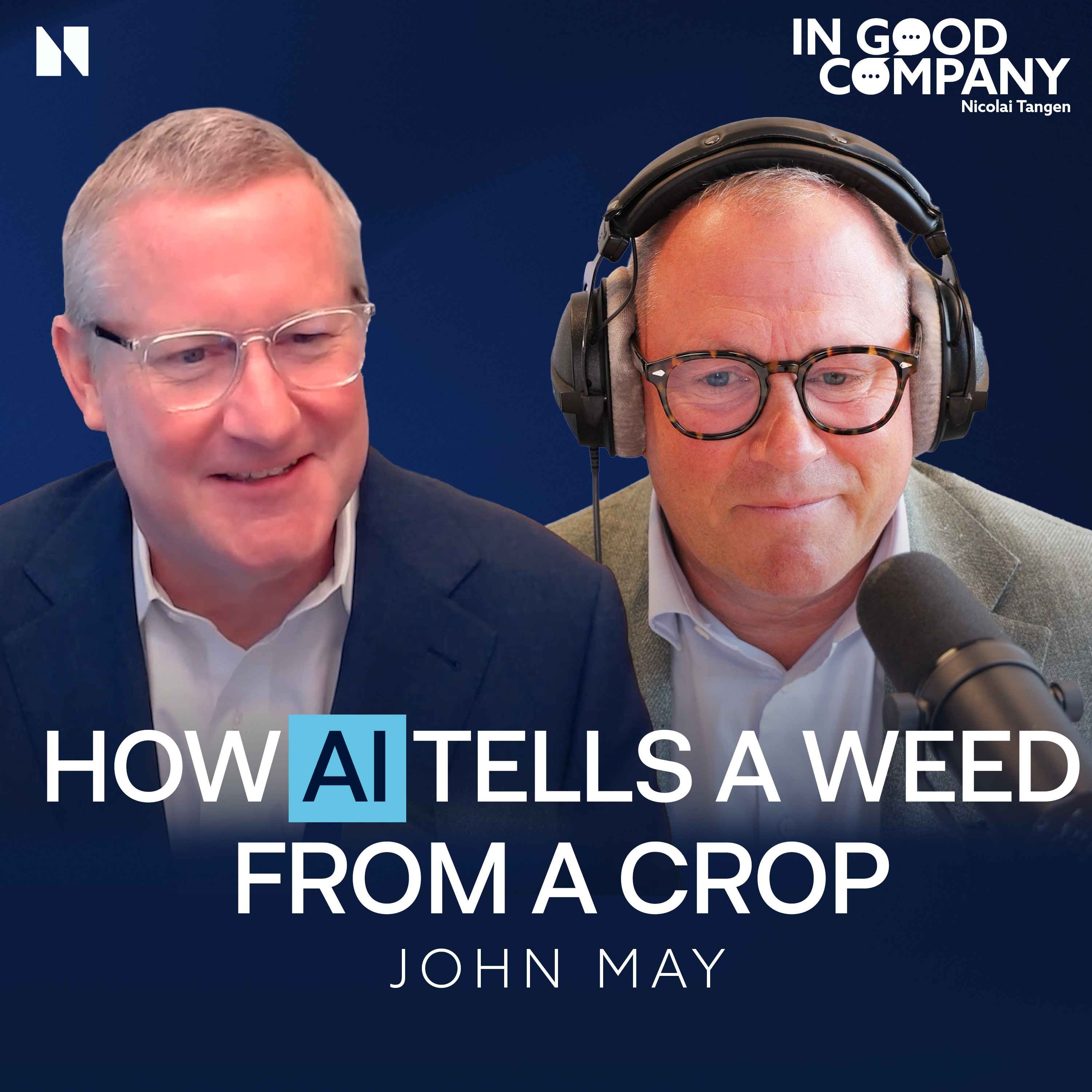
To solve the agricultural problem of weed control, John Deere acquired a computer vision company and repurposed technology originally developed for autonomous vehicles. Instead of steering a car, they use AI to precisely identify and spray only weeds, demonstrating a powerful cross-industry technology application.
To overcome the high capital cost of its advanced technology, John Deere offers a subscription-like 'pay-per-acre' model. This allows farmers who cannot afford the upfront purchase to access the latest innovations, effectively spreading expensive tech across a larger market and creating a recurring revenue stream for hardware.
Being product-led is not about specific tactics, but about prioritizing customer outcomes. This focus on creating happy customers naturally drives revenue and growth, making the approach universally beneficial for any business seeking long-term success.
