Get your free personalized podcast brief
We scan new podcasts and send you the top 5 insights daily.
Generating disproportionate returns requires holding an original, contrarian perspective that the market initially dismisses as "stupid." The ability to persist with a non-consensus belief until it's proven correct is a core, and rare, quality of great investors.

Related Insights
Reid Hoffman's secret to successful contrarian investing isn't just finding unpopular ideas. It's about first identifying why intelligent people believe an idea like Airbnb or Facebook will fail, and then making a specific bet on why that smart critique is incorrect.

Venture capitalists thrive by adopting one of two distinct personas: the "in the flow" consensus-driver focused on speed and connections, or the "out of the flow" contrarian focused on deep, isolated work. Attempting to straddle both paths leads to failure.

The most successful venture investors share two key traits: they originate investments from a first-principles or contrarian standpoint, and they possess the conviction to concentrate significant capital into their winning portfolio companies as they emerge.

To achieve above-average investment returns, one cannot simply follow the crowd. True alpha comes from contrarian thinking—making investments that conventional wisdom deems wrong. Rubenstein notes the primary barrier is psychological: overcoming the innate human desire to be liked and the fear of being told you're 'stupid' by your peers.

Venture firms have processes like investment committees to prevent bad decisions. However, to generate exceptional returns (alpha), an investor must ultimately trust their own unique point of view, even when it differs from the consensus. This contrarian thinking is what firms hire new talent for.

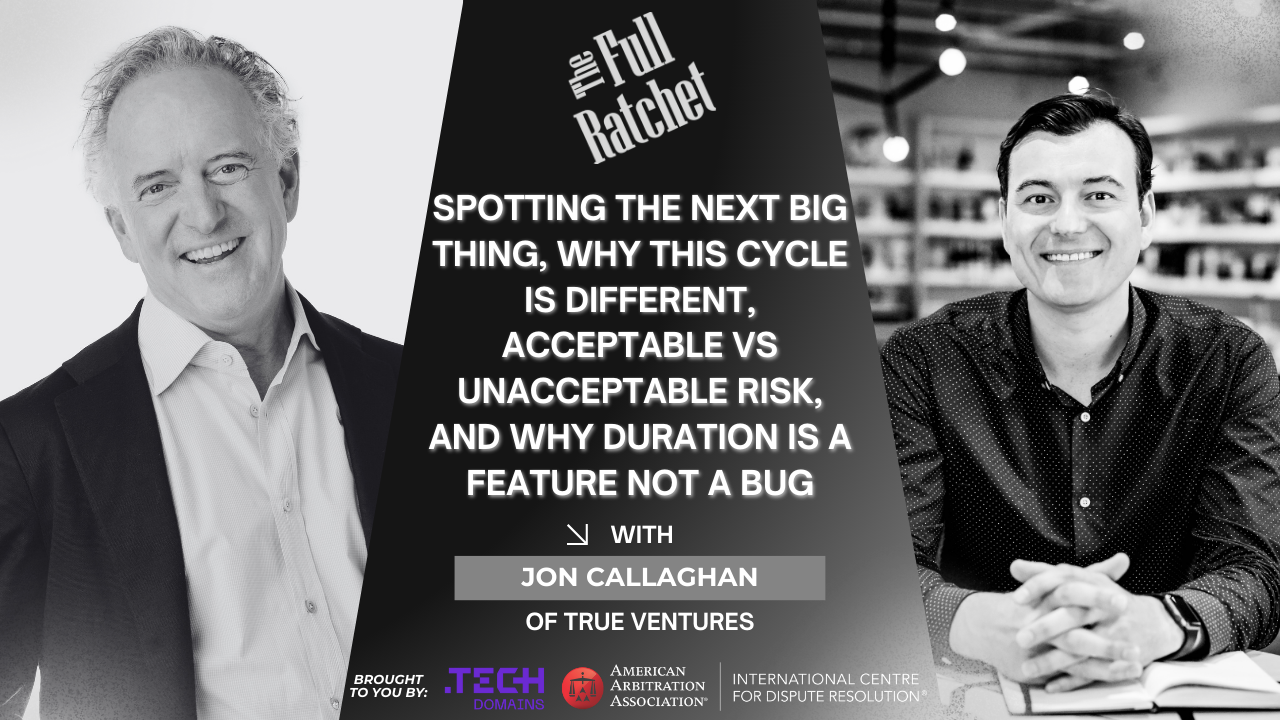
In VC, where being wrong is the norm (80%+ of the time), the most critical trait is not righteousness but deep curiosity. This learning-first mindset is what uncovers non-obvious opportunities and allows investors to see future market shifts before they become mainstream, according to True Ventures' Jon Callaghan.
Great investment outcomes often require weathering long periods of underperformance. The ability to remain patient, like holding a stock through five years of losses before it triples, is a critical skill. This long-term conviction, grounded in business fundamentals, is what separates successful investors from the rest.

Investors naturally develop 'scar tissue' from past failures, leading to increased cynicism that can prevent them from backing ambitious, non-obvious ideas. The best investors intentionally fight this bias by balancing their experience with a 'beginner's mind.' While pure naivete is dangerous, so is excessive cynicism, and finding the intersection between the two is critical for venture success.
Pursuing a genuinely non-obvious idea feels risky, not just uncertain. This feeling of danger—the fear of wasting years on a potential failure—is often a signal that you're working on something truly contrarian and valuable, as it deters others.

To achieve exceptional results, you must believe something and take action that the consensus thinks is wrong. This requires a non-consensual, often stubborn conviction. This path is high-risk because it means you are either a visionary who is early or you are simply an idiot.
