Get your free personalized podcast brief
We scan new podcasts and send you the top 5 insights daily.
The latest AI models like GPT-6 Astra may not offer noticeable improvements for all existing workflows, and can sometimes feel like a regression. Their primary value lies in enabling entirely new applications, like 3D design or advanced video editing, shifting the strategic focus from mere efficiency to discovering new opportunities.

Related Insights
Expert users report that while Astra's pure coding ability shows diminishing returns, its skill in 'computer use'—automating and navigating complex applications—is a massive leap. This indicates the frontier of AI is shifting from code generation to higher-level software orchestration and agentic task completion.
The true power of AI lies beyond optimizing existing workflows. The key skill is shifting from asking 'How can AI help my job?' to 'What can we do now that was previously impossible or uneconomic?' This reframes AI as a tool for radical innovation, not just incremental efficiency.
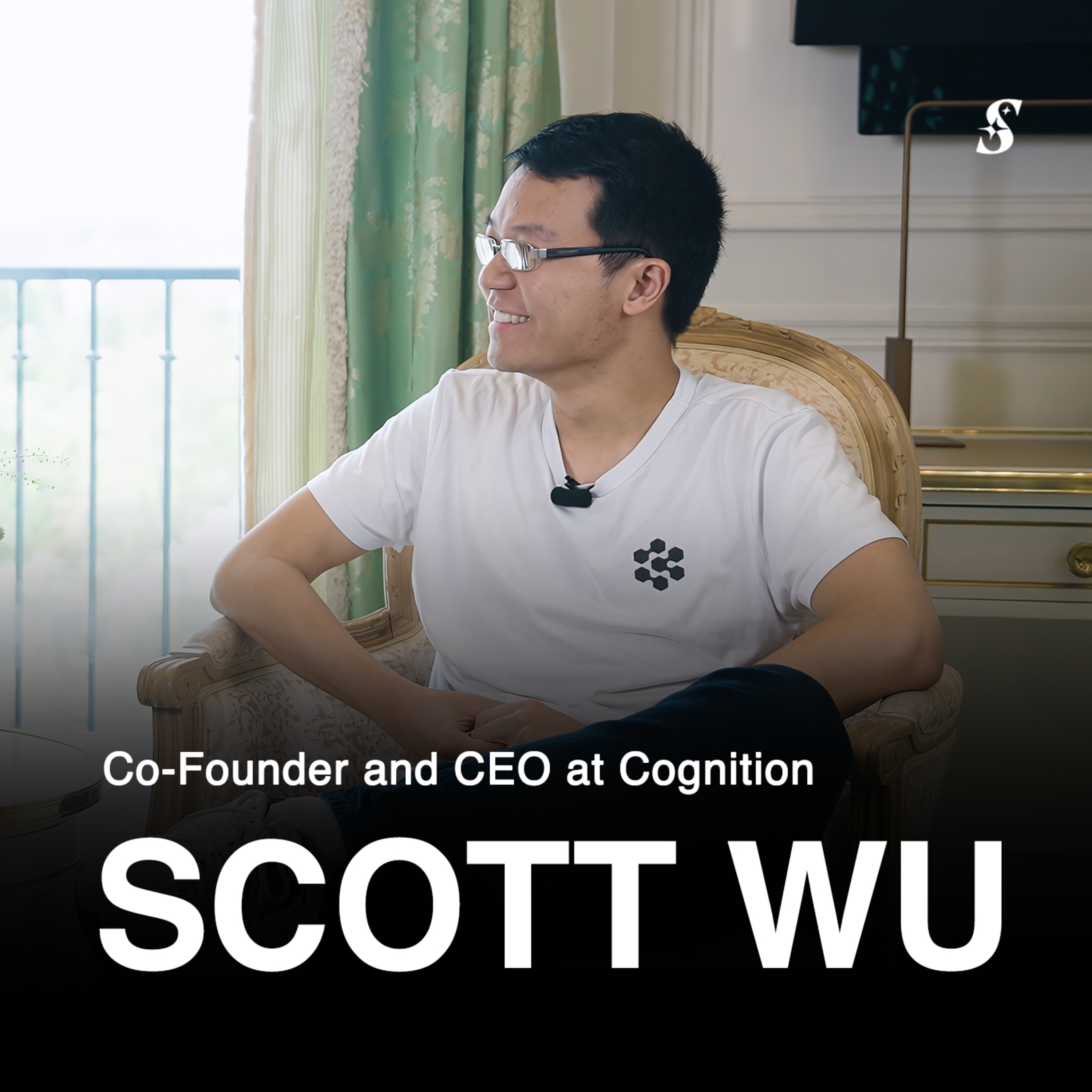
Scott Wu argues that focusing on AI's ability to make existing work more efficient misses the point. The real transformation comes from creating new capacity—enabling the development of things previously impossible, like "single-use software" or "self-driving software," fundamentally changing what businesses can build.
Astra's primary value isn't in improving existing workflows but in unlocking entirely new capabilities like 3D modeling and complex computer use. This reframes it as a tool that challenges users to rethink what is possible, rather than a simple upgrade for current tasks.
Previous AI models often hit a "quality ceiling" on complex tasks, failing to deliver high-quality output despite clear architectural instructions. GPT-6 Astra represents a leap that can "one-shot" these previously intractable problems, unblocking ambitious, long-stalled engineering projects.

While GPT-5.5 is a massive technical improvement, it may not feel transformative for 99% of users' daily workflows. Previous models like GPT-5.4 were already proficient enough for common tasks. The new model's value is realized at the ceiling of capability, on complex edge-case problems that stressed older models, rather than in everyday use.
Contrary to the idea that AI will become simpler to use, achieving state-of-the-art results with models like Astra requires sophisticated prompting techniques. Power users are adopting manager-and-sub-agent frameworks, indicating that prompt engineering is evolving into a more complex and valuable skill, not becoming obsolete.

While costly, advanced AI models provide a return on investment by enabling teams to tackle previously unsolvable or prohibitively complex problems. The value isn't just in accelerating existing workflows but in fundamentally increasing the ambition and scope of what's technically achievable.

Marketers should view Astra not as an incremental improvement for generating copy or images, but as a transformational tool for automating repetitive tasks and executing complex research missions. The value lies in its "agentic" capabilities to perform actual work, not just provide answers.

New AI model releases are becoming like incremental iPhone updates. The real breakthroughs now happen in the application layer—the "harnesses" like Claude Code. These platforms, with features like dynamic workflows, are what truly unlock new capabilities, shifting market focus from raw model power to user experience and practical tooling.