Get your free personalized podcast brief
We scan new podcasts and send you the top 5 insights daily.
A16z argues that influencing policy is a "relationship game" requiring sustained engagement with policymakers and staff. Startups, focused on survival, lack the resources for this long-term effort, so A16z acts as the infrastructure to build and maintain these crucial connections on their behalf.

Related Insights
In heavily regulated or legally ambiguous industries, a founder's most valuable asset can be political connections. One startup literally used a pitch deck slide showing its co-founder with prominent politicians to signal their ability to influence future legislation in their favor. This represents a stark, real-world "crony capitalism" business strategy.

A16z's foundational belief is that founders, not hired "professional CEOs," should lead their companies long-term. The firm is structured as a network of specialists to provide founders with the knowledge and connections they lack, enabling them to grow into the CEO role and succeed.

As described by Microsoft's President, corporate political donations are the "entry ticket" to the retreats and dinners where politicians spend their time. The check doesn't buy a specific policy outcome but provides the consistent access needed to build influential relationships.

The firm intentionally builds a powerful, public-facing brand so portfolio companies can 'borrow' its force and reputation at critical development points, accelerating their own growth and market presence.

Veteran advisor Bradley Tusk argues that successful startup lobbying is not about technology's merits, but about a politician's self-interest. The key is to demonstrate how approving the startup's agenda helps a politician win their next election, or how blocking it will hurt their chances.

Luckey reveals that Anduril prioritized institutional engagement over engineering in its early days, initially hiring more lawyers and lobbyists. The biggest challenge wasn't building the technology, but convincing the Department of Defense and political stakeholders to believe in a new procurement model, proving that shaping the system is a prerequisite for success.
![Palmer Luckey - Inventing the Future of Defense - [Invest Like the Best, CLASSICS] thumbnail](https://megaphone.imgix.net/podcasts/f7c9aa8e-cb8d-11f0-828e-0b281809c10a/image/cc07f91ec47f95abbde771a4956b37b7.jpg?ixlib=rails-4.3.1&max-w=3000&max-h=3000&fit=crop&auto=format,compress)
A16Z's promotional efforts are not for ego. The goal is to build a dominant brand that portfolio companies can 'borrow' at critical moments, using the firm's reputation and force in the world as a slingshot to build their own.

For its American Dynamism fund, Andreessen Horowitz provides more than capital; it fields a dedicated policy team in Washington D.C. This team works to change structural government problems, like defense procurement, creating a more favorable market for its portfolio and the broader startup ecosystem.
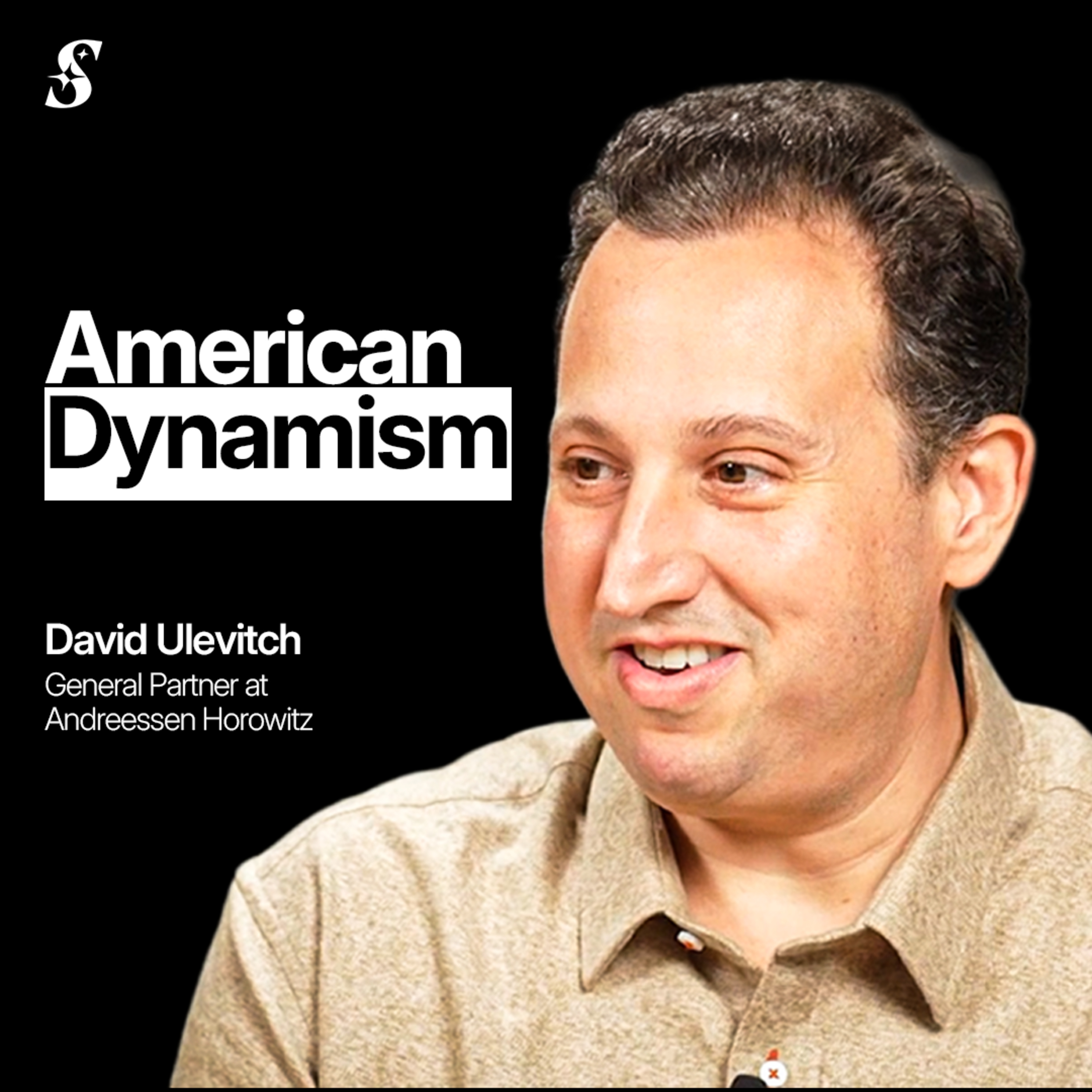
A16z frames its "American Dynamism" portfolio, which invests in national interest sectors, as the "child coming to teach the parent." It aims to re-inject Silicon Valley's rapid innovation model back into the government, the very entity that fostered Silicon Valley's original culture post-WWII.
Venture firm A16z's heavy involvement in policy began when its founders realized early AI and crypto regulatory discussions were dominated by large companies. Startups ("little tech") had no representation, prompting A16z to create a function to provide that missing voice at the table.