Get your free personalized podcast brief
We scan new podcasts and send you the top 5 insights daily.
When an AI agent encounters a blocker it can't solve, like a CAPTCHA, the most efficient workflow is for a human to intervene for that single step. This model flips the script: instead of the AI assisting the human, the human assists the AI, enabling the automated task to continue.

Related Insights
Moving beyond the co-pilot model, Genesis has its AI agents work autonomously on complex tasks. They only engage a human when they get stuck or their confidence in a decision drops, inverting the traditional human-in-the-loop workflow for maximum efficiency and creating a system that learns from every interaction.

The primary obstacle for tools like OpenAI's Atlas isn't technical capability but the user's workload. The time, effort, and security risk required to verify an AI agent's autonomous actions often exceed the time it would take for a human to perform the task themselves, limiting practical use cases.
AI browsers like Atlas may initially refuse to scrape sites like LinkedIn due to built-in guardrails. Explicitly prompting the tool to "use your agent mode" can often serve as a workaround to bypass these restrictions and execute the task.

In a hybrid model, an AI can handle a customer conversation but escalate ambiguous micro-tasks, like interpreting a photo for a warranty claim, to a human agent via a private message. The human provides a quick verdict, allowing the AI to continue the interaction seamlessly without the customer knowing.

The key to leveraging agentic AI is not knowing how to set up automations yourself. The AI can build its own workflows. Your job is to act as an overseer, providing logins or approvals when it gets stuck, rather than executing the technical steps yourself.

Instead of forcing full autonomy, the AI agent allows teams to start with human approvals at key stages. This 'human-in-the-loop' model builds trust and enables organizations to incrementally automate complex support workflows as they grow more confident in the system's reliability.
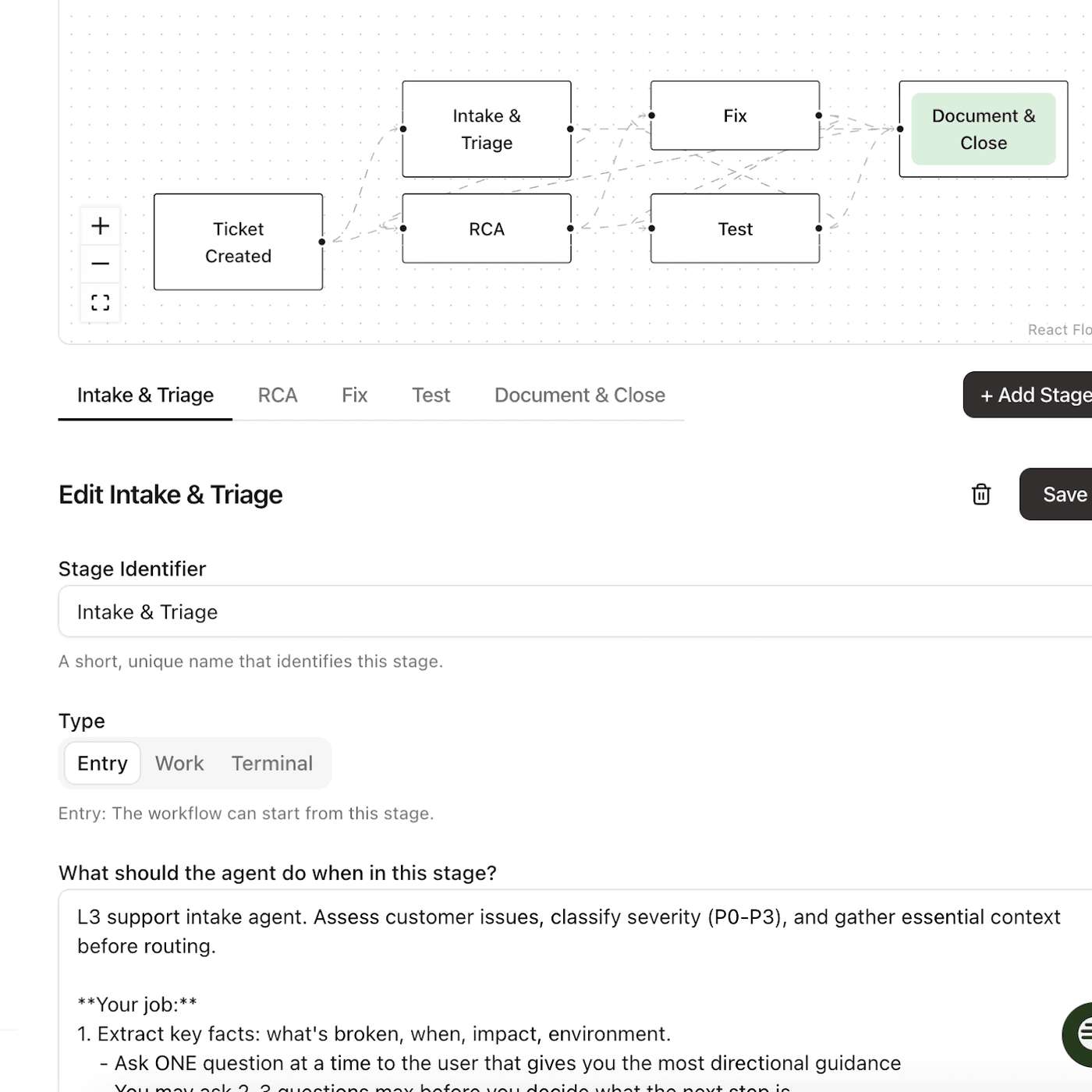
Instead of pursuing 100% automation, Lila's system treats complex manual tasks as API calls routed to human technicians. This pragmatic approach keeps humans 'below the API line,' seamlessly integrating necessary manual work into a software-driven workflow without halting automation.

Even advanced AI agents fail at basic business tasks. They are frequently blocked by bot detection on sites like Amazon during checkout and cannot pass the "Know Your Customer" (KYC) identity verification required to open a traditional bank account, necessitating human intervention.

For complex, high-stakes tasks like booking executive guests, avoid full automation initially. Instead, implement a 'human in the loop' workflow where the AI handles research and suggestions, but requires human confirmation before executing key actions, building trust over time.
When an AI coding assistant asks you to perform a manual task like checking its output, don't just comply. Instead, teach it the commands and tools (like Playwright or linters) to perform those checks itself. This creates more robust, self-correcting automation loops and increases the agent's autonomy.