Get your free personalized podcast brief
We scan new podcasts and send you the top 5 insights daily.
While traditional hybrid models still require solving differential equations during use, Physics-Informed Neural Networks (PINNs) learn the final outcome directly. They are trained to obey physical laws but don't need the equations for inference. This provides a significant speed advantage for computationally expensive systems like chromatography, making them more suitable for real-time applications.

Related Insights
Manage the complexity of end-to-end continuous processes by creating automated feedback loops. Integrating real-time analytics, like an online HPLC, with mechanistic models allows for the dynamic, on-the-fly adjustment of downstream unit operations based on live upstream performance, optimizing the entire system.
Unlike traditional methods that simulate physical interactions like a key in a lock, ProPhet's AI learns the fundamental patterns governing why certain molecules and proteins interact. This allows for prediction without needing slow, expensive, and often impossible physical or computational simulations.

A core challenge in physical AI is the tension between large, powerful models (offboard, in a data center) and the need for low-latency models (onboard, on the machine). The key is using techniques like distillation to create smaller derivatives that run in milliseconds for safety-critical decisions.

For physical design, simulation shouldn't just be a final verification step. Instead, it should be a tool used during model training to build the AI's intuition or "taste." This allows the model to generate high-quality designs quickly at inference time, mirroring how expert human engineers develop their skills.

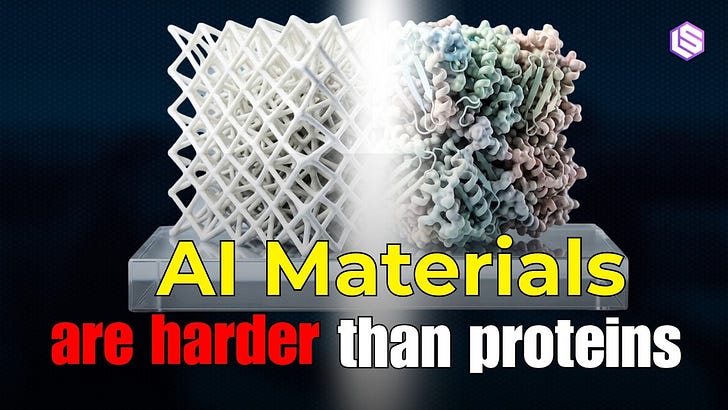
Rather than just replacing physics-based models, AI can be used to select the *correct* physics model. Heather Kulik's team uses the quantum wave function itself as an input to a neural network to predict which quantum mechanical approximation will be most accurate for a specific material, a complex task that defies simple heuristics.
A major breakthrough for Liquid AI was finding a closed-form solution for the differential equations governing their neural networks, a problem unsolved since 1907. This eliminated the need for slow, step-by-step numerical solvers, enabling a massive leap in scalability from hundreds to potentially billions of neurons.

To ensure scientific validity and mitigate the risk of AI hallucinations, a hybrid approach is most effective. By combining AI's pattern-matching capabilities with traditional physics-based simulation methods, researchers can create a feedback loop where one system validates the other, increasing confidence in the final results.
Experiments are not just for validation; they are a form of computation. By treating nature as a 'Physics Processing Unit' (PPU) working alongside digital GPUs, we can integrate physical experimentation directly into the computational loop, creating a powerful hybrid system for materials discovery.
Traditional science failed to create equations for complex biological systems because biology is too "bespoke." AI succeeds by discerning patterns from vast datasets, effectively serving as the "language" for modeling biology, much like mathematics is the language of physics.

Generative AI alone designs proteins that look correct on paper but often fail in the lab. DenovAI adds a physics layer to simulate molecular dynamics—the "jiggling and wiggling"—which weeds out false positives by modeling how proteins actually interact in the real world.
