Get your free personalized podcast brief
We scan new podcasts and send you the top 5 insights daily.
For physical design, simulation shouldn't just be a final verification step. Instead, it should be a tool used during model training to build the AI's intuition or "taste." This allows the model to generate high-quality designs quickly at inference time, mirroring how expert human engineers develop their skills.

Related Insights
In hardware automation, a "go slow to go fast" approach is essential. Iterations are too slow and costly once hardware is built. Front-loading validation through drawings and simulations avoids major architectural issues that often get buried later due to project momentum or "go fever."

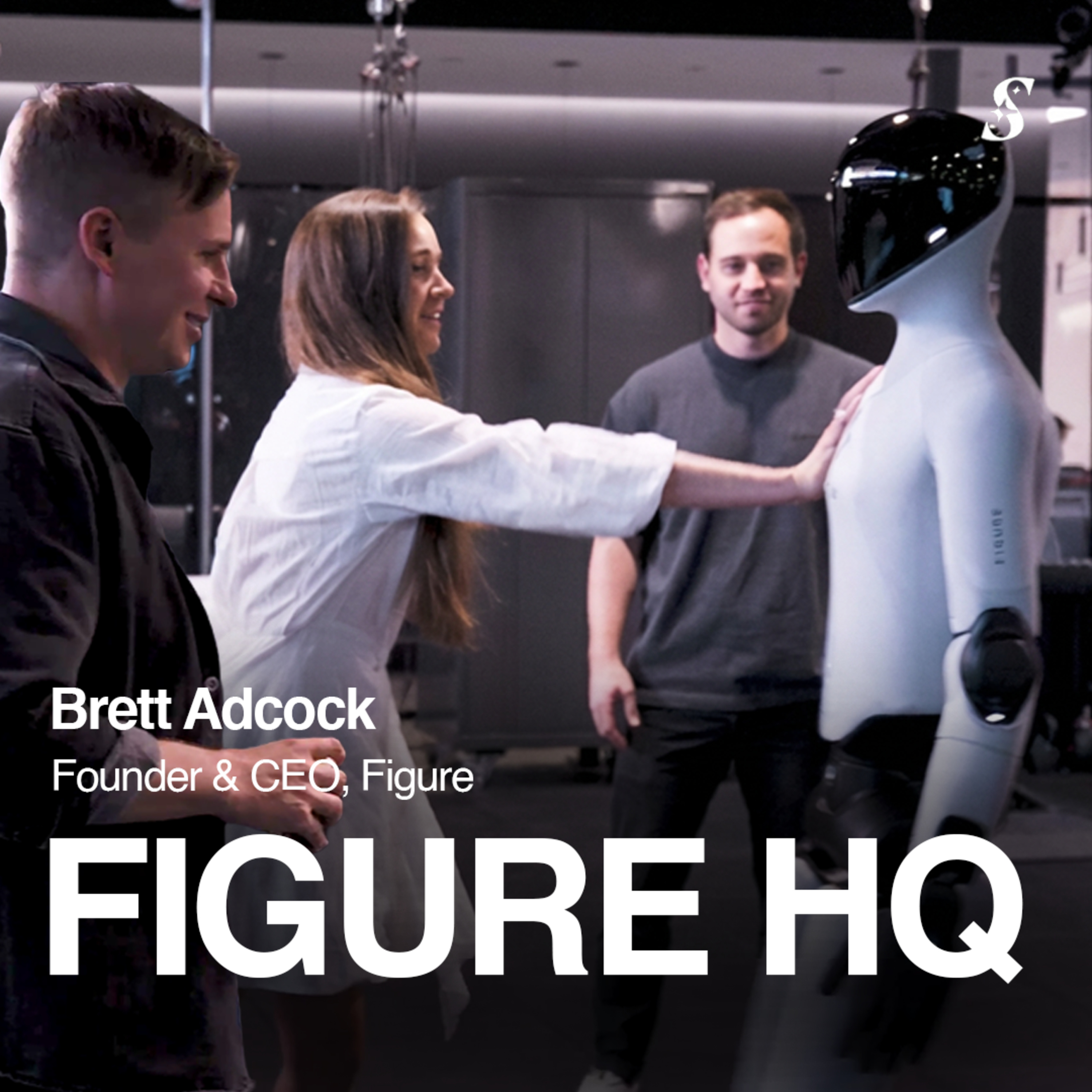
Figure trains its robot's stability controller entirely in a physics simulator, akin to a video game. This allows them to test countless scenarios synthetically. The resulting AI model is so effective it can be 'zero-shot' deployed directly onto the physical robot, achieving human-level stability immediately.
High-fidelity simulations aim for prediction, but simpler "toys" like SimCity are invaluable for building intuition. They are just complex enough to exhibit unexpected behaviors, teaching users how complex systems "bite back" without needing perfect real-world accuracy.

Beyond supervised fine-tuning (SFT) and human feedback (RLHF), reinforcement learning (RL) in simulated environments is the next evolution. These "playgrounds" teach models to handle messy, multi-step, real-world tasks where current models often fail catastrophically.

The AI's ability to handle novel situations isn't just an emergent property of scale. Waive actively trains "world models," which are internal generative simulators. This enables the AI to reason about what might happen next, leading to sophisticated behaviors like nudging into intersections or slowing in fog.

A common misconception is that simulation perfectly represents reality. In practice, it's a continuous loop: real-world data is required to tune simulator parameters, and this validation must be repeated until the gap between simulation and reality is small enough to trust the results.

To ensure scientific validity and mitigate the risk of AI hallucinations, a hybrid approach is most effective. By combining AI's pattern-matching capabilities with traditional physics-based simulation methods, researchers can create a feedback loop where one system validates the other, increasing confidence in the final results.

Unlike text-based AI that relies on descriptive prompts, some advanced design tools for physical components work in reverse. The user defines 'no-go' zones and constraints, and the AI then generates numerous optimized design possibilities within those boundaries.

Instead of using traditional, rule-based simulators, Comma AI trains its driving agent inside a learned "world model." This generative model creates photorealistic, diverse driving scenarios and, crucially, responds accurately to the agent's simulated actions—a key requirement for effective robotics training.

Creating realistic training environments isn't blocked by technical complexity—you can simulate anything a computer can run. The real bottleneck is the financial and computational cost of the simulator. The key skill is strategically mocking parts of the system to make training economically viable.
