Get your free personalized podcast brief
We scan new podcasts and send you the top 5 insights daily.
Project Meridian, a U.S. military initiative to reimagine modern warfare, actively involves private sector leaders like Elon Musk and Palmer Luckey. This strategy accepts the risk of regulatory capture as a necessary trade-off to access unparalleled engineering talent for national security.

Related Insights
A powerful partnership has formed between elite US tech talent (e.g., from Google X) and experienced Ukrainian drone units on the front line. This creates a rapid, iterative feedback loop for innovation that Russia’s slow, centralized defense industry is unable to compete with, accelerating technological superiority.

A new category of agile tech companies is winning major defense contracts by offering cheaper, software-driven, and nimbler solutions like drones and AI, directly challenging established giants like Lockheed Martin.

The Under Secretary of War's primary job is not just to fund technology, but to actively cultivate an ecosystem of new defense contractors. The stated goal is to create five more major companies capable of challenging established primes like Lockheed Martin, fostering competition and bringing new capabilities into the defense sector.
The military lacks the "creative destruction" of the private sector and is constrained by rigid institutional boundaries. Real technological change, like AI adoption, can only happen when intense civilian leaders pair with open-minded military counterparts to form a powerful coalition for change.

Investing in a hypersonic weapons company, once a career-ending move in Silicon Valley, is now seen as a crucial act of deterrence. This rapid cultural reversal, catalyzed by geopolitical events, signifies a profound sea change in the tech industry's values and its relationship with national security.

Historically, major defense innovations like ICBMs and the U-2 spy plane succeeded when a builder ("founder") was shielded by an internal military champion ("maverick"). This pairing provides the political cover and resources needed to navigate and overcome institutional inertia.

The pipeline for national security talent has shifted from government and military service to the private sector. Young innovators at startups and hyperscalers are developing critical technologies that directly contribute to national security, representing a new, decentralized form of public service.

Starlink's ability to grant or revoke its service in a conflict zone directly impacts a military's command and control. By changing its policies, Starlink single-handedly gutted Russia's battlefield communications, demonstrating how private firms now control critical levers of war.

Beyond SpaceX's products, its most significant impact is creating a diaspora of engineers skilled in Musk's "build for production" methodology. These alumni are now founding new defense companies, applying lessons on speed and cost that are absent from traditional engineering education and corporate environments.
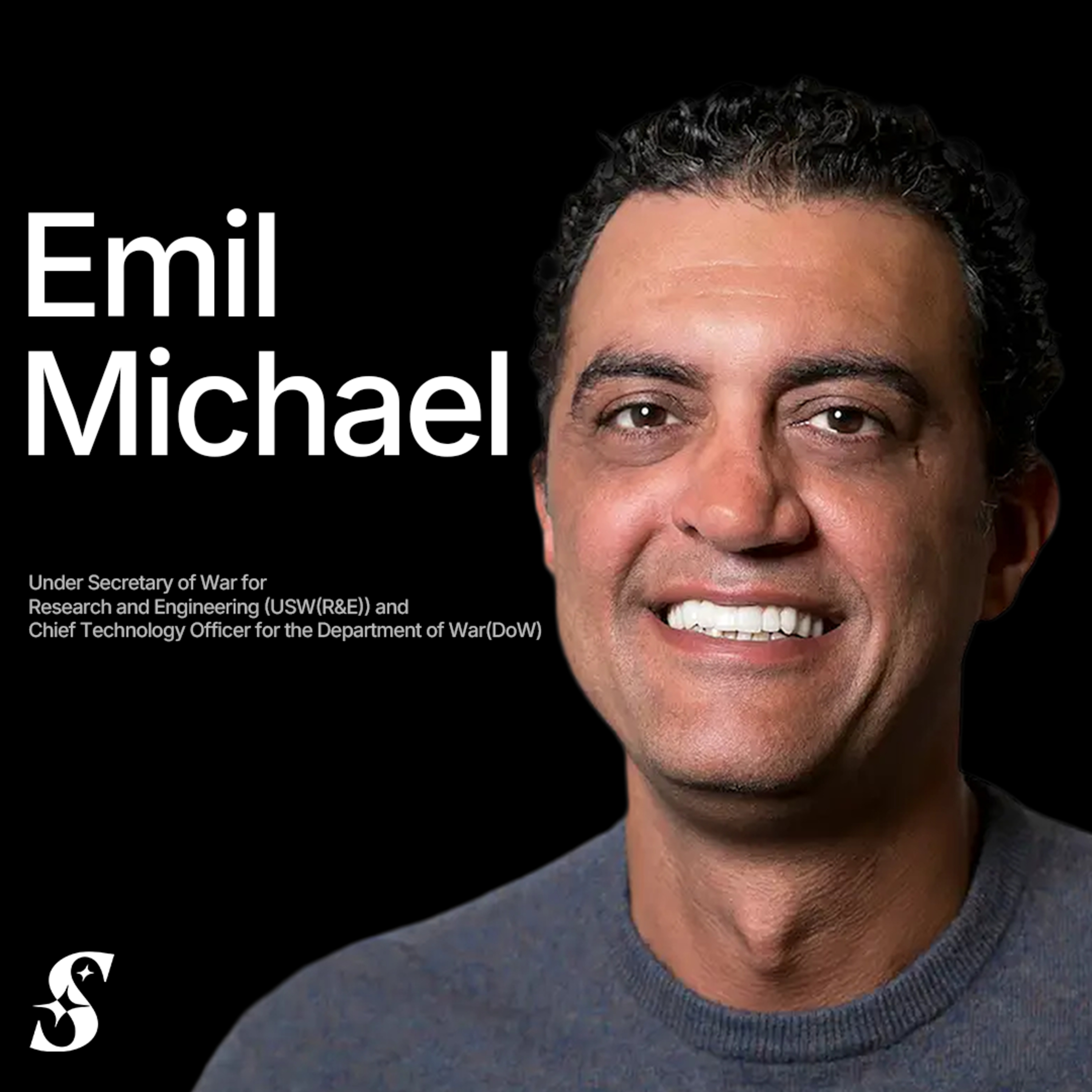
Emil Michael describes his role not as a procurement officer but as a "chief venture capitalist" for the Department of War. The strategy is to identify and fund promising new defense tech companies, creating a virtuous cycle where success attracts more private capital and talent to the sector.
