Get your free personalized podcast brief
We scan new podcasts and send you the top 5 insights daily.
Instead of using AI to eliminate colleagues, a more optimistic strategy is to automate your own corporate tasks. This frees up your time and mental energy to build a side business with the same powerful AI tools, ultimately creating a path to exit the corporate world.

Related Insights
Most companies are not Vanguard tech firms. Rather than pursuing speculative, high-failure-rate AI projects, small and medium-sized businesses will see a faster and more reliable ROI by using existing AI tools to automate tedious, routine internal processes.

The common fear of AI eliminating jobs is misguided. In practice, AI automates specific, often administrative, tasks within a role. This allows human workers to offload minutiae and focus on uniquely human skills like relationship building and strategic thinking, ultimately increasing their leverage and value.

Frame internal AI initiatives not as a way to replace employees, but to automate their chores. This frees them to move 'up the stack' to perform higher-value functions like client relations, creative strategy, and founder meetings, ultimately increasing overall output.
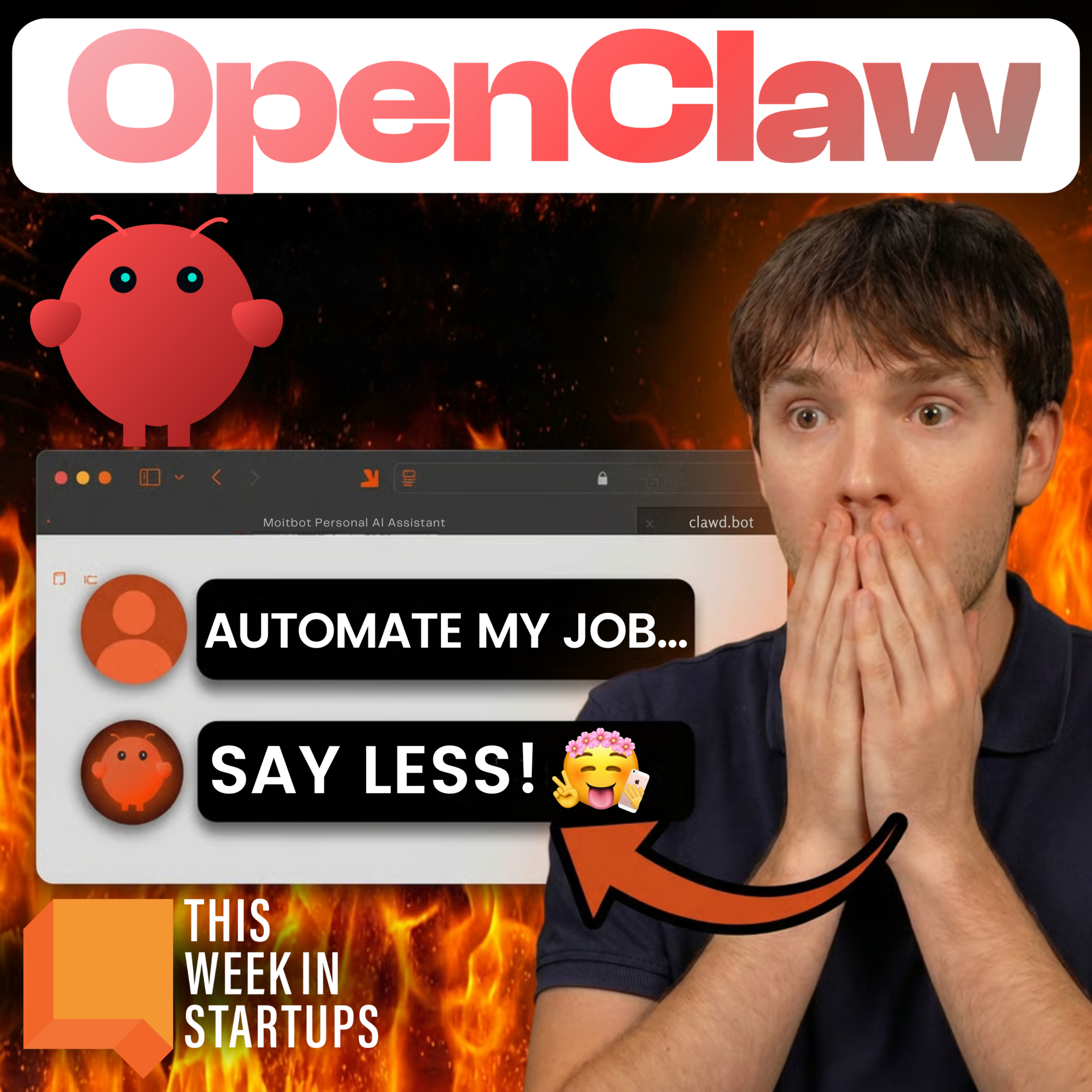
Instead of viewing AI-driven job loss negatively, it can be an opportunity. Displaced specialists, like video game artists, can now leverage AI agents to handle other business functions (coding, marketing), enabling them to build entire companies and products by themselves.

The most effective career strategy for employees facing automation is not resistance, but mastery. By learning to operate, manage, and improve the very AI systems that threaten their roles, individuals can secure their positions and become indispensable experts who manage the machines.
A counterargument to mass unemployment suggests AI will dramatically lower the barrier to entrepreneurship. When one person can automate accounting, marketing, and coding, small-scale business formation becomes much easier, potentially shifting labor from traditional white-collar roles to a new wave of small businesses.

The focus on AI automating existing human labor misses the larger opportunity. The most significant value will come from creating entirely new types of companies that are fully autonomous and operate in ways we can't currently conceive, moving beyond simple replacement of today's jobs.

To thrive with AI, professionals should operate like "mermaids." Your unique, creative work is your irreplaceable "human half." AI is the functional "tail" used to automate tedious tasks you dislike, freeing up time to focus on high-value, uniquely human skills that differentiate you.

Kahlow actively encourages her team to find ways to replace their own roles with AI. She promises that those who succeed in automating their job will be given a new, higher-value position within the company.

Amjad Masad argues that AI agents will automate standardized, siloed tasks that make employees feel like 'cogs in a machine.' This frees up individuals to be more creative and entrepreneurial within their roles, allowing them to see the full fruit of their labor and reversing the 'alienation' Karl Marx described.
