Get your free personalized podcast brief
We scan new podcasts and send you the top 5 insights daily.
To thrive with AI, professionals should operate like "mermaids." Your unique, creative work is your irreplaceable "human half." AI is the functional "tail" used to automate tedious tasks you dislike, freeing up time to focus on high-value, uniquely human skills that differentiate you.

Related Insights
Business owners should view AI not as a tool for replacement, but for multiplication. Instead of trying to force AI to replace core human functions, they should use it to make existing processes more efficient and to complement human capabilities. This reframes AI from a threat into a powerful efficiency lever.

The common fear of AI eliminating jobs is misguided. In practice, AI automates specific, often administrative, tasks within a role. This allows human workers to offload minutiae and focus on uniquely human skills like relationship building and strategic thinking, ultimately increasing their leverage and value.

Frame internal AI initiatives not as a way to replace employees, but to automate their chores. This frees them to move 'up the stack' to perform higher-value functions like client relations, creative strategy, and founder meetings, ultimately increasing overall output.
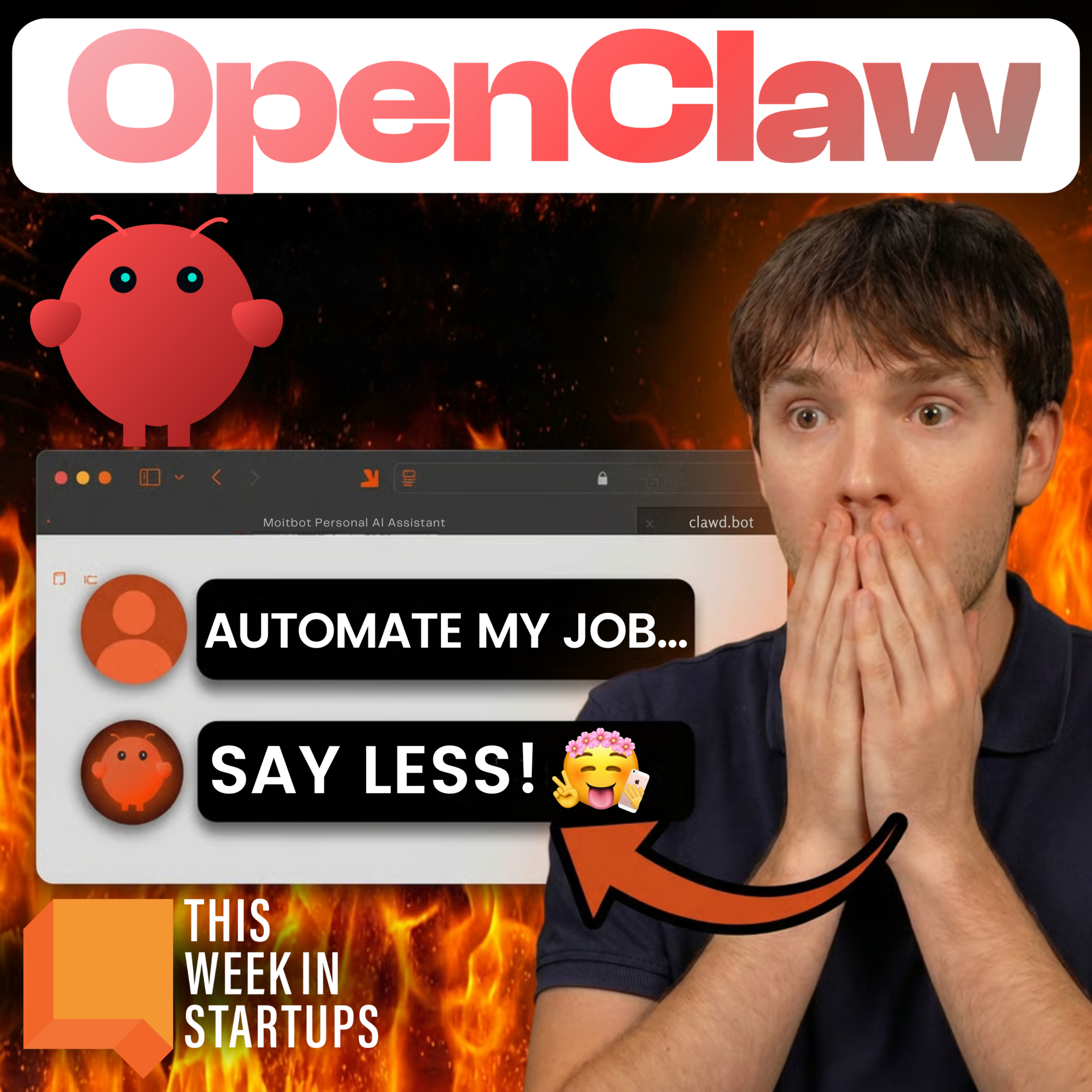
AI's primary value isn't replacing employees, but accelerating the speed and quality of their work. To implement it effectively, companies must first analyze and improve their underlying business processes. AI can then be used to sift through data faster and automate refined workflows, acting as a powerful assistant.

The strategic narrative for AI integration is shifting from automation (replacement) to augmentation (collaboration). Augmentation positions AI as an assistant that enhances human skills, enabling teams to achieve outcomes that neither humans nor AI could accomplish independently. This fosters a more inclusive and productive environment.

To truly leverage AI, professionals must change their approach to tasks. Instead of automatically assuming personal responsibility, the first question should be whether an AI tool can perform it. This proactive mindset shift unlocks significant productivity gains by automating routine work.

Instead of viewing AI collaboration as a manager delegating tasks, adopt the "surgeon" model. The human expert performs the critical, hands-on work while AI assistants handle prep (briefings, drafts) and auxiliary tasks. This keeps the expert in a state of flow and focused on their unique skills.

Instead of fearing AI, design engineers should leverage it to automate boilerplate and foundational code. This frees up mental energy and time to focus on what truly matters: crafting the nuanced, high-quality interactions and animations that differentiate a product and require human creativity.

The true ROI of AI isn't just efficiency; it's the opportunity to reallocate time from low-value tasks to uniquely human activities. Use the bandwidth gained to build deeper client relationships, foster community, and engage in creative work.

Adopt a 'more intelligent, more human' framework. For every process made more intelligent through AI automation, strategically reinvest the freed-up human capacity into higher-touch, more personalized customer activities. This creates a balanced system that enhances both efficiency and relationships.