Get your free personalized podcast brief
We scan new podcasts and send you the top 5 insights daily.
The removal of Ukraine's defense minister may reflect a deeper strategic debate. Established military leaders are pushing back against a "gamified" approach where tactical units chase high-value targets for points. They advocate for a more traditional strategy where strikes are explicitly tied to achieving larger, defined military objectives.

Related Insights
Ukraine is reforming its command structure by implementing corps that oversee about five brigades each. This is a significant improvement over previous temporary groupings that managed up to 20 brigades, leading to better coordination, staff work, and allocation of specialized assets like UAV regiments.

A key tension exists within Ukraine's leadership regarding long-term strategy. One camp believes a longer war degrades Russia's economy and allows Ukraine's defense industry to integrate with Europe. The opposing view is that a prolonged conflict disproportionately damages Ukraine's own critical infrastructure first.

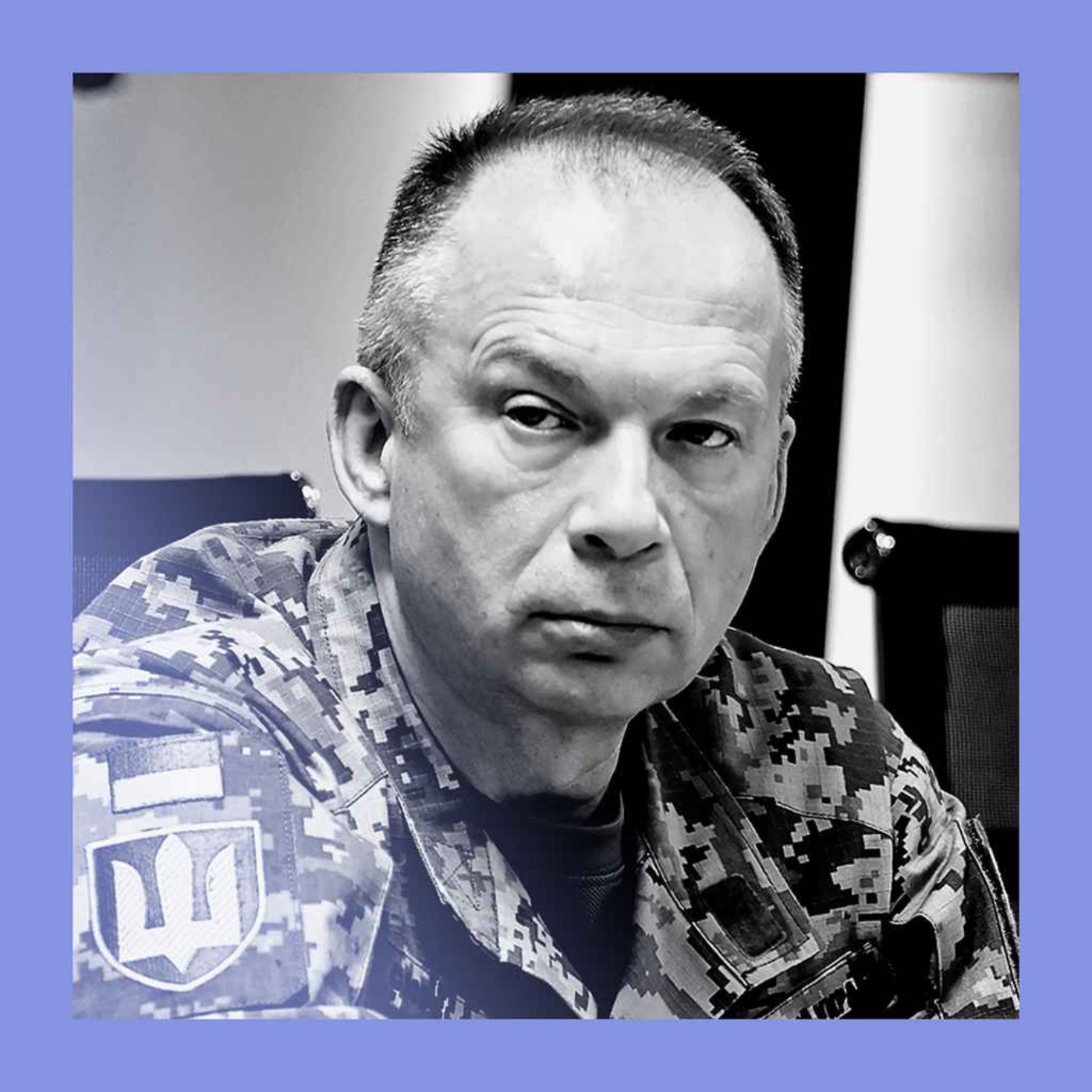
The dismissal of Ukraine's top general, Alexander Sersky, stemmed from a deep "culture clash" between his Soviet-style, high-casualty tactics and the tech-driven, reformist approach of the now-fired Defense Minister, Mihalo Fedorov. This internal conflict reveals a crucial struggle over the military's very ethos, separate from external wartime pressures.
European leaders have shifted from seeing Ukraine as a moral cause to a vital strategic asset. Ukraine's battle-tested army is viewed as Europe's "shield," and its innovations in drone warfare are seen as Europe's future "arsenal," especially amid doubts about US security guarantees.

Ukraine's most realistic theory of success is not reclaiming all territory militarily, but leveraging its advantages to stabilize the front and inflict unsustainable casualties and economic costs on Russia. This strategy aims to make the war so futile for Moscow that it forces a favorable negotiated settlement.
A key architect of Ukraine's drone program has pivoted the military's objective away from capturing territory. The new strategy uses drones to target individual Russian soldiers, aiming for a kill rate that exceeds Russia's recruitment rate. This redefines victory as causing a demographic and logistical collapse of the enemy force, rather than controlling land.
Contrary to expectations of a high-tech war, the conflict in Ukraine demonstrates enduring principles of warfare. The superiority of defense over offense, the difficulty of breakthroughs without air power, and the tendency toward attrition are all classic lessons that would be recognizable to strategists from past major conflicts.

With the goal of retaking all territory now unrealistic, Ukraine's military command has adopted a new strategy: inflict such high monthly casualties on Russian forces (40-50k) that Putin cannot sustain recruitment levels, ultimately forcing him to seek a ceasefire due to domestic pressure.

President Zelensky politically miscalculated by firing his popular, reformist defense minister. The move sparked public outrage and street protests, which gave the ousted minister leverage. This ultimately forced Zelensky to also fire his top general, bruising the president's political judgment and authority in the eyes of allies and citizens.
To focus drone strikes on high-value targets like Russian personnel, Ukraine implemented a gamification system. Brigades earn points for hitting specific targets, which can be exchanged for new equipment. This incentivizes a strategic shift from destroying materiel to attriting enemy forces, directly influencing battlefield behavior through a reward-based framework.