Get your free personalized podcast brief
We scan new podcasts and send you the top 5 insights daily.
A visual knowledge graph tracks the AI's understanding of the business, market, and customers. The CPO's goal is to increase this coverage percentage, which directly correlates with the ability to delegate higher-level strategic tasks to the AI agent.

Related Insights
To get high-quality, autonomous work from an AI agent, you must treat it like a new hire, not just give it a simple prompt. You must provide a clear goal, specific skills (pre-defined knowledge), the right tools (APIs, etc.), and rich context (company data).

A robust framework for measuring an AI agent's success requires a tiered approach. First, establish baseline quality (is it working correctly?). Then, measure user engagement (adoption, retention). Finally, connect these to top-line business impact (revenue, savings).
Consumer AI like ChatGPT has broad context but lacks the specific depth needed for business problems. To get great results from enterprise AI, you must provide it with deep, rich context like unified customer data, campaign history, and internal team conversations. Quality output is a direct function of context depth.

Implement a system where an AI agent uses both content analytics (views, likes) and business metrics (app downloads, revenue) to continuously refine its strategy. This 'Larry Loop' allows the agent to learn what drives actual business results, not just vanity metrics, creating a fully autonomous marketing engine.
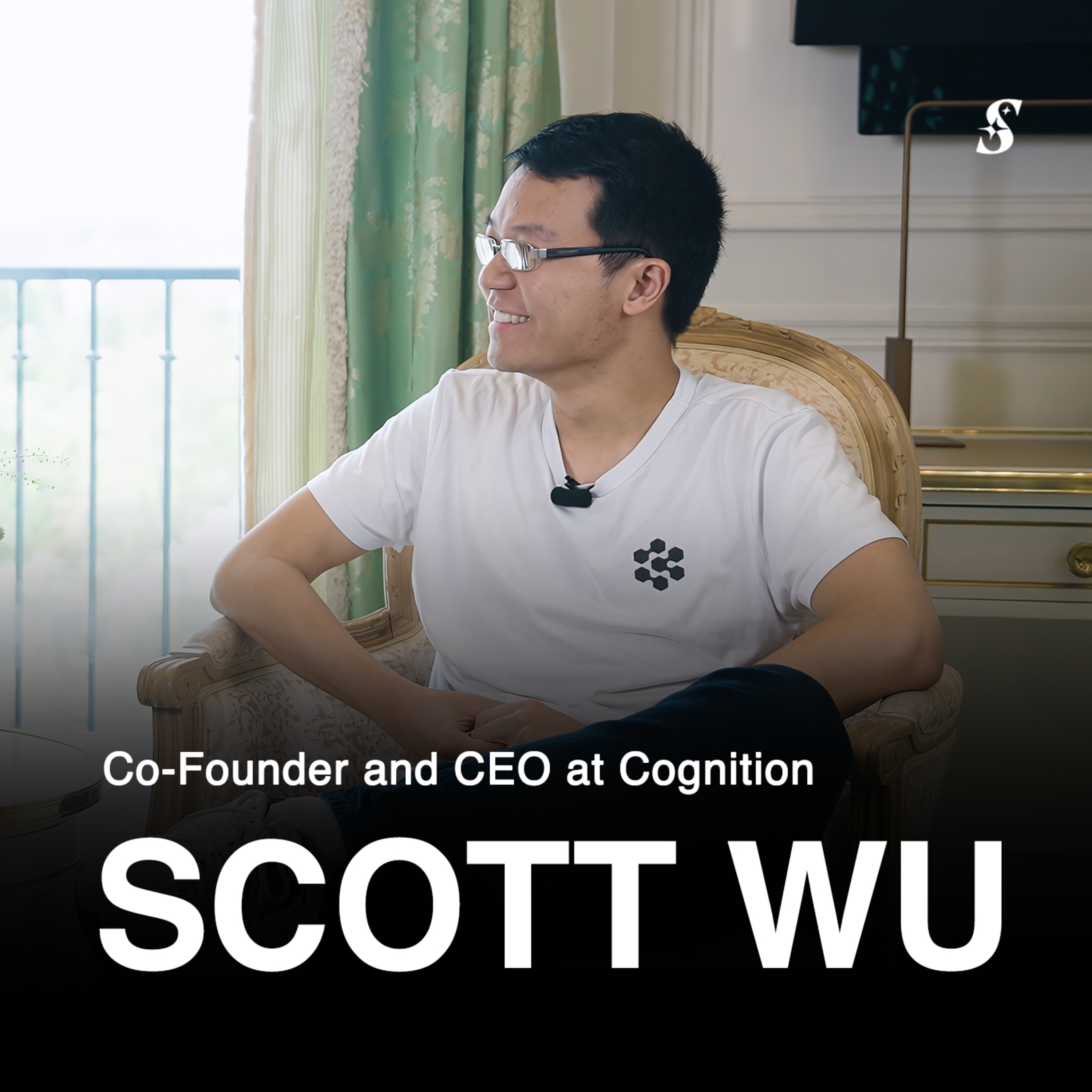
CEO Scott Wu dismisses "literal tokens" as a vanity metric for AI productivity. Instead, Cognition measures the impact of its AI agent, Devin, by tracking core business KPIs and customer outcomes. This shifts the focus from raw output to tangible business value and ROI.
Traditional product metrics like DAU are meaningless for autonomous AI agents that operate without user interaction. Product teams must redefine success by focusing on tangible business outcomes. Instead of tracking agent usage, measure "support tickets automatically closed" or "workflows completed."

To maximize an AI agent's effectiveness, you must "onboard" it like a new employee. Providing context like brand guidelines, strategic goals, and performance data trains the system, making it significantly more intelligent and useful for your specific needs.

AI agents are simply 'context and actions.' To prevent hallucination and failure, they must be grounded in rich context. This is best provided by a knowledge graph built from the unique data and metadata collected across a platform, creating a powerful, defensible moat.

Open and click rates are ineffective for measuring AI-driven, two-way conversations. Instead, leaders should adopt new KPIs: outcome metrics (e.g., meetings booked), conversational quality (tracking an agent's 'I don't know' rate to measure trust), and, ultimately, customer lifetime value.

Instead of focusing on time saved (e.g., 16 hours/week), the real KPI for executive AI use is expanding 'reach'—the capacity to engage in more strategic areas like competitive intelligence and customer discovery, which were previously impossible to do at scale.
