Get your free personalized podcast brief
We scan new podcasts and send you the top 5 insights daily.
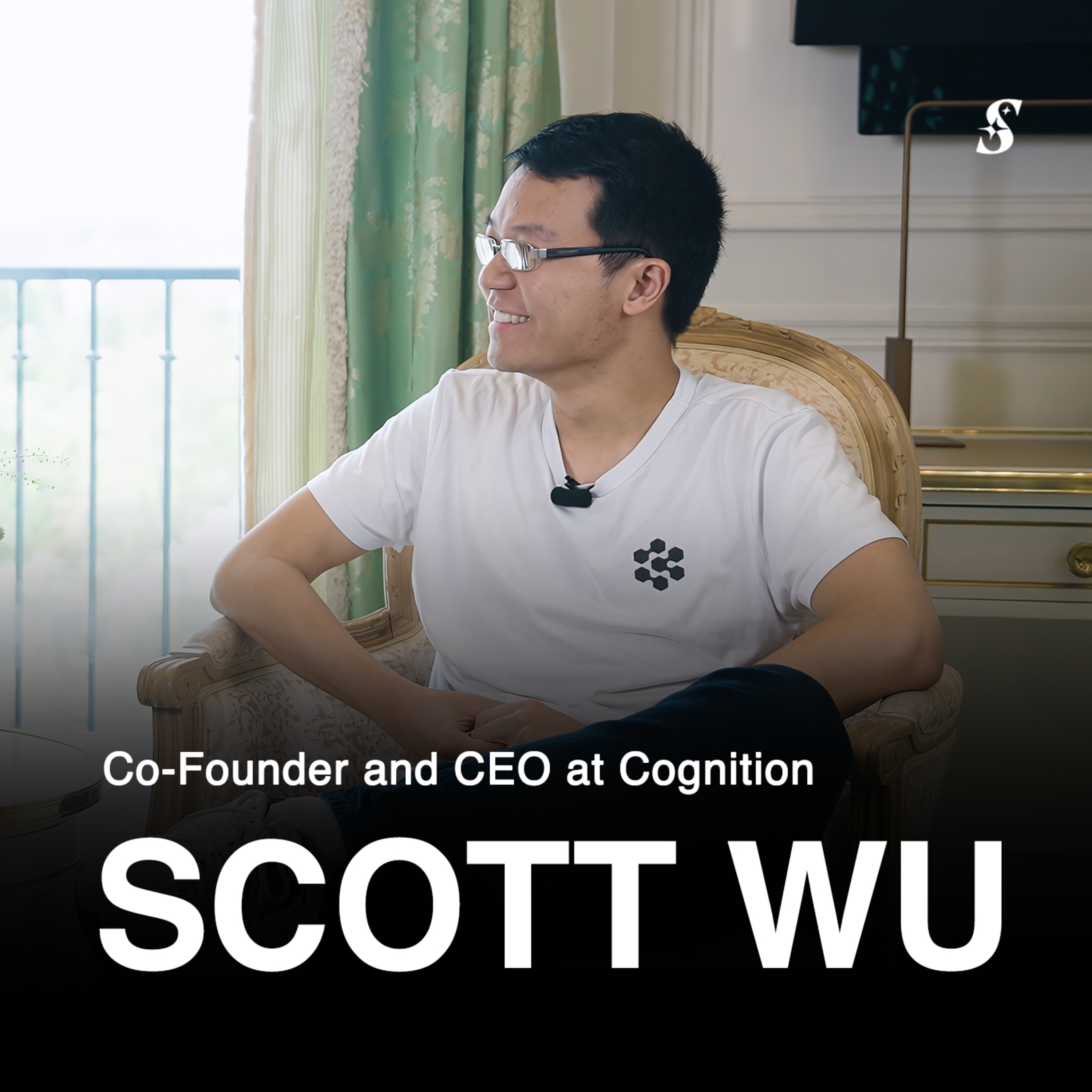
CEO Scott Wu dismisses "literal tokens" as a vanity metric for AI productivity. Instead, Cognition measures the impact of its AI agent, Devin, by tracking core business KPIs and customer outcomes. This shifts the focus from raw output to tangible business value and ROI.
Related Insights
To quantify the real-world impact of its AI tools, Block tracks a simple but powerful metric: "manual hours saved." This KPI combines qualitative and quantitative signals to provide a clear measure of ROI, with a target to save 25% of manual hours across the company.

The success of AI in marketing should not be measured by the quantity of content or ideas generated, which can create chaos. Instead, leaders must track its impact on core business metrics like revenue growth and operational efficiency. The goal is enabling a 10-person team to operate with the impact of a 100-person team.

Unlike traditional software that optimizes for time-in-app, the most successful AI products will be measured by their ability to save users time. The new benchmark for value will be how much cognitive load or manual work is automated "behind the scenes," fundamentally changing the definition of a successful product.

As AI handles more routine tasks, traditional productivity metrics like 'tasks completed' become obsolete. The focus must shift from output to outcomes. It no longer matters what was done on a given day, but rather how tools were used to achieve a specific business goal.

With infinitely scalable AI agents, cost and time per interaction are no longer primary constraints. Companies should abandon classic efficiency metrics like Average Handle Time and instead measure success by outcomes, such as percentage of tasks completed and improvements in Customer Satisfaction (CSAT).

Superhuman's CEO advises against simply tracking AI costs, a practice he calls 'token maxing'. Instead, they evaluate the ROI of internal AI tools by measuring developer productivity metrics like feature delivery pace. This output-focused approach has doubled engineering velocity, justifying the AI spend.

Instead of focusing on cost-cutting metrics like "hours saved," leaders should measure AI's success by the capacity it frees up. For instance, faster research analysis enables more studies per year, leading to more customer-informed decisions. This reframes efficiency as a strategic advantage that drives growth, not just reduces costs.

According to Mike Cannon-Brookes, advanced enterprises are not tracking AI success by counting tokens. Instead, they are asking harder questions about overall output, such as engineering productivity and quality. They understand that high token usage doesn't always correlate with high productivity, shifting focus from raw usage to tangible business outcomes.

Vanity metrics like "AI lines of code" are misleading. Coinbase measures AI success by its impact on the end-to-end development cycle: the total time from a ticket's creation to the change landing with a user. This metric holistically captures gains and focuses the team on true velocity.

While it's easy to measure increased output from AI, like completing more story points, product leaders are failing to connect these efficiency gains to actual business ROI or customer value. This creates a significant blind spot when justifying AI investments.
