Get your free personalized podcast brief
We scan new podcasts and send you the top 5 insights daily.
Small-scale UBI trials are inherently flawed because participants know the income is temporary. Retirement, however, is a massive, long-running natural experiment in UBI for those over 65. Its immense popularity proves that a guaranteed, permanent income is a viable and desirable social policy.

Related Insights
AI will inevitably cause mass, short-term job displacement. To prevent a depression from collapsed consumer spending, Universal Basic Income (UBI) is essential. It acts as a bridge, sustaining demand and allowing society to benefit from AI's productivity gains while new industries emerge.
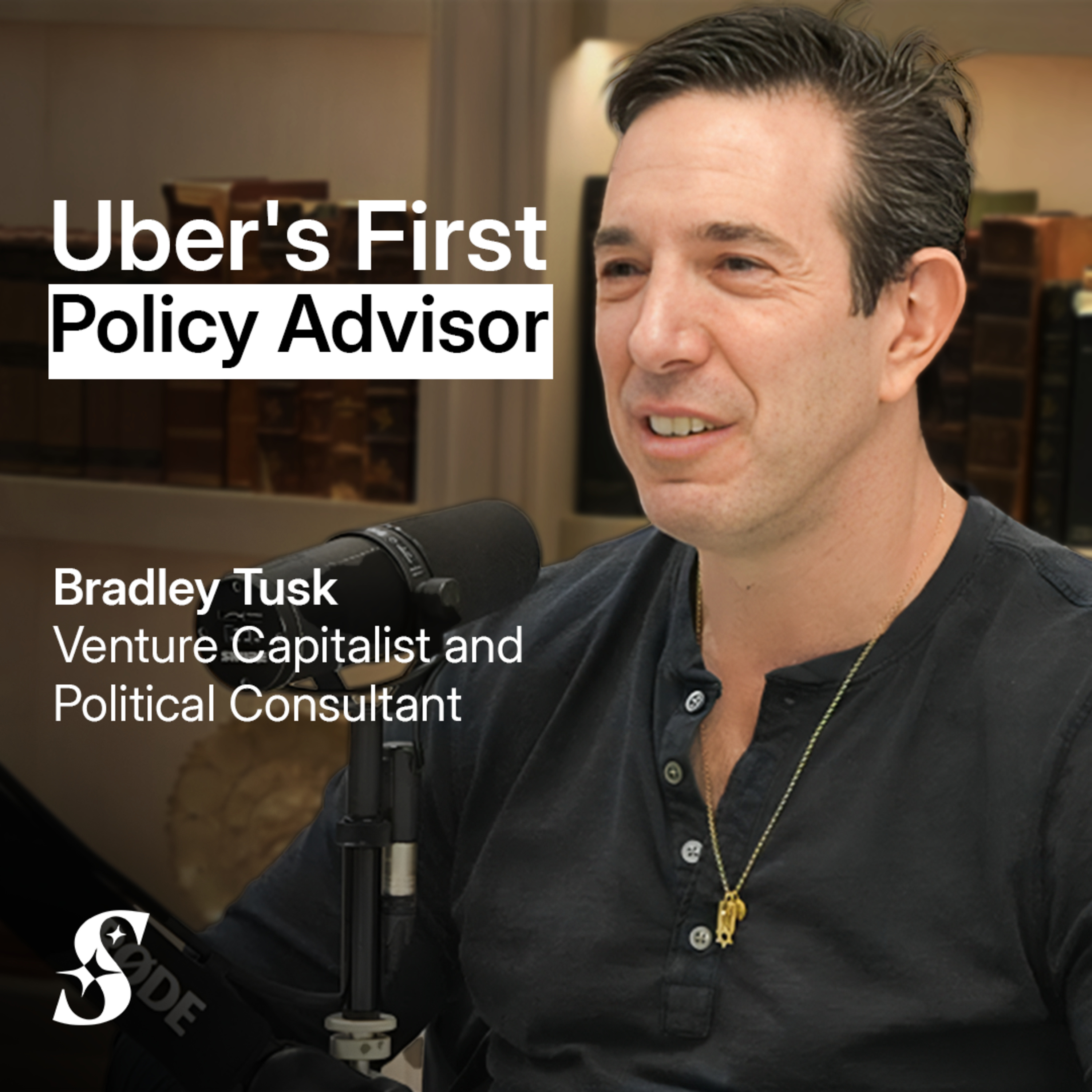
The common narrative for a post-labor future is Universal Basic Income (UBI). However, Elon Musk's perspective is "Universal High Income." This vision is not about wealth redistribution but about radical technological deflation, where the costs of energy, labor, and transportation approach zero, creating massive abundance and purchasing power for everyone.

Emad Mostaque argues that the math for a tax-funded Universal Basic Income (UBI) doesn't work. Providing even a poverty-level UBI in the U.S. would cost $5 trillion, the entire federal tax base. Corporate taxes from AI giants wouldn't come close, necessitating a fundamental rethinking of how money is created and distributed.

Social Security is framed not just as a successful anti-poverty program, but as a system that annually moves over a trillion dollars from the younger, less wealthy working-age population to the most affluent generation in history, who are often asset-rich.

Coinbase is funding a UBI experiment giving New Yorkers crypto. This is a strategic play, not just charity. It aims to prove crypto's efficiency as a distribution mechanism for government welfare, positioning it to become the foundational infrastructure for future social programs and driving mass adoption.

Pensioners receive benefits because they spent decades working, contributing to the system, and accumulating political bargaining power. A society of "forever pensioners" who never had that economic leverage would be at the mercy of the ruling elite's whims.

Providing every American with a poverty-level UBI of $16,000 would cost $5 trillion annually. This figure exceeds the entire US federal tax base of approximately $4.9 trillion. This simple calculation demonstrates that funding UBI through traditional taxation is not a viable solution for AI-driven job displacement.

Sam Harris challenges the fear that Universal Basic Income (UBI) would create mass purposelessness by pointing to historical aristocracies. He argues this large population, who didn't have to work, still managed to find meaning and live recognizably happy lives, serving as a real-world test case for a leisured society.
Since taxing profitless AI companies is impossible, a new system is needed. Instead of redistribution, money creation itself must be re-engineered. Capital could be generated and injected directly to individuals for simply existing and participating in the economy, fundamentally changing how money enters circulation.
Giving people a basic stipend won't end economic competition. Instead, it will fuel a secondary economy where people compete for each other's stipends through new forms of gambling, entertainment, entrepreneurship, and status games.
