Get your free personalized podcast brief
We scan new podcasts and send you the top 5 insights daily.
Micromobility company Lime's IPO filing highlights that its primary business risks are not competitors, but physical potholes and "metaphorical potholes" like theft and public disrespect for its scooters. This exposes a core vulnerability for any business deploying physical assets in the public sphere.

Related Insights
Bolt's initial scooter launch in Paris was a disaster, with rampant theft and vandalism of consumer-grade scooters. The key insight was that the unit economics were impossible without controlling the hardware. By developing custom-built scooters that couldn't be easily resold for parts, they dramatically reduced theft and made the business model viable.

When a physical product has low technical barriers to entry and can be easily copied, the only sustainable competitive advantage is a strong brand. Founders must focus on building a community and identity that competitors cannot replicate.

While its technology is advanced, Waymo's most significant competitive advantage is its head start in securing regulatory permits to operate and charge for rides. Competitors like Amazon's Zoox are far behind, not yet able to take paid passengers. This regulatory moat creates a powerful first-mover advantage in lucrative urban markets.

Unlike Uber's network-effect moat, Adams is building defensibility through capital-intensive physical assets. By owning billions of dollars of real estate for its cloud kitchens, it creates a massive barrier to entry that is prohibitively expensive for competitors to replicate, ensuring a durable moat.
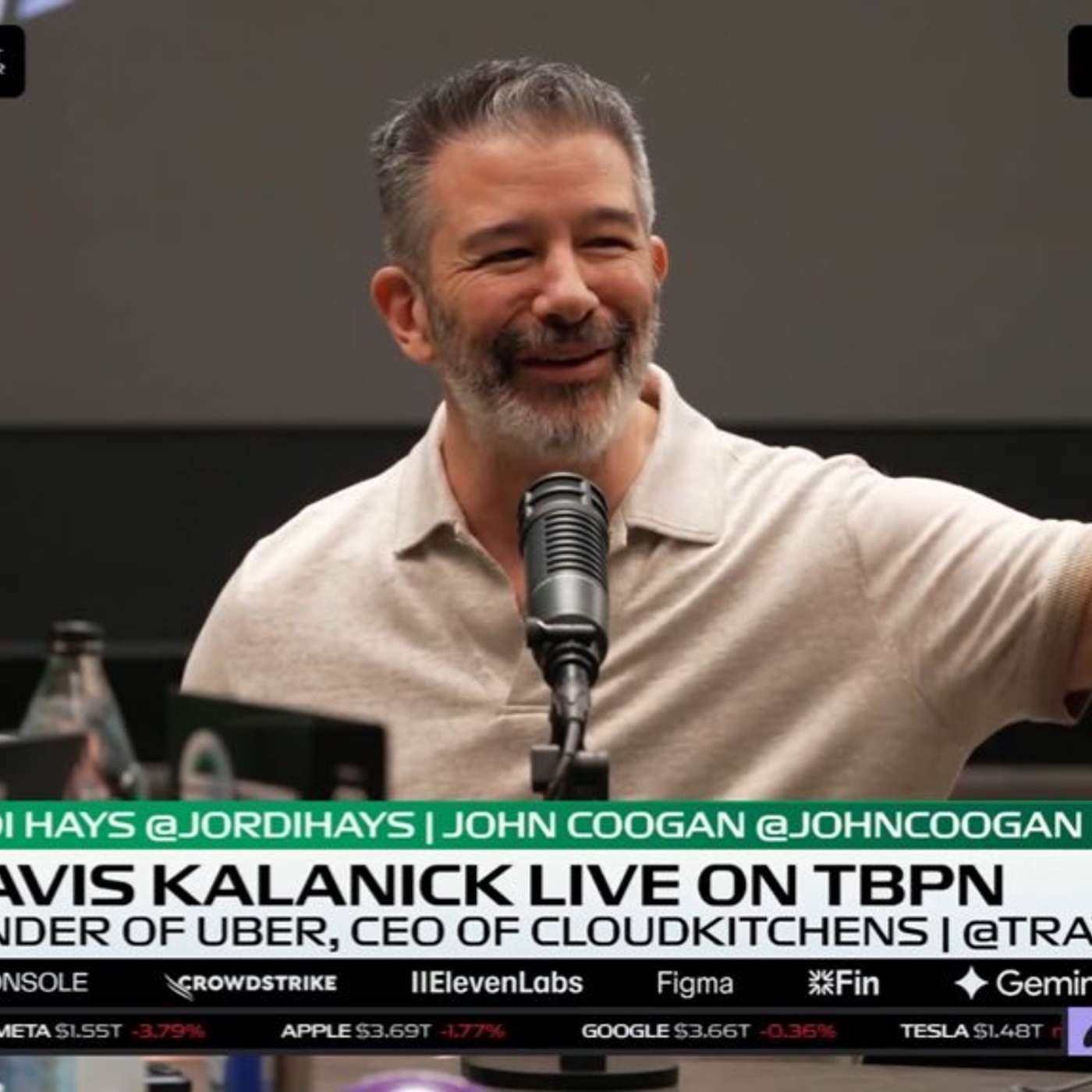
Kalanick compares his focus on food logistics to his early work in taxis, noting that both were seen as "boring" or "weird" ideas. He believes the best markets are often less competitive because they are difficult and unattractive to others, creating huge potential for founders who embrace the challenge.

As AI commoditizes software, the most defensible businesses are no longer asset-light SaaS models. Instead, companies with physical world operations, regulatory moats, and liability are safer investments. Their operational complexity, once a weakness, now serves as a formidable barrier against pure AI-driven disruption.
Lyft's CEO isn't overly concerned about AI agents commoditizing rideshare because the service is physical. Customers need to trust the safety and reliability of who picks them up, a factor that generic AI agents can't easily replicate or guarantee.

The popular Silicon Valley mantra often masks a willingness to create negative externalities for others—be it other businesses, users, or even legal frameworks. It serves as a permission slip to avoid the hard work of considering consequences.

Businesses trading on long-standing, real-world reputations are the most vulnerable. They fail to see that word-of-mouth is shifting from personal recommendations to Facebook shares. This digital shift will happen faster than they expect, allowing digitally native competitors to usurp their market position.

Founders often chase severe, 'shark bite' problems that are rare. A more sustainable business can be built solving a common, less severe 'mosquito bite' problem, as the market size and frequency of need are far greater.