Get your free personalized podcast brief
We scan new podcasts and send you the top 5 insights daily.
The U.S. intervention in Venezuela reflects a broader domestic trend of fast, unilateral policymaking via executive authority. This pattern bypasses congressional consensus-building, heightening policy uncertainty and systemic risk premiums for investors across all sectors.

Related Insights
The chaotic nature of major foreign policy moves, such as the Venezuelan operation, could be strategic. By creating an overwhelming and confusing news cycle, the administration can deliberately divert media and public attention away from damaging domestic issues like the Epstein files.

A surge in IPOs and M&A isn't driven by pro-business policies, but by a reduction in policy uncertainty. With a clearer, albeit more interventionist, landscape, companies have the confidence to execute major strategic plans they had previously postponed.
The US executive branch increasingly initiates military action by citing inherent commander-in-chief powers, sidestepping the constitutional requirement for Congress to declare war. This shift, exemplified by the Venezuela operation, marks a 'third founding' of the American republic where historical checks and balances on war-making are now considered quaint.
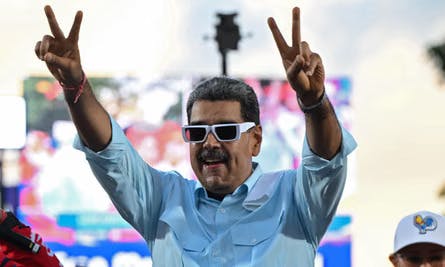
The Venezuelan intervention was coordinated with American oil businesses before and after, while Congress was kept in the dark. This demonstrates a shift where foreign policy serves specific corporate interests directly, bypassing traditional democratic oversight and processes.
Despite major political upheaval in Venezuela, the oil market's reaction is minimal. This is because the short-term supply impact is ambiguous, with an equal probability of production increasing through U.S. re-engagement or decreasing due to intensified blockades, creating a balanced risk profile.

Modern multinationals avoid the high cost and risk of securing foreign markets themselves. Instead, they 'draft' behind the U.S. government, which uses its diplomatic and military power to create favorable conditions. This effectively socializes geopolitical risk for corporations while they privatize the profits.

The US has established a precedent of using military force to apprehend fugitives abroad based on domestic legal actions, as seen with Noriega in 1989 and Maduro now. This practice blurs the line between law enforcement and an act of war, creating a thin legal justification for military intervention without traditional congressional or international approval.
The U.S. intervention in Venezuela demonstrates its willingness to act decisively in the Western hemisphere. This display of power provides the U.S. with increased leverage in USMCA trade negotiations, enabling it to push Mexico harder on limiting Chinese investment and influence.
The hosts argue that even with vast oil reserves and government encouragement, the political instability, power vacuum, and lack of rule of law in Venezuela make it a poor investment for oil companies. The cost and uncertainty of securing profits are too high.
Despite expected legislative gridlock, investors should focus on the executive branch. The president's most impactful market tools, such as tariff policy and deregulation via executive agencies, do not require congressional approval. Significant policy shifts can therefore occur even when Congress is divided and inactive.