Get your free personalized podcast brief
We scan new podcasts and send you the top 5 insights daily.
The chaotic nature of major foreign policy moves, such as the Venezuelan operation, could be strategic. By creating an overwhelming and confusing news cycle, the administration can deliberately divert media and public attention away from damaging domestic issues like the Epstein files.

Related Insights
Trump's erratic approach isn't random; it's a strategy to create chaos and uncertainty. This keeps adversaries off-balance, allowing him to exploit openings that emerge, much like a disruptive CEO. He is comfortable with instability and uses it as a tool for negotiation and advantage.

Powerful figures like Trump and Musk strategically deploy headline-grabbing announcements as 'weapons of mass distraction.' This is not random behavior but a calculated tactic to divert public and media attention away from core weaknesses, whether it's a political scandal (Epstein) or a flawed business model (Tesla as just a car company).
The Trump administration is depicted as ignoring Venezuela's legitimately elected opposition leader and instead choosing to work with the former vice president. This suggests a strategy prioritizing controllable stability with a regime figure over supporting a democratically elected but potentially less predictable leader.
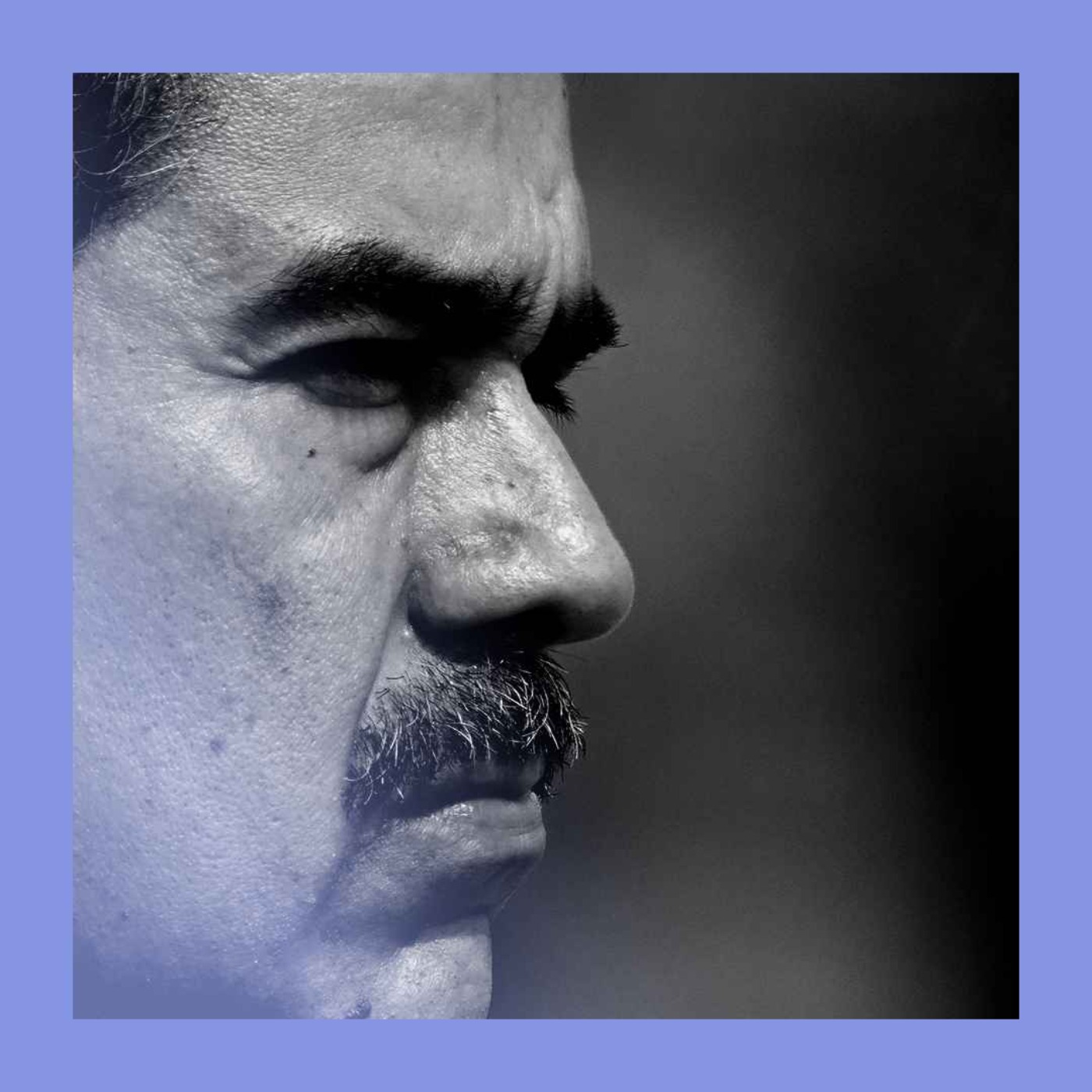
The Venezuelan intervention was coordinated with American oil businesses before and after, while Congress was kept in the dark. This demonstrates a shift where foreign policy serves specific corporate interests directly, bypassing traditional democratic oversight and processes.
Venezuela's remaining leadership can adopt a strategy of "playing for time." By appearing cooperative while delaying substantive changes, they can wait for events like the US midterms to increase domestic political pressure on the administration, making sustained intervention unpopular and difficult to maintain. The weaker state's best defense is the superpower's internal clock.
When a politician suddenly makes a previously ignored issue intensely important, they are likely employing misdirection. The goal is to control the news cycle and public attention, either to distract from a more significant action happening elsewhere or to advance a hidden agenda unrelated to the stated crisis.

Trump's seemingly chaotic approach is best understood as a CEO's leadership style. He tells his staff what to do rather than asking for opinions, uses disruption as a negotiation tactic, and prioritizes long-term outcomes over short-term public opinion or procedural harmony.

Despite an administration staffed by veterans weary of foreign entanglements, the U.S. has amassed its largest military force in the Caribbean since the Cuban Missile Crisis. This contradiction highlights a deep strategic incoherence, which the speaker calls a "strategic cacophony," making it difficult to formulate consistent national policy.

An administration has no incentive to fully resolve a major public scandal because its unresolved nature makes it a perfect "red herring." It can be used repeatedly to distract the public and media from current policy failures or other damaging news, making perpetual ambiguity more politically useful than transparency.
A former National Security Council staffer observed that President Trump's decisions often seemed counterintuitive in the moment but were later revealed as brilliant strategic "chess moves." This pattern built a high degree of trust among staff, enabling them to execute his vision without always understanding the immediate rationale.
