Get your free personalized podcast brief
We scan new podcasts and send you the top 5 insights daily.
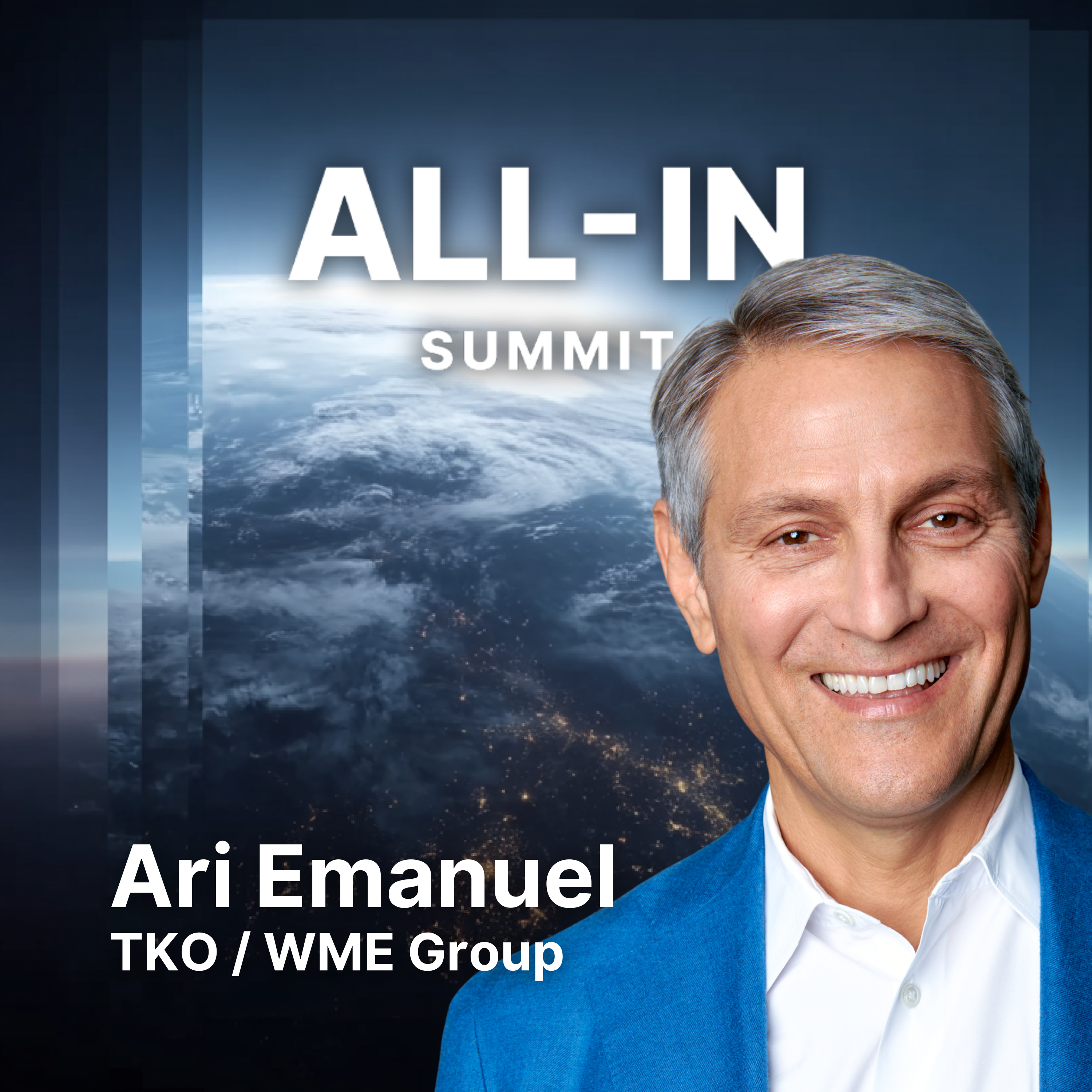
Emanuel remains a hands-on agent not for the commissions, but for the strategic advantage it provides his larger company, TKO. Representing A-list clients keeps him in constant, high-level talks with every major media buyer (Netflix, Amazon). This provides critical intel and relationships needed to close massive deals for TKO's assets.
Related Insights
View your personal brand or "likeness" not just as a marketing tool, but as a strategic asset that generates deal flow. This asset grants access to rooms and relationships that can be converted into partnerships, ownership stakes, and long-term revenue streams, fundamentally shifting you from talent-for-hire to an equity holder.

Media expert Dylan Byers frames the three-way battle for Warner Bros. Discovery as intensely personal. The motivations of key players like David Ellison (proving himself) and David Zaslav (controlling his exit) are rooted in personal relationships and reputation, making it more than a straightforward M&A negotiation.

iHeartMedia's deal to stream "The Breakfast Club" on Netflix made its star, Charlemagne tha God, indispensable. This new, high-stakes distribution channel gave him the leverage to secure a $200 million contract extension, demonstrating how content syndication directly inflates the value and negotiating power of key on-air talent.

Ari Emanuel argues the agent's role has fundamentally shifted. Instead of just connecting talent to projects, agencies like Endeavor now assemble the entire creative package—writers, directors, actors—and present it to distributors. This moves the core creative assembly power from studios to full-service agencies.

Emanuel asserts that media companies are ill-equipped to own sports leagues because the core operational challenge is managing a fluid, dynamic relationship with athletes (who are often independent contractors). This talent-centric business is fundamentally different from a media company's typical content operations and requires a unique skillset.
Emanuel's agency, Endeavor, used its unique position representing global talent to identify undervalued sports and entertainment properties. By acquiring these localized assets (like UFC), they could apply their global infrastructure to unlock massive value that the original owners couldn't access, capturing 90% of the value instead of a 10% agent fee.
Ari Emanuel's core strategy was to identify localized companies or talent with global potential. By leveraging Endeavor's global platform, they could significantly increase an asset's value, allowing them to transition from a representation role to a more lucrative ownership position. This model focuses on unlocking latent global demand.

Ari Emanuel describes his leadership style as a "democratic dictatorship." This involves gathering diverse opinions from all levels of the operation to inform decisions, but ultimately retaining centralized authority to make the final call. This balances collaborative input with decisive leadership, crucial for managing fluid businesses.
The old investment banking model of mass-emailing a deal to many potential buyers is ineffective for media assets. Selling a media company now requires a custom, hands-on process targeting a handful of highly specific, strategic buyers, as the universe of potential acquirers has shrunk and their needs have changed.
![Media M&A - [Business Breakdowns, EP.230] thumbnail](https://megaphone.imgix.net/podcasts/8404be2a-a3c6-11f0-9d01-7b00b28a9d50/image/9a48597af1149c3b024e8d2f7327aa89.jpg?ixlib=rails-4.3.1&max-w=3000&max-h=3000&fit=crop&auto=format,compress)
QED Investors realized they were misusing their famous founder, Nigel Morris, by only bringing him in for the final call. They now strategically deploy him early in the process to open doors and build relationships with target companies, using his reputation as an asset for outreach, not just a closing tool.
