Get your free personalized podcast brief
We scan new podcasts and send you the top 5 insights daily.
GRU Space's designs are intentionally aesthetic and inspiring ("Grecofuturism"), viewing the first lunar structures as future historical monuments akin to the Parthenon. This branding attracts high-net-worth individuals and builds a powerful legacy.
Related Insights
Societies at their peak build large-scale public art to capture their values and ambition, a practice largely dormant in the U.S. since Mount Rushmore. Reviving this tradition, perhaps with modern materials like carbon fiber, can inspire progress and create lasting cultural symbols for the next generation.

Musk's presentations, like for the lunar mass driver, often focus on grand, futuristic concepts, emphasizing how "epic" a project will be rather than providing a detailed business plan. This suggests his strategy is about selling a long-term vision, not a Q1 roadmap, to attract talent and capital.

GRU Space focuses on making bricks from lunar soil because while space robotics are proven, the technology to use local resources (ISRU) lacks "flight heritage." Solving this materials science problem unlocks the entire lunar economy.
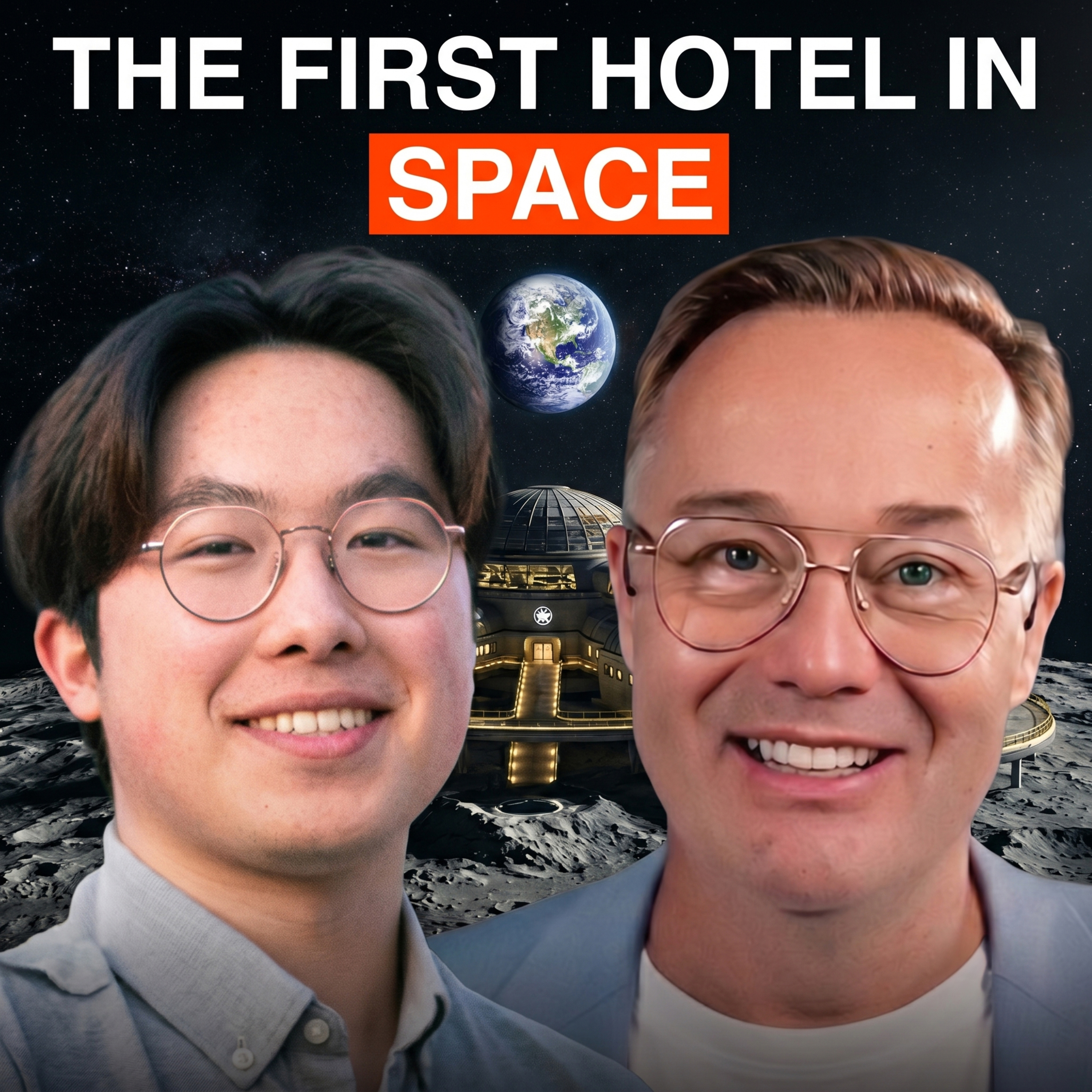
GRU Space's strategy is to build a commercial moon hotel to create demand for lunar services, positioning them as the go-to contractor for NASA's larger moon base projects. This creates a private ecosystem, reducing reliance on government funding.
SpaceX is strategically delaying its Mars ambitions to first establish a permanent, 'self-growing' city on the moon. Elon Musk now views this as a more practical 10-year goal, with the moon serving as an essential staging ground for materials and deeper space exploration, rather than a direct-to-Mars approach.
Unlike typical S-1 filings, SpaceX's paperwork includes mission statements about "extending the light of consciousness to the stars" and a bonus for building a city on Mars. This transforms a legal document into a branding tool, attracting investors who are buying into a civilization-altering vision, not just quarterly earnings.

Instead of energy-intensive methods like laser sintering, GRU Space uses a geopolymer brought from Earth to bind lunar regolith into bricks. This approach is more feasible given the significant power constraints on the moon.
The Artemis II mission's primary objective was less about scientific data and more about psychology and public engagement. It was designed as a modern "media event" to create shared, meaningful experiences through iconic photography, making inspiration a key performance indicator for contemporary space exploration.
The company discovered an unplanned revenue stream when brands offered to pay to put their logo on the first brick on the moon. This monetizes the immense marketing value of being "the first" of a category in space, effectively funding deep tech R&D with advertising dollars.

The company's long-term vision is to enable mega-structures in space, starting with AI data centers to tap into unlimited solar power. Subsequently, it becomes 20 times more energy-efficient to use materials mined from the moon than from Earth to build these structures.