Get your free personalized podcast brief
We scan new podcasts and send you the top 5 insights daily.
GRU Space focuses on making bricks from lunar soil because while space robotics are proven, the technology to use local resources (ISRU) lacks "flight heritage." Solving this materials science problem unlocks the entire lunar economy.
Related Insights
Getting to space is now relatively cheap thanks to SpaceX. The next economic revolution will be triggered by solving the much harder problem of bringing materials back from space. This will enable in-space manufacturing and create a true two-way space economy.

Tesla's evolution from an electric car company to an autonomous robotics company is the critical enabler for space industrialization. Its robots can be deployed to the moon to build and operate mines and factories, overcoming the biggest limiting factor of getting human labor into space.

Companies like SpaceX have largely solved the transportation problem. The next major bottleneck and massive economic opportunity is creating sustainable habitats on the Moon and Mars by utilizing local resources (ISRU), shifting the core focus of the space economy.

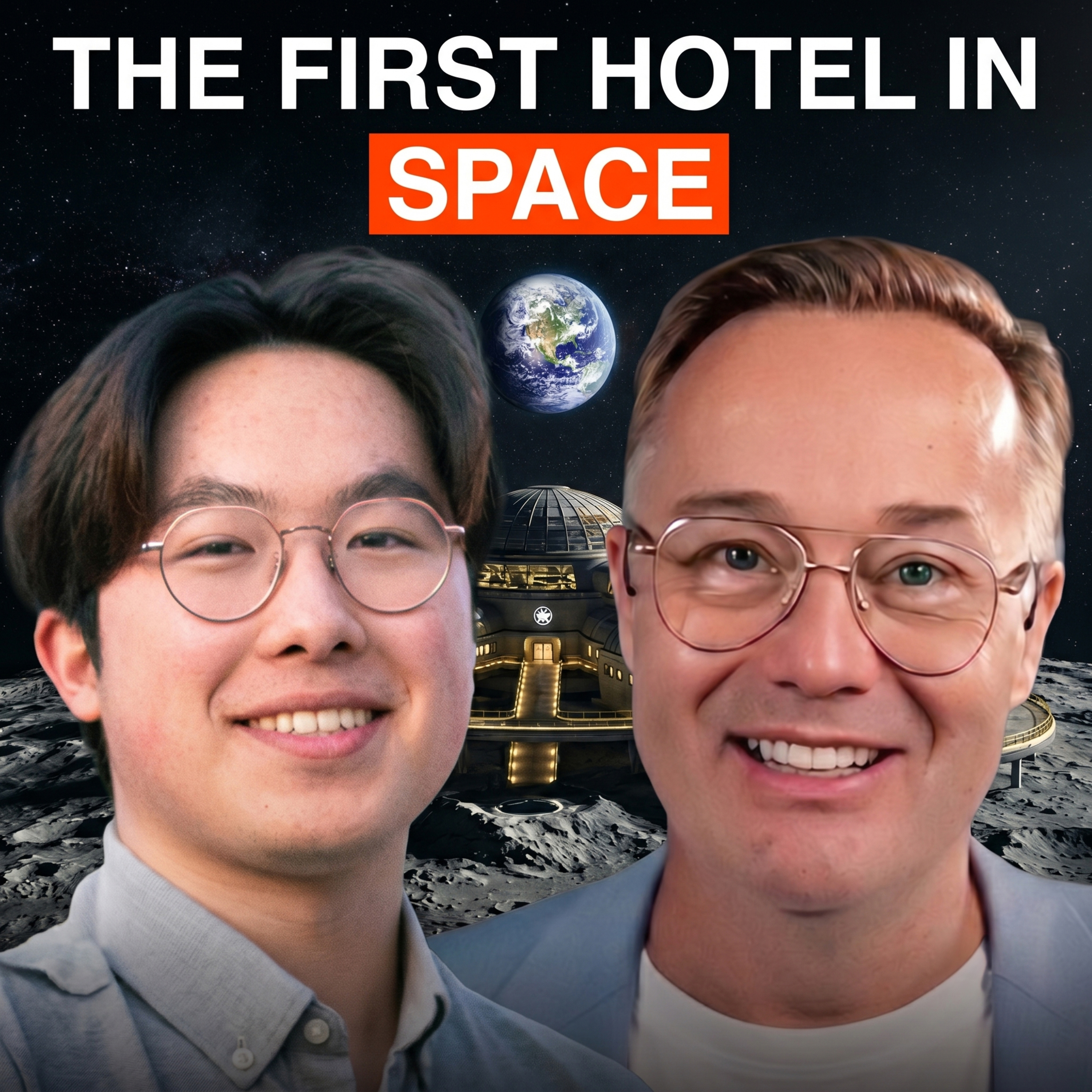
GRU Space's strategy is to build a commercial moon hotel to create demand for lunar services, positioning them as the go-to contractor for NASA's larger moon base projects. This creates a private ecosystem, reducing reliance on government funding.
The core technologies developed for a commercial lunar hotel—in-situ resource utilization and inflatable habitats—are the same ones NASA identified as its top priorities for permanent moon bases. This highlights a powerful dual-use synergy between commercial and government space ventures.
Mining and manufacturing on the moon is more feasible than asteroid mining. The moon's low gravity and lack of atmosphere allow for a 'mass driver'—an electric rail—to launch finished goods back to Earth at nearly zero shipping cost, creating an economic advantage over terrestrial production.
SpaceX is strategically delaying its Mars ambitions to first establish a permanent, 'self-growing' city on the moon. Elon Musk now views this as a more practical 10-year goal, with the moon serving as an essential staging ground for materials and deeper space exploration, rather than a direct-to-Mars approach.

Instead of energy-intensive methods like laser sintering, GRU Space uses a geopolymer brought from Earth to bind lunar regolith into bricks. This approach is more feasible given the significant power constraints on the moon.
The project's value proposition is defeated if you transport fully-made satellites to the moon just to launch them back towards Earth. The true economic benefit comes from sourcing and manufacturing most of the payload's mass from lunar resources, minimizing costly Earth-to-moon transport.
The company's long-term vision is to enable mega-structures in space, starting with AI data centers to tap into unlimited solar power. Subsequently, it becomes 20 times more energy-efficient to use materials mined from the moon than from Earth to build these structures.