Get your free personalized podcast brief
We scan new podcasts and send you the top 5 insights daily.
As demonstrated by the DJI hack, AI agents won't wait for official APIs. They will reverse-engineer private protocols to interact with any device or service, effectively turning the entire digital and physical world into a massive, unofficial API.

Related Insights
As AI makes it trivial to scrape data and bypass native UIs, companies will retaliate by shutting down open APIs and creating walled gardens to protect their business models. This mirrors the early web's shift away from open standards like RSS once monetization was threatened.

Ubiquitous local AI agents that can script any service and reverse-engineer APIs fundamentally threaten the SaaS recurring revenue model. If software lock-in becomes impossible, business models may shift back to selling expensive, open hardware as a one-time asset, a return to the "shrink wrap" era.
The usefulness of AI agents is severely hampered because most web services lack robust, accessible APIs. This forces agents to rely on unstable methods like web scraping, which are easily blocked, limiting their reliability and potential integration into complex workflows.

By running locally on a user's machine, AI agents can interact with services like Gmail or WhatsApp without needing official, often restrictive, API access. This approach works around the corporate "red tape" that stifles innovation and effectively liberates user data from platform control.
AI agents are becoming the dominant source of internet traffic, shifting the paradigm from human-centric UI to agent-friendly APIs. Developers optimizing for human users may be designing for a shrinking minority, as automated systems increasingly consume web services.

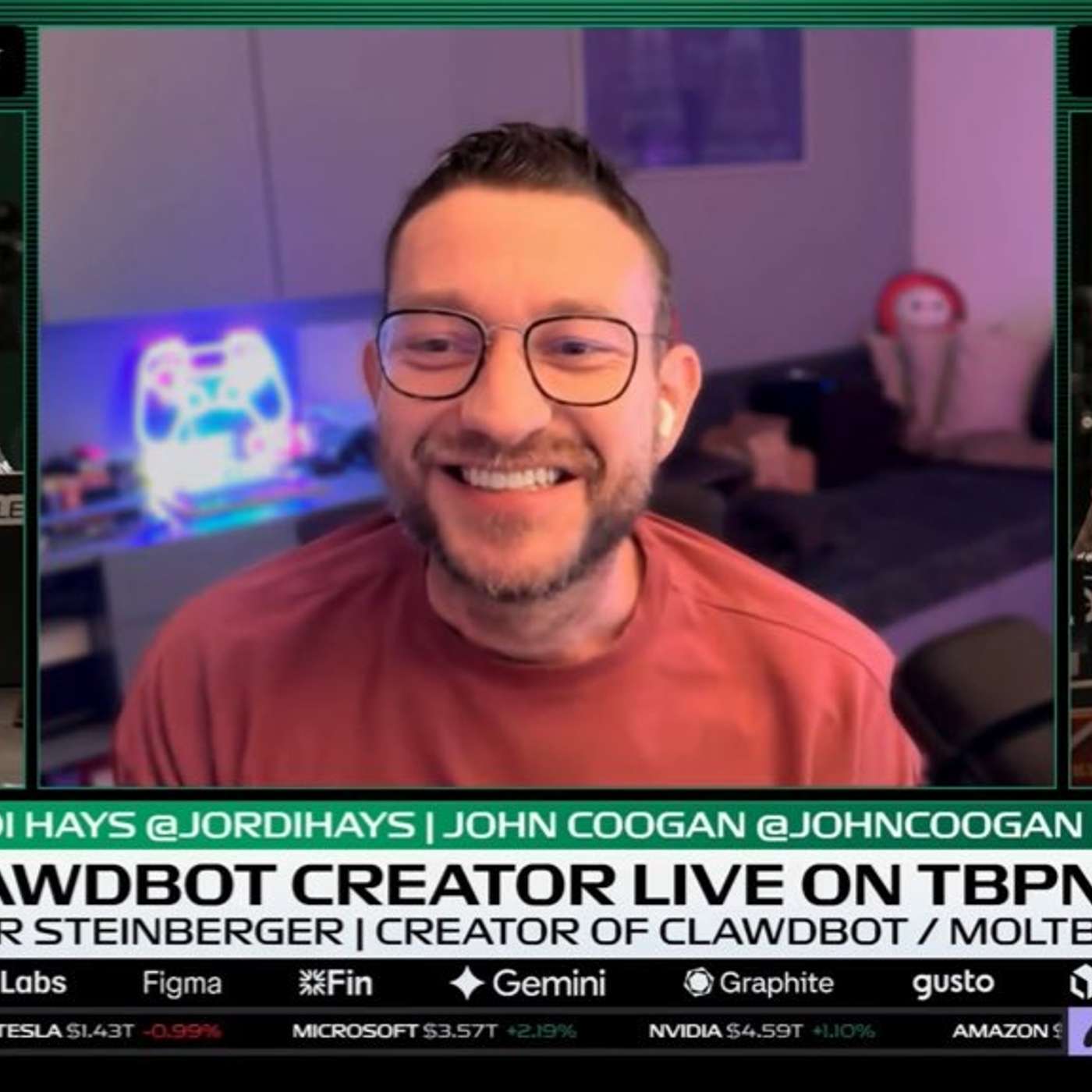
The rise of autonomous agents like OpenClaw dictates that the future of software is API-first. This architecture is necessary for agents to perform tasks programmatically. Crucially, it must also support human interaction for verification, collaboration, and oversight, creating a hybrid workflow between people and AI agents.

The CEO of WorkOS describes AI agents as 'crazy hyperactive interns' that can access all systems and wreak havoc at machine speed. This makes agent-specific security—focusing on authentication, permissions, and safeguards against prompt injection—a massive and urgent challenge for the industry.

A more likely AI future involves an ecosystem of specialized agents, each mastering a specific domain (e.g., physical vs. digital worlds), rather than a single, monolithic AGI that understands everything. These agents will require protocols to interact.

While marketed as a coding tool, the Codex app's architecture for managing parallel agents, skills, and long-running tasks suggests it's a foundation for a general-purpose consumer agent. The focus on orchestrating complex work positions it as a command center for any task, not just software development.

The future of AI is not just humans talking to AI, but a world where personal agents communicate directly with business agents (e.g., your agent negotiating a loan with a bank's agent). This will necessitate new communication protocols and guardrails, creating a societal transformation comparable to the early internet.
