Get your free personalized podcast brief
We scan new podcasts and send you the top 5 insights daily.
The backlash against AI in writing often assumes writers use tools like ChatGPT as their only source for research and composition. In reality, professionals use AI as a time-saving assistant for tasks like summarizing topics or refining sentences, while still relying on extensive primary research and maintaining their own voice.

Related Insights
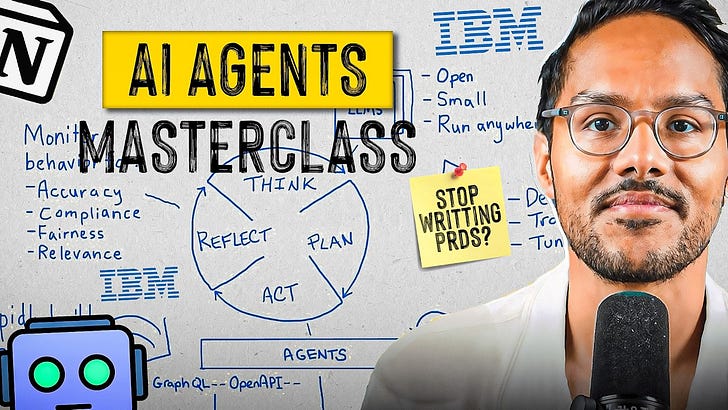
While AI tools once gave creators an edge, they now risk producing democratized, undifferentiated output. IBM's AI VP, who grew to 200k followers, now uses AI less. The new edge is spending more time on unique human thinking and using AI only for initial ideation, not final writing.
In its current form, AI primarily benefits experts by amplifying their existing knowledge. An expert can provide better prompts due to a richer vocabulary and more effectively verify the output due to deep domain context. It's a tool that makes knowledgeable people more productive, not a replacement for their expertise.

The real problem with AI-generated text isn't the assistance it provides but when users present AI's words as their own without any critical thinking or editing. This lack of human intellectual input is the modern definition of plagiarism in the age of AI.

The best use of AI in content creation isn't for writing the first draft. Instead, apply it to the tedious parts of the process you dislike, such as data processing, topic ideation, or even editing, to accelerate the path to a high-quality, human-created piece.

AI's best use in content creation is refinement, not initial generation. Use it as a 'thought partner' with prompts like 'remove sentences that don't move the story forward' or 'grade my post on its ability to retain a reader.' This sharpens your message without sacrificing authenticity.

The controversy over AI's role in editing is misguided because books have never been the sole product of a single author. The final text is already an amalgamation of inputs from editors and agents. AI is simply a new tool in this long-standing collaborative process, not a fundamental shift in authorial purity.
AI is a poor substitute for authentic writing and cannot replicate a unique voice. However, it's an invaluable tool for accelerating the editing process. By feeding it drafts and previous work, you can get instant, objective feedback on flow, repetition, and weak points, creating a faster feedback loop than human editors alone.

Don't use AI to generate generic thought leadership, which often just regurgitates existing content. The real power is using AI as a 'steroid' for your own ideas. Architect the core content yourself, then use AI to turbocharge research and data integration to make it 10x better.

While many fear AI-generated books, author Joanna Stern reveals how professionals actually use the technology. AI was not used to write prose but was indispensable for backend tasks like organizing notes, managing timelines, and formatting endnotes, accelerating the entire process.

An AI entrepreneur's viral essay warning about AI's job-destroying capabilities lost some credibility when it was revealed he used AI to help write it. This highlights a central hypocrisy in the AI debate: evangelists and critics alike are leveraging the technology, complicating their own arguments about its ultimate impact.
