Get your free personalized podcast brief
We scan new podcasts and send you the top 5 insights daily.
Don't use AI to generate generic thought leadership, which often just regurgitates existing content. The real power is using AI as a 'steroid' for your own ideas. Architect the core content yourself, then use AI to turbocharge research and data integration to make it 10x better.
Related Insights
Instead of hiring a 'Chief AI Officer' or an agency, the most successful GTM AI deployments empower existing top performers. Pair your best SDR, marketer, or RevOps person with AI tools, and let them learn and innovate together. This internal expertise is more valuable than any external consultant.
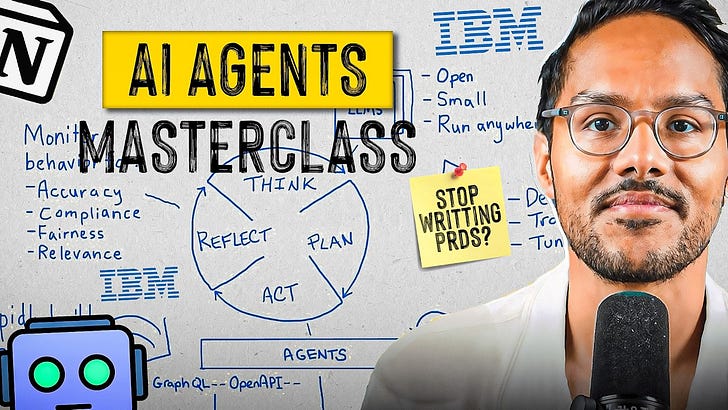
While AI tools once gave creators an edge, they now risk producing democratized, undifferentiated output. IBM's AI VP, who grew to 200k followers, now uses AI less. The new edge is spending more time on unique human thinking and using AI only for initial ideation, not final writing.
Instead of using AI to generate generic text, leverage it as a partner to enhance your unique voice. A powerful technique is to have AI interview you to create a "story log"—a database of your personal anecdotes and experiences. This provides authentic, non-replicable material for future content.

The most powerful use of AI for business owners isn't task automation, but leveraging it as an infinitely patient strategic advisor. The most advanced technique is asking AI what questions you should be asking about your business, turning it from a simple tool into a discovery engine for growth.

A powerful workflow is to explicitly instruct your AI to act as a collaborative thinking partner—asking questions and organizing thoughts—while strictly forbidding it from creating final artifacts. This separates the crucial thinking phase from the generative phase, leading to better outcomes.

AI's power is not in creating successful strategies from scratch, but in scaling your existing best practices. An AI agent cannot make a broken process work. First, identify what messaging and campaigns are effective, then use AI to execute them at a near-infinite scale, 24/7.
Go beyond using AI for data synthesis. Leverage it as a critical partner to stress-test your strategic opinions and assumptions. AI can challenge your thinking, identify conflicts in your data, and help you refine your point of view, ultimately hardening your final plan.
Instead of viewing AI collaboration as a manager delegating tasks, adopt the "surgeon" model. The human expert performs the critical, hands-on work while AI assistants handle prep (briefings, drafts) and auxiliary tasks. This keeps the expert in a state of flow and focused on their unique skills.

While AI offers efficiency gains, its true marketing potential is as a collaborative partner. This "designed intelligence" approach uses AI for scale and data processing, freeing humans for creativity, connection, and building empathetic customer experiences, thus amplifying human imagination rather than just automating tasks.
AI should not be the starting point for creation, as that leads to generic, spam-like output. Instead, begin with a distinct human point of view and strategy. Then, leverage AI to scale that unique perspective, personalize it with data, and amplify its distribution.