Get your free personalized podcast brief
We scan new podcasts and send you the top 5 insights daily.
Researchers can avoid the immense risk of creating mirror life for study. Instead, they can develop mirror-image countermeasures (like mirror antibodies) and test them against normal bacteria. If effective, the 'normal' version of that countermeasure would work against mirror life, allowing for safe R&D.
Related Insights
The immune system fails because of a cascade effect. Our adaptive immune system (antibodies) depends on activation signals from the innate system. Because the innate system's receptors can't bind to mirror molecules, the initial alarm is never sounded, preventing the entire defensive chain of command from launching.
Contrary to the popular belief that antibody development is a bespoke craft, modern methods enable a reproducible, systematic engineering process. This allows for predictable creation of antibodies with specific properties, such as matching affinity for human and animal targets, a feat once considered a "flight of fancy."

The fundamental immune mechanisms that mirror life bypasses (pattern recognition receptors) are conserved across the tree of life. This means plants and insects are also vulnerable, making mirror life a catastrophic threat to agriculture and entire ecosystems, not just vertebrates.
The very researchers who saw creating mirror life as a grand scientific challenge are now its staunchest opponents after analyzing the risks. This powerful example of scientific self-regulation saw pioneers of the field pivot from creation to prevention, forming an interdisciplinary group to warn the world.
Unlike typical pathogens, mirror bacteria would be immune to their natural predators like viruses (bacteriophages). This advantage could allow them to proliferate uncontrollably in soil and oceans, creating a permanent environmental reservoir for infection and potentially outcompeting essential natural microbes.
A common objection—that mirror life would starve—is incorrect. The human body is rich in achiral nutrients (molecules without a mirror-image form), like acetate and glycerol. Mirror bacteria can readily metabolize these, allowing them to grow rapidly without needing to consume our body's chiral molecules.
Unlike AI or nuclear power, mirror life offers minimal foreseeable benefits but poses catastrophic risks. This lack of a strong commercial or economic driver makes it politically easier to build a global consensus for a moratorium or ban, as there are few powerful interests advocating for its development.
The AI-discovered antibiotic Halicin showed no evolved resistance in E. coli after 30 days. This is likely because it hits multiple protein targets simultaneously, a complex property that AI is well-suited to identify and which makes it exponentially harder for bacteria to develop resistance.

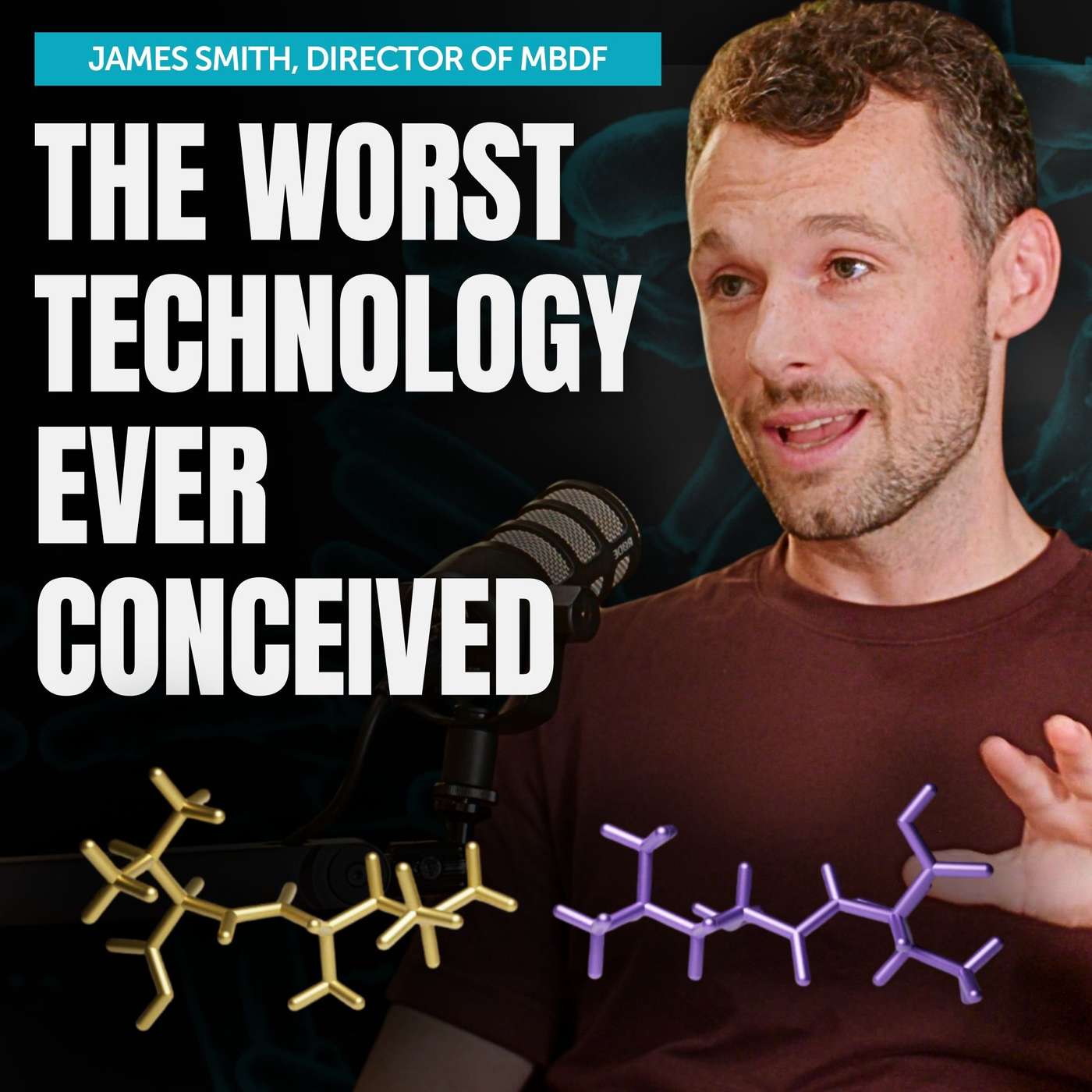
Mirror life's molecules are mirror images of normal biology. Our immune receptors, like right-handed gloves, cannot properly bind to these 'left-handed' pathogens. This fundamental shape mismatch, not just novelty, prevents an effective immune response, making it a uniquely dangerous threat.
A common misconception is that engineered life would be feeble like current lab-created 'minimal cells'. In reality, a bad actor would create a mirror version of a naturally robust bacterium like E. coli, not a fragile lab specimen, to ensure its survival and virulence in the natural environment.